


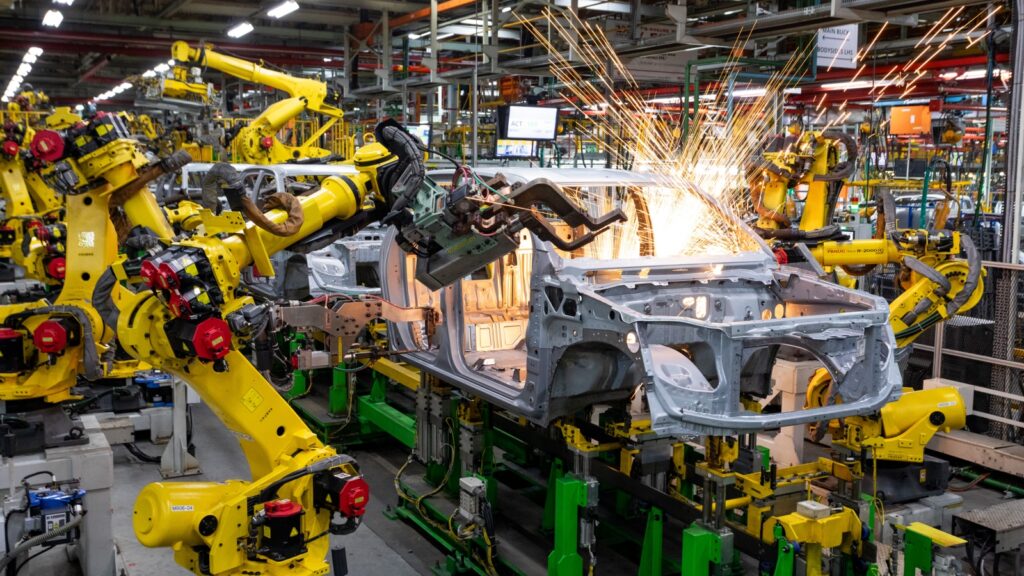
South Africa’s vehicle manufacturing industry is under immense pressure from foreign carmakers that are able to compete in our market at much lower prices.
The local car scene has seen a dramatic shift over the last five years, as once popular legacy brands like BMW and Mercedes-Benz have reported a decline in sales while new competitors from Asia have experienced a surge in interest.
Suzuki, which is now the second best-selling car brand in the country, imports all of its vehicles from India. Mahindra has also seen a massive uptick in sales.
Chinese brands have also taken off, with Chery and GWM now selling thousands of units every month, inspiring other brands like BYD, Geely, GAC, MG, and several others to try their luck in our market.
Chery alone sold over 6,000 units in the first four months of 2026, positioning it as a major competitor to South Africa’s original equipment manufacturers (OEMs) with factories here.
South Africa’s auto sector is one of the country’s largest employers, creating more than 115,000 direct jobs while indirectly supporting thousands more at various points in the local supply chain.
Metair, a vehicle parts manufacturer, recently warned that South Africa’s auto industry was being threatened by the influx of new car brands.
It noted that the country’s new-vehicle market had grown in the first half of the year, with over 315,000 sales recorded between January and June – a 12.9% year-on-year increase.
Metair also highlighted that sales in June 2026 were the highest for that month in 19 years. However, many of these new sales were attributed to imports, mostly from Asian countries.
“Most of the increase in vehicle sales was attributable to imports from Chinese and Indian automotive brands, which continue to put pressure on the locally manufactured vehicle market,” it said.
South Africa is home to six major car factories

South Africa is home to six legacy OEMs. Ford has a plant in Silverton that produces the Ford Ranger and VW Amarok bakkies, while BMW has a site in Rosslyn making the X3 SUV.
VW produces the Polo and Polo Vivo hatchbacks at Kariega, and Isuzu builds the D-Max bakkie in Gqeberha. Mercedes-Benz has a C-Class factory in East London, and Toyota has a massive plant in Durban that produces multiple vehicles like the Hilux, Fortuner, and Corolla Cross.
Nissan used to have a site in Rosslyn that made the Navara bakkie, but it sold the factory to Chery earlier this year due to financial difficulties.
The factory is currently being retooled to build cars from across the Chery Group, with the first vehicles scheduled to make their way off the assembly line in 2027.
Each of these sites is a major driver of employment in its respective area. VW’s plant alone accounts for over 3,900 jobs. It is also the only factory in the world that still produces the Polo.
Metair warned that South African exports have declined by 7.8% year-on-year to 181,000 units, which is a serious problem given that exports account for the majority of sales.
However, it also said that South Africa’s car production rates have remained relatively flat and that the industry has shown signs of improvements despite the challenging operating environment.
Metair said it expects its own earnings before interest and taxes (EBIT) to rise due to cost-saving measures, improved operational efficiency, and the inclusion of Harnesses Proprietary Limited in its next interim results.
It said it was satisfied with its performance during the interim period despite the challenges posed by South Africa’s stagnant economy and shifting car-buying landscape.
“Metair is pleased with its operational and financial performance and resilience during the Interim Period particularly given the net decrease in local OEM volumes for the two major customers served by Metair,” it said.


 Loading ...
-facelift-2-2025.10.webp)
