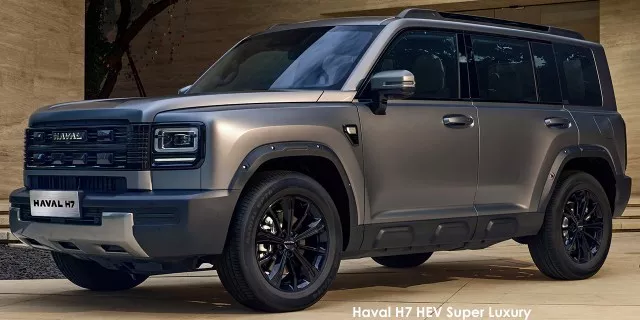
South Africa sold more new energy vehicles (NEVs) in the first quarter of 2022 than it did in the past two years combined.
NEVs encompass plug-in hybrids, traditional hybrids, and electric cars, and their rising sales indicate a growing interest by local consumers in more fuel-efficient and environmentally-friendly vehicles.
Over 1,400 NEVs were sold in South Africa in the past three months, according to Naamsa.
This is compared to 896 units in 2021, 324 units in 2020, and 407 units in 2019.
Out of all the NEVs sold in the domestic market in the first three months of 2022, fully-electric vehicles (EV) accounted for 112 models.
This might not sound like all that much, but it’s more impressive when you consider that, during the entire 2021, roughly 200 EVs were sold in South Africa, while in 2020 only 92 EVs found new owners.
However, the increase in EV sales may partially be attributed to the introduction of new models to the local scene, as brands like Audi, BMW, Mercedes-Benz, and Volvo are introducing battery-powered cars in droves.

Upward trend
According to Naamsa’s NEV sales figures that track statistics as far back as 2017, the data shows a positive trend for the sector.
Traditional hybrids have seen an explosion of new interest within the last two years, with plug-in hybrid and electric cars maintaining a smaller but consistent market share.
Plug-in hybrids refer to cars that are equipped with an internal combustion engine (ICE), but are also capable of running entirely on an electric motor, and are typically the most expensive form of hybrid you can buy.
Traditional/mild hybrids, in contrast, are driven by an ICE but employ a supplementary electric motor usually to help drive the wheels, thereby drastically cutting down on the car’s fuel consumption, and they are generally more affordable than plug-ins as a result.
As the most affordable type of NEV available to the public, it’s little surprise that traditional hybrids accounted for 90% of all NEV sales so far this year, having more than doubled sales from 627 units in 2021 to 1,257 units in the first quarter of 2022.
The growth in popularity for NEVs, in general, may also be attributed to rising fuel costs, as South African fuel prices are currently at unprecedented levels with another potential increase of up to R3.48 per litre being on the horizon.


 Loading ...