The first car touchscreen – and how far the technology has evolved


Modern cars are packed to the brim with new technologies that all go towards the task of making our travels both safer and easier.
While certain pieces of equipment have their pros and cons, and the motoring world as a whole is still split on the idea of whether or not we need or even want many of these conveniences, one bit of tech has become a staple in just about every new vehicle that slinks off the production line these days.
This bulwark of the industry is a touchscreen that dominates the centre of the dashboard, occupying the same space that one would previously have found a cassette or CD player.
However, despite touchscreens in cars appearing to be a fairly recent idea brought about by the age of the smartphone, their history goes back a lot further than most people may think.
The rise of the touchscreen
Believe it or not, the first car to feature a touch-operated screen in a car dashboard dates back all the way back to the 1986 Buick Riviera, according to Top Gear.
Its simple black-and-green aesthetic may look quaint by today’s standards but was cutting edge at the time, and seemed to be taken right out of the era’s sci-fi movies like Blade Runner and RoboCop.
Referred to as a “Graphic Control Centre,” the 9.0-inch screen allowed users to access 91 different car functions without the need for all manner of knobs and switches, but the system failed to catch on in those early days because consumers claimed the system was far too distracting to use while driving.
Of course, it’s funny to hear this as the main reason for the touchscreen’s decades-long hibernation in cars given how they are the norm in cars today, but the concern that digital displays are too distracting is still a valid one that sees debate in modern times.
One of the more common gripes is the screen’s replacement of physical buttons for basic functions like the aircon which tends to overcomplicate the simple function.
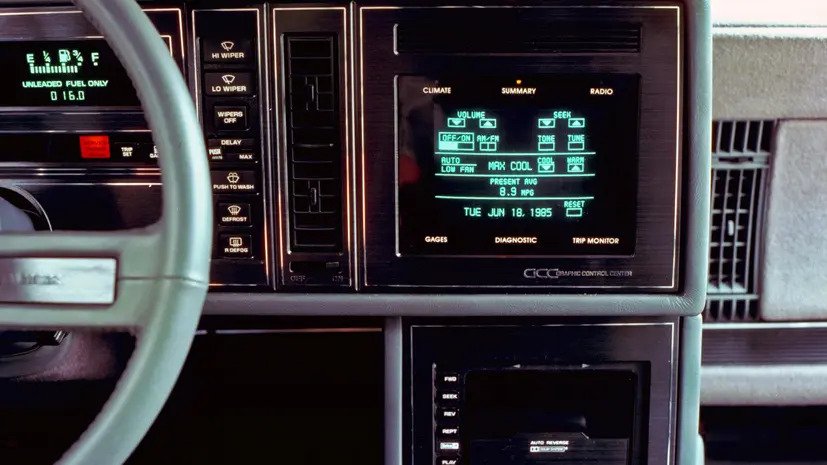
1986 Buick Riviera
It wasn’t until the 2000s that touchscreens started to really become a thing, albeit in limited appearances for the most high-end of cars.
Case in point is BMW’s iDrive system, which debuted in 2002 on the luxurious 7 Series and replaced all the physical switches for other functions, though this used a knob in the lower console for the controls instead of being touch-based, and was quickly rolled back to include traditional dash buttons again after customers complained about the overly-minimalist approach.
It was in 2012 when in-car displays started to resemble the ones we have now, as the year saw Tesla launch the Model S with an enormous 17-inch monitor replacing the centre console.
Again the screen took the role of all physical buttons, but with the swift rise of smartphones in the mid-2000s, touch displays were far more normal to the average consumer and the technology itself had improved to as to have minimal delays between prompts.
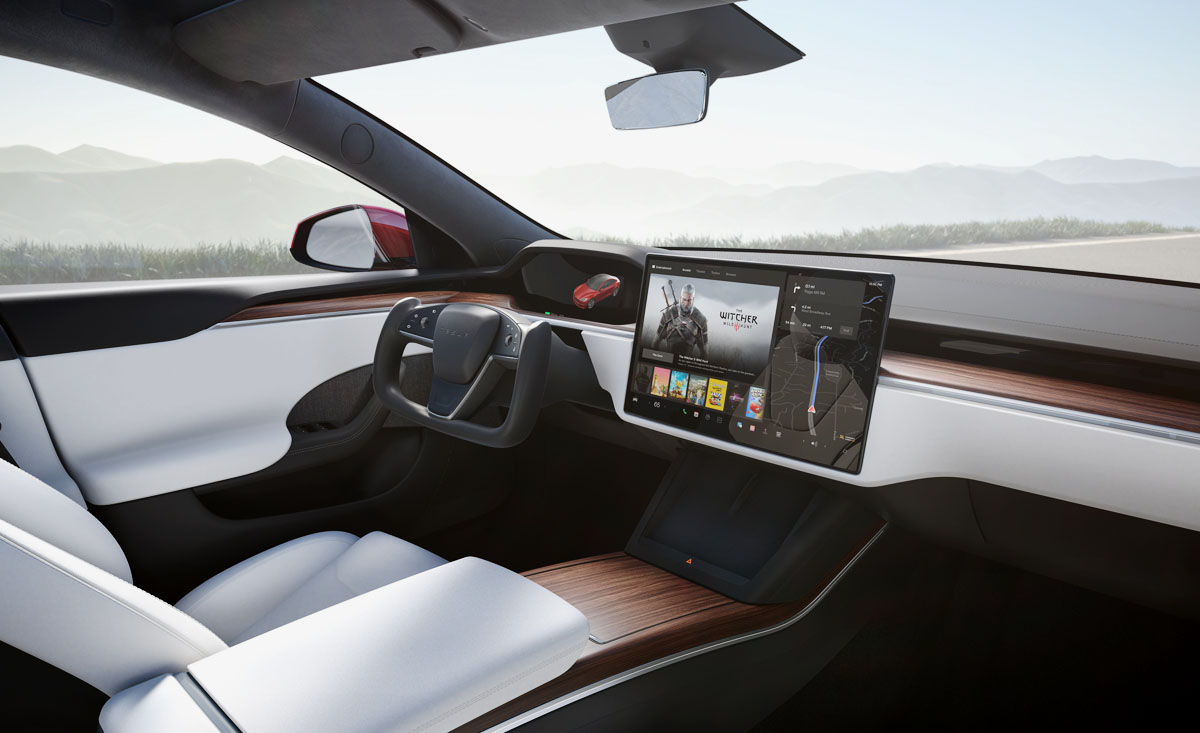
2022 Tesla Model S
It was during the 2010s that car touchscreens, or “infotainment screens” became a far more common sight.
Third parties began to develop their own software, leading to the launch of the now-familiar Apple CarPlay and Android Auto.
Apple’s operating system debuted in 2015 on the Ferrari FF, while Android’s service came out a year later with the Hyundai Sonata being the first recipient.
Fast forward to 2023 and it’s clear that these displays are not going anywhere. They offer so much utility with reverse camera displays, internet access, and navigation tools to name a few, and they have even started replacing physical rear-view mirrors in some cars like the Audi e-tron.
Suffice it to say, there is still a lot of potential with in-car displays and the future is looking much brighter than the past for these interactive fixtures.




 Loading ...