Back in the day, BMW’s badging referred to the particular model range and the size of the engine underneath the hood of that particular car, for example, 530i stood for a 5 Series sedan with a 3.0-litre petrol engine.
However, with the advent of turbocharging and electrification, it was no longer feasible to use this nomenclature, so the automaker had to adapt the meaning of the numbering scheme for the modern world, just like its rival Audi.
Today, BMW’s “Strategic Naming and Vehicle Identification” system still denotes the model range and propulsion method of a vehicle, but the numbers that in the past detailed the engine now refer to the vehicle’s power output.

Understanding BMW’s badges
The first number in the three-digit combination on a BMW badge refers to the series of vehicles, with larger numbers indicating larger cars, like the 1 Series hatch being much smaller than the 7 Series sedan, ditto with the X1 and X7 SUVs.
Even numbers are generally given to the sporty versions such as coupes, including the 2 Series, 4 Series, and 8 Series.
To distinguish between the body styles of the cars, an “X” or “Z” prefix will accompany the model designation, an example of this being the X3 SUV and Z4 roadster. But sedans, hatches, and coupes get no such unique identifier.
BMW M Performance cars additionally feature an “M” before the model name (e.g. M340i) or after the vehicle name (e.g. X5 M50i).

The two digits that come after the model designation, the ones that used to disclose the size of the motor, now indicate output – or “virtual displacement” as BMW likes to call it.
While the company hasn’t clarified the exact brackets into which these numbers fit, it said a vehicle with the number “45” produces anywhere between 300-350kW.
The last part of the model name includes a lowercase letter that stands for the drive technology.
Petrol cars have an “i” and diesels have a “d”. An “e” means that the vehicle is a plug-in hybrid. Only if a BMW is fully electric will it have an “i” in front of the name, such as the i4 and iX3.
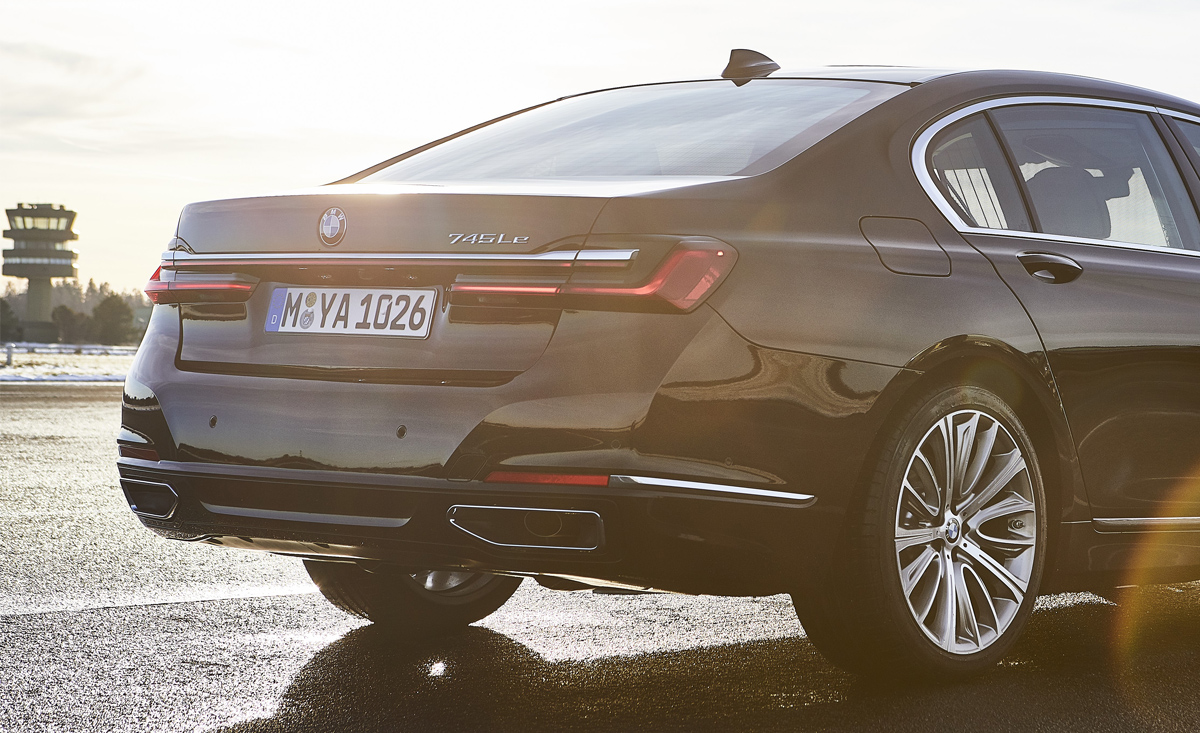
Other suffixes like “L” mean long wheelbase, “CSL” stands for Coupe Sport Lightweight, “Ti” is for Turismo Internazionale, and “iS” is for Injected Sport.
The letters “GT” may also be present in the nameplate, in which case the car will offer increased boot space and a higher driving position than the non-GT variants, and always four doors.
“LCi” is short for Life Cycle Impulse, and is affixed to the mid-life update of the vehicle. In more practical terms, the seventh generation of the 3 Series was launched in 2019 and updated in 2023, so the pre-update version is simply called the 3 Series, while the facelifted variant is the 3 Series LCi.
All-wheel drive vehicles then have “xDrive” attached to their name, too, regardless of body style.
The “sDrive” badge, on the other hand, tells you if a vehicle is front or rear-wheel drive, but is only affixed to the SUV and roadster cars and not the sedans, hatchbacks, or coupes.


 Loading ...