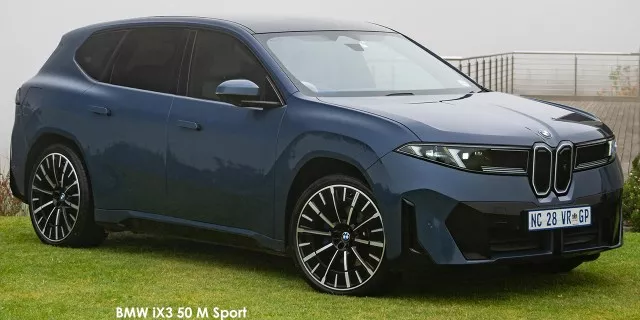
A growing trend in the automotive scene in recent years has been the shift away from body types like hatchbacks and sedans towards crossovers, SUVs, and bakkies.
These larger vehicles do have their advantages, from better interior space to a heightened ground clearance, but one of the more common arguments in favour of models like SUVs is that they are much safer than other cars.
While there is some truth to this, the reality is that things are much more complicated than “bigger equals safer”.
Bigger doesn’t always mean better
The primary rationale behind bigger cars being safer comes down to basic physics, as force is calculated as mass times acceleration.
In layman’s terms, the larger an object is, the more force it will hit with than a smaller object travelling at the same speed, which in the context of a car accident generally means something like an SUV will collide with more force than a hatchback and will be proportionally less affected by the opposing force acting on it.
Not only that, but larger vehicle bodies also provide more of a crumple zone in a crash, which can help mitigate some of the forces being inflicted on the cabin.
This is great news for the occupants of the heftier model and why we tend to generalise that larger cars are safer, but it comes at the cost of those on the receiving end of the accident.
Needless to say, getting hit by a fast-moving object twice the size of what you are driving is very dangerous, but momentum alone does not tell the full story.

The other issue that SUVs and bakkies present is that they tend to have higher ground clearance with bonnets that rest much higher than what you see on a sedan, which makes them much more of a threat to other cars.
In car-safety tests there is a concept known as “crash compatibility” which refers to how two cars interact with one another in a collision, and how well they ensure the safety of not just their occupants, but those in the other car as well.
Again, mass is one of the main determinants here with heavier vehicles being more dangerous than lighter ones, but the height, shape, and design of the car are also important.
In a head-on collision between similarly sized passenger cars, their front ends effectively crumple into each other making them “compatible” in a crash, but this principle does not work when a bakkie with a stiff 4×4 chassis and a bonnet that sits several inches higher than a hatchback’s come into contact with one another.
You can see the difference in front height between a bakkie like a VW Amarok and a hatchback like a VW Polo below:

It’s also important to mention that other road users like pedestrians and cyclists are even more at risk of big cars than motorists for this same reason.
In an accident with a low-bonnet car like a sedan, a pedestrian will likely be hit in the legs or lower torso and has a better tendency to be flung over the top or side of the car.
While this is obviously still extremely dangerous for the victim, it is a more ideal outcome than what can happen with a high-riding truck or SUV.
In this situation, the vehicle is more likely to connect with the person’s full torso or even their head, inflicting more severe injuries, and since the bonnet is too high for the person to be picked up and flung over by the impact, they are more likely to be pushed under the car instead, adding another potentially lethal element to the crash.
This is why NCAP ratings now include a “vulnerable road users” category in addition to the adult and child occupant scores, which assess new models based on how damaging they can be to cyclists and pedestrians.
One more issue that many new SUVs and bakkies tend to have is that their large bonnets create a front blind spot that can extend as much as 4.7 metres on the biggest American autos, which is particularly dangerous for children and people in wheelchairs who are not tall enough to be seen by the driver.
Carmakers are addressing these issues by adding cameras and object sensors, which is why the NCAP test also has a category for the amount of safety assistance equipment on the model, but it nevertheless shows that drivers of these larger cars need to be even more aware of their surroundings than they would be in a smaller car.



 Loading ...

-2026.10.webp)