New VW Caravelle gets the green light for South Africa


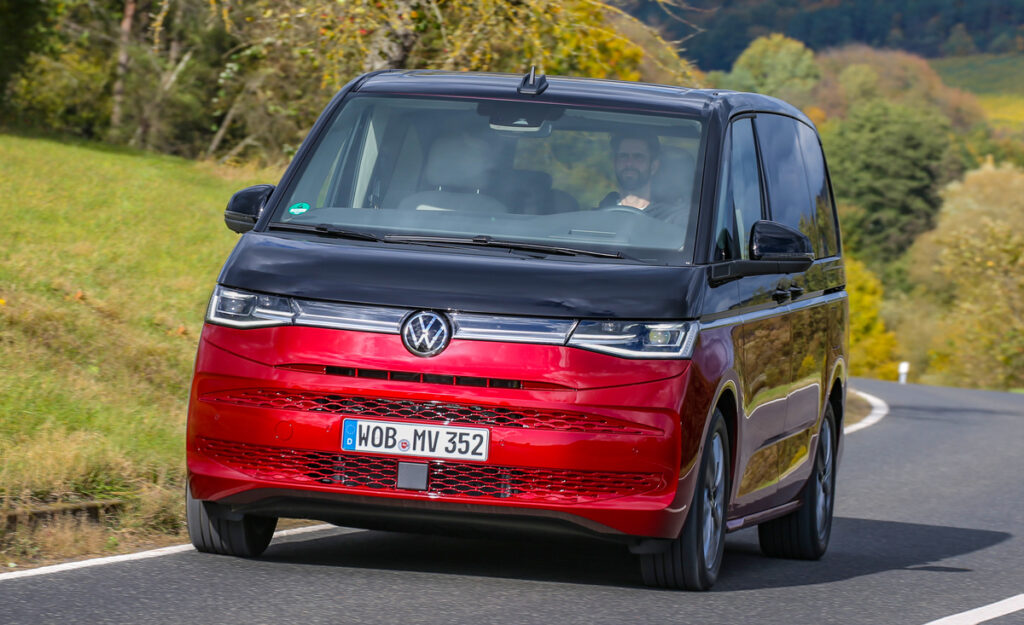
VW has officially announced that the new Caravelle will arrive in South Africa towards the mid-year of 2026.
The Caravelle minibus is an iconic model with a long history in South Africa, as the first generation units were produced more than seven decades ago at Volkswagen Group Africa’s factory in Kariega.
Since then, the vehicle has gone through multiple generations, from the original T1 all the way to the recent T6.1.
Now, the carmaker is preparing to launch the new Caravelle T7, which will adopt a plug-in hybrid (PHEV) powertrain.
“Looking ahead, Volkswagen is firmly future-ready for the South African market, embracing electrification through plug-in hybrid models that balance efficiency with everyday usability, a clear statement of intent that the spirit of the original Bus lives on, re-engineered for a cleaner, smarter future,” said the company.
What to expect

The next-gen Caravelle is a PHEV with an electric 4Motion all-wheel-drive system, featuring an electric motor over both axles.
The dual e-motors are paired with a 1.5-litre, four-cylinder turbocharged petrol (TSI) engine, which generates 130kW and 250Nm by itself.
Depending on the driving situation, the combustion engine will receive assistance from the front-mounted e-motor, which produces 85kW, and, if necessary, the rear-mounted e-motor with 100kW.
Once the car reaches a speed of 130km/h, the rear axle is automatically removed from the drive system by a decoupling unit, a disengagement clutch. The rear e-motor is also shut off to conserve energy.
Powering the e-motors is a 19.7kWh battery, which affords an all-electric driving range of 91km.
It supports 11kW AC charging, as well as 50kW DC fast charging, the latter of which can top up the cells from 10 to 80% in approximately 26 minutes.
A side benefit of the large battery is that the Caravelle also supports full air conditioning while idle for up to 30 minutes, and users will be able to set the cabin climate temperature before getting in.
The car itself has four driving modes for Eco, Comfort, Sport, and Individual, which determine how the electric drivetrain functions.
Eco mode reduced the power and torque, and changes the accelerator pedal response to encourage a more efficient driving style.
Comfort, naturally, improves the quality of the ride, while Sport ensures that the system is always prepared to deliver maximum system power with a sharper throttle response.
Individual will then allow users to customize the vehicle’s settings, such as the steering and adaptive chassis control to suit their preferences.
The electric 4Motion system also has unique benefits over a conventional four-wheel-drive system, as it has full control over the rear axle.
“This feature is a major advantage, as it allows for more power and traction as well as more dynamic torque control. The power distribution of the electrically driven rear axle can be ideally adapted, particularly on uneven surfaces,” explained the automaker.
“With this drive system, the vehicle can be driven entirely via the rear axle with spinning wheels on the front axle, for example this is possible only with a high level of design effort on conventional all-wheel drive vehicles.”
VW has yet to reveal the Caravelle’s equipment sheet, but considering its upmarket positioning, it is sure to come with high-end features like leather upholstery, a large infotainment screen with Apple CarPlay and Android Auto, a digital driver display, and an extensive Advanced Driver Assistance Software (ADAS) suite with functions like adaptive cruise control with stop-and-go, blind-spot detection, lane-keep assist, parking sensors, and a rearview camera.




 Loading ...