R7,000 traffic fine quota rumour circulating in South Africa’s richest city


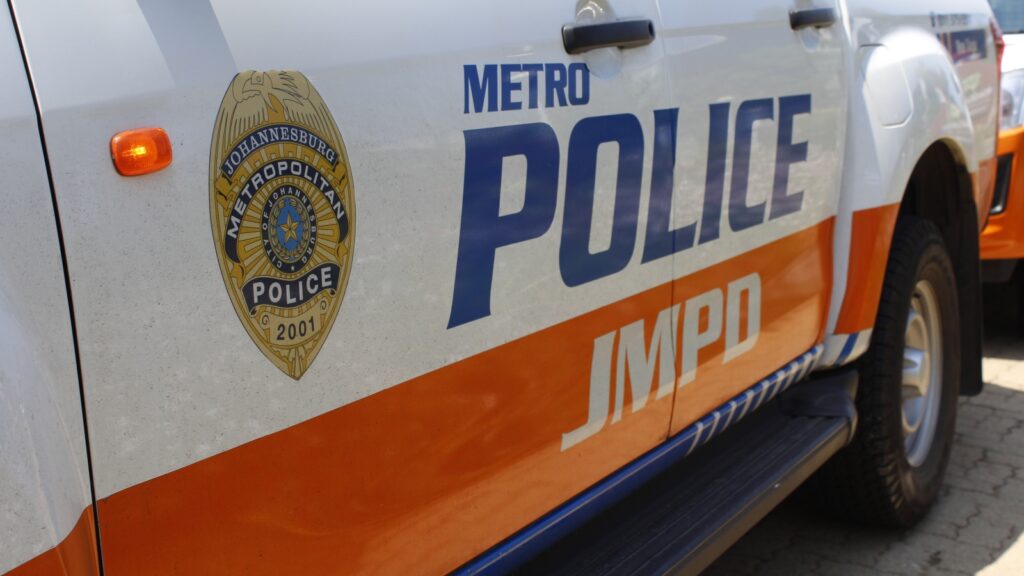
The Johannesburg Metropolitan Police Department (JMPD) has denied a recent claim that it has instructed its officers to collect at least R7,000 in traffic fines per day.
This claim was made by the Democratic Alliance (DA) spokesperson for community safety, Michael Sun, who alleged that officers told the party that they are under pressure to meet this qouta.
According to Sun, officers who approached the party revealed that they would be offered overtime payments if they met their daily targets.
Consequently, traffic officials are incentivized to focus on issuing fines instead of bylaw enforcement, traffic management, or crime prevention.
Sun argued that this tactic is shifting the focus of policing away from public safety towards revenue collection.
The DA believes this is one of the main reasons for the increase in police roadblocks across the metro, particularly at busy intersections.
The party stated that many of these roadblocks are labelled as “roadside checks” to avoid the stricter legal requirements prescribed in the National Road Traffic Act and SAPS Standing Orders.
These requirements include authorization from a senior officer, proper signage, and adequate warning to motorists.
Sun argued that roadblocks that do not follow these measures are not aimed at improving traffic flow or driving behaviour, and are merely an excuse to fine motorists.
The DA called on Gauteng Premier Panyaza Lesufi to intervene, remove any revenue-based police quotas, and ensure that the JMPD prioritizes public safety.
It also submitted questions to the Premier asking for clarity on the legality of these instructions, the roadblocks, and the use of public resources.
The city responds
The JMPD has denied the DA’s allegations, stating that has not instructed its officers to meet a R7,000 traffic fine target.
It stressed that its primary mission is to maintain safety and order on the roads, and not to collect revenue.
JMPD spokesperson Xolani Fihla said that traffic fines are issued based on observed infractions, and not because the officers are expected to issue a certain number of fines per day.
“It is important to clarify that while issuing citations is a necessary part of enforcing traffic regulations, there is no quota system that officers are required to follow,” he explained.
“The department’s focus is on ensuring compliance with traffic laws to prevent accidents and protect the lives of all road users, not on generating a specific number of traffic fines.”
Fihle added that the performance of officers is assessed based on their overall effectiveness in improving the safety of a community, and that their evaluation is not based on the number of fines they have issued.
“The integrity of our operations is paramount, and all actions are carried out in strict accordance with the law.”
Searching for funds
The allegation that the JMPD is pressuring officers to issue fines comes at a time when the City of Johannesburg is facing a severe financial crisis.
The Auditor-General has flagged over R22 billion in irregular expenditure and hundreds of millions in wasteful spending, reported BusinessTech.
As a result, the National Treasury has warned that funding to the city could be cut if the situation does not improve.
Joburg mayor Dada Morero has been given 14 days to respond.
Julius Kleynhans, Executive Manager for Local Government at the Organisation Undoing Tax Abuse (OUTA), claimed the city’s financial woes indicate a lack of accountability.
“Over a year ago, we saw a billion rand taken back by Treasury from conditional grants that were unspent. When those in charge don’t spend allocated money, they should be held to account,” he said.
“Over the last five years, Johannesburg has been a target for looting, and when no action is taken against those responsible, it raises questions about whether leaders are involved.”
Kleynhans argued that the city needs stronger oversight from council, competent administration free from political interference, and performance measures that promote service delivery and economic growth.
“Last year, the city received R7.12 billion for free basic services, yet it cannot account for the households that benefited. The same goes for infrastructure grants. Residents can see the money hasn’t been used effectively,” he said.
While Morero has deployed a “bomb squad” to investigate service delivery issues, no meaningful change is expected to take place so long as there are no changes in leadership.
“If the mayor were serious, those who failed to do their jobs would have been removed already. Instead, new layers are being added above ineffective staff,” said Kleynhans.
“If we had competent leaders in place, the system could work, but the political issues must stop.”




 Loading ...