Dial-a-Ride court case raises concerns over wider transport problems


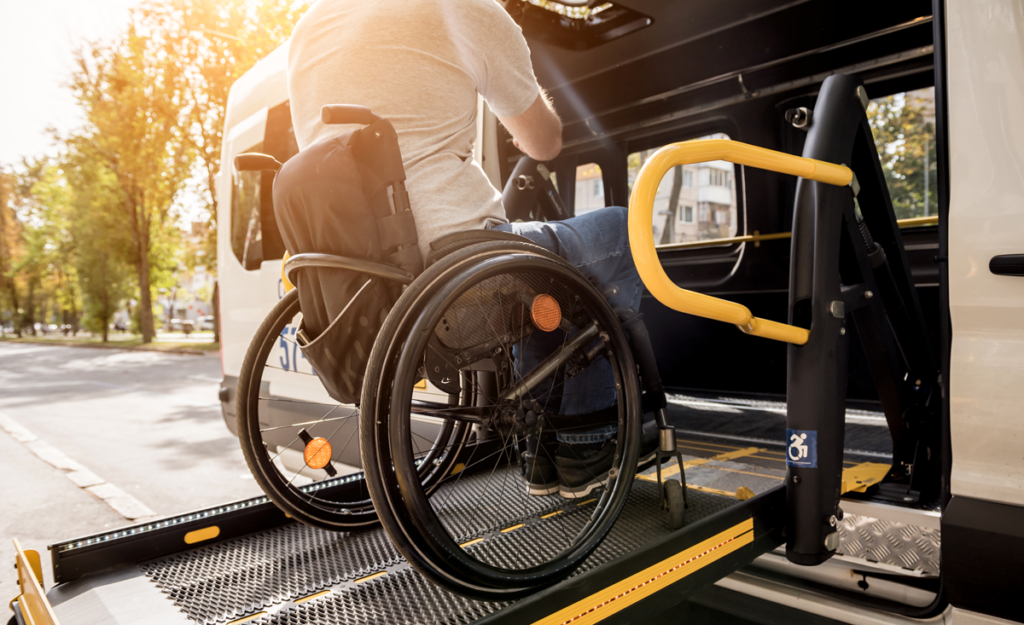
The City of Cape Town hopes the national government will be prompted to act on its promises to improve disability transport accessibility following the recent Dial-a-Ride court case.
This court case comes from the Western Cape Network on Disability, which raised concerns over a lack of disability accessibility in the service to the Western Cape High Court.
In a letter to the public in December 2024, President Cyril Ramaphosa stated that South Africans with disabilities were excluded from public transportation.
He noted that minibuses were an example of this, with the taxis having limited capacity for accommodating wheelchairs and other mobility aids.
“As a result of these serious challenges, many in the disabled community find themselves poor, unemployed, and excluded. They suffer ill-health and poor quality of life,” he said.
Earlier in 2024, at the Transport Summit on Universal Accessibility and Accessible Transport for All in April, the Department of Transport committed to offering universal accessibility to transport.
The Department did note that there are barriers preventing those with disabilities from exercising their constitutional right to freedom of movement.
This led to the Department adding provisions for improving public transport accessibility in its framework for 2024 to 2030.
However, this commitment has seen little real progress with actual funding and projects remaining to be seen.
Therefore, the recent announcement from the City of Cape Town that it planned to reduce its Dial-a-Ride service was met with strong opposition from civil rights groups.
Dial-a-Ride case
The Dial-a-Ride service was created in 2002 as a means of providing a specialised door-to-door service for people with mobility impairments.
This service would go on to expand in the following years to a level not initially expected when it was introduced.
However, the city has received no funding for the service from the national government and instead has funded the services through municipal rates since its inception.
Consequently, the service is operating unsustainably at a monthly budget deficit of nearly R1 million.
The city has requested funding from other branches of the state, but has met with little success thus far.
As a result, Dial-a-Ride has not taken any new applicants since 2018.
The city has, however, noted it welcomes the court case as it will bring light to the current problems and has committed to upgrading its public transport system to accommodate people with disabilities.




 Loading ...