The Administrative Adjudication of Road Traffic Offences (Aarto) system has been delayed by several months – an outcome that many industry stakeholders saw coming.
The Organisation Undoing Tax Abuse (Outa) recently stated that they are not surprised that Aarto has been delayed, citing several issues with the new laws.
Aarto is the legislation that will make significant changes to South Africa’s traffic laws, introducing a new demerit system where motorists accumulate points on their driver’s licences for various infringements.
The number of points received depends on the severity of the infraction, and once a person receives 15 points, their licence is automatically suspended.
If an individual’s licence is suspended three time, their licence is cancelled and they will be required to retake their driver’s exam to gain a new one.
A demerit point will be removed from a licence every three months.
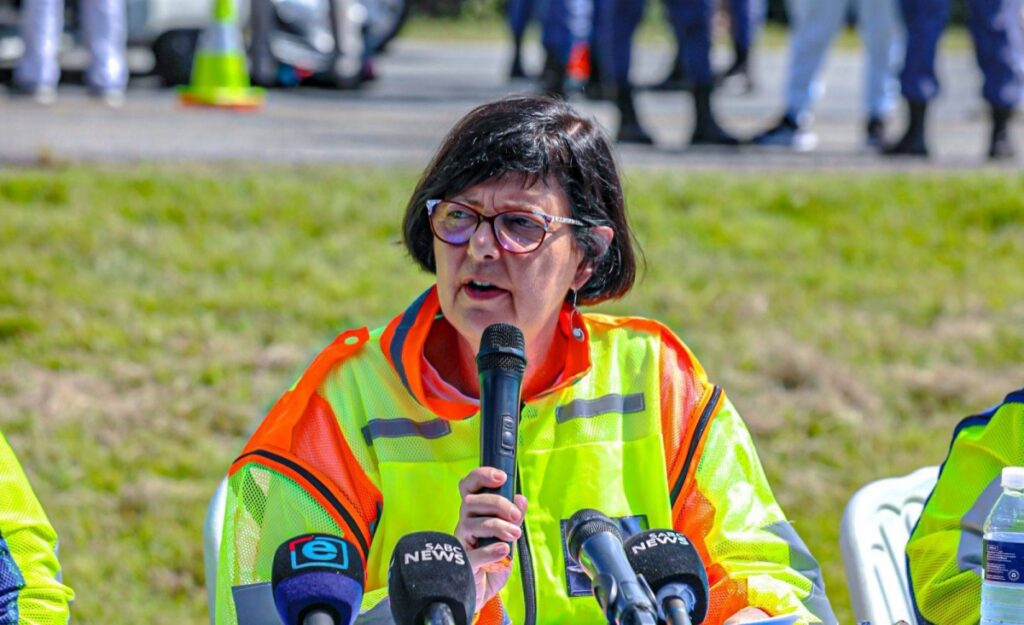
Aarto was meant to go into effect across major municipalities nationwide on 1 December 2025, but Transport Minister Barbara Creecy recently announced that the national rollout date has been pushed back to 1 July 2026.
Commenting on the delay, Outa CEO Wayne Duvenage said that Aarto is not feasible in its current state.
“This delay was inevitable,” he said.
“Aarto was never ready, not in 2020, not in 2024, and certainly not now.”
“These repeated postponements confirm what we have warned all along: the system is unworkable in its current form.”
He added that Outa supports any system that leads to an improvement in road safety, but that Aarto is not that system.
“The regulations must be clear, fair, and functional. Aarto fails that test.”
Outa claimed that the new regulations were hastily pushed through without public participation, which is deeply concerning for citizens.
The latest changes to Aarto represent a complete rewrite of the version that was first published for public comment back in 2020, according to Duvenage.
Additionally, the most recent amendments, published on 31 October 2025, include pages of illegible text in the schedules that list offences, fines, and demerit points.
“Citizens cannot comply with laws they cannot read,” said Duvenage.
“That’s not enforcement; that’s confusion.”
He highlighted the fact that several municipalities have expressed that they want to withdraw from Aarto, which they view as an overly complicated and expensive bureaucratic process that won’t result in meaningful change to road safety.
“This postponement should be used to get Aarto right.”
“If government is serious about road safety, it must return to the drawing board — build a transparent, practical system that supports enforcement, earns public trust, and genuinely saves lives.”
The Department of Transport stated that the decision to delay Aarto was based on an assessment that showed some municipalities were not ready to implement phase one of the new system on 1 December 2025.
“The Department will soon publish the new proclamation with new staggered implementation dates, the 1 July 2026 being the official implementation date,” it said.
“The phased approach of implementation will still be maintained as initially envisaged.”
Transport Minister should resign

Driving.co.za managing director Rob Handfield-Jones is another industry voice who was not surprised by the Aarto delay.
“The finalised regulations are a cluttered mess, which could have considerable vulnerability in any court challenge on their merits, let alone the lack of consultation apparent in their finalisation,” he said.
Handfield-Jones noted that the department has been repeatedly warned about the issues that Aarto will present, yet it has continued regardless.
Aarto will radically change South Africa’s traffic laws by separating violations into minor infringements and serious offences.
Traffic infringements will be handled by the Road Traffic Infringement Agency, while serious offences will be treated as criminal matters.
Currently, all fines issued in South Africa, excluding those issued by the metro police departments in Johannesburg and Tshwane, are subject to a criminal process.
Handfield-Jones claimed that Aarto’s delay is an embarrassing U-turn for the Department of Transport.
“It has been so long since the Aarto pilot project was launched in 2008 that I’ve lost count of the number of times the launch of Aarto has been postponed, but we must be into double figures by now,” he said.
“The pilot project was supposed to conclude in December 2009, with Aarto’s launch in mid-2010. It is now 16 years later and 27 years since Aarto became law in 1998.”
He claimed that the Aarto debacle highlights repeated incompetence on the Department of Transport’s part.
“This is a flagship project which has yet again failed spectacularly and embarrassingly,” he said.
“It is impossible to have confidence in the Minister of Transport — she should resign immediately.”





 Loading ...