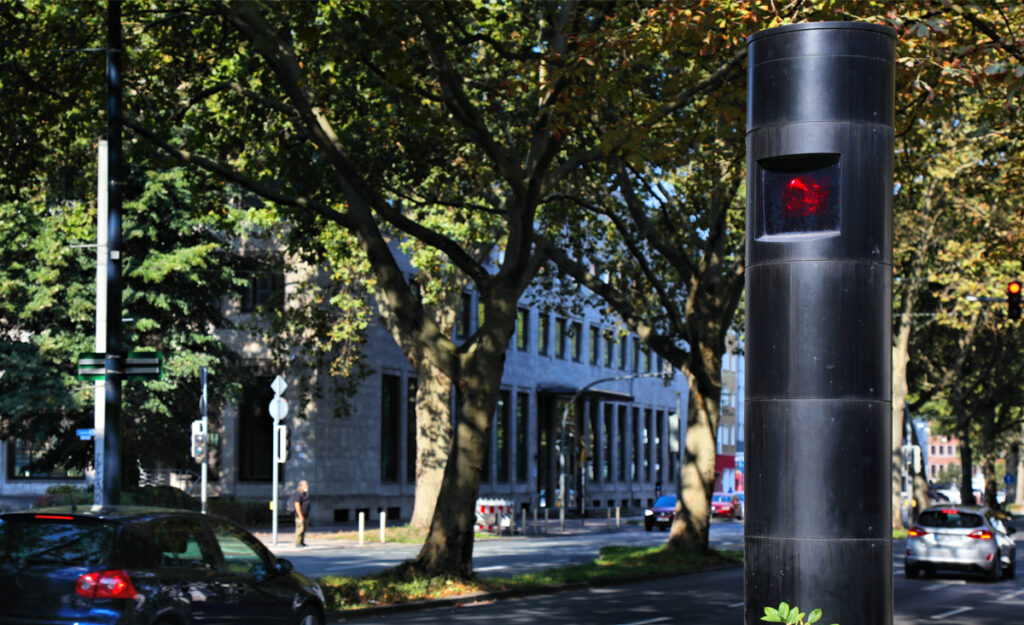
The City of Cape Town plans to install new high-tech speed cameras around the metro that are less conspicuous to motorists.
The number of permanent speed cameras in Cape Town has grown dramatically over the last five years, increasing 196% from 26 to 77 placements as of November 2025.
However, city officials insist that this is not enough and that more fixed cameras will be introduced in the near future.
Additionally, more police officers will be equipped with mobile speed traps and deployments will become more frequent.
In a recent interview with CapeTalk, Mayoral Committee Member for Safety and Security Alderman JP Smith explained that new cameras are being installed throughout the city.
He confirmed that the 77 cameras currently in operation includes both speeding and red light cameras.
“It’s probably not enough. We should probably have a significantly larger number if you compare us to other cities around the world,” he said.
While discussing the incoming cameras, Smith explained that the new models are a more advanced design and are less conspicuous to motorists.
“The cameras are of a slightly more modern design. We’re less likely to see a flash because they use optical systems that don’t require visible flash enhancement. The infrared flash is not visible to the human eye,” he said.
Hidden vs visible cameras

When asked whether speed cameras actually lead to meaningful change in driver habits, Smith admitted that the impact is limited.
“Driver behaviour is changed by a camera only in the immediate vicinity of that camera. People will slow down for the camera and speed up immediately after,” he said.
“Cameras are therefore placed where speed needs to be reduced—based on accident data, serious or fatal collisions, or community petitions about congestion or red-light violations.”
The issue is that the individual only received the fine well after the infraction is recorded, which creates a disconnect between the person’s actions and consequences.
“The connection between bad behaviour and punishment is not immediate. So, I don’t think cameras on their own are particularly effective in shaping driver mindset.”
Smith argued that manual speed traps are more effective because their location is not predictable.
Furthermore, he stated that speed cameras would be more effective and reduce loss of life if they were hidden, but that the public insists that cameras should be visible.
“You should, of course, never be speeding, so you shouldn’t be worried about where the cameras are,” Smith said.
“However, many people spend a vast amount of energy arguing with us about whether cameras are too concealed. Our speed enforcement policy, therefore, emphasises visibility—though I don’t think it necessarily aids road safety.”
In addition to speed cameras, the City of Cape Town is ramping up visible traffic enforcement.
One of the main areas of concern is intersections, as the city has observed a worrying level of disregard for traffic lights and stop signs.
“So over the last seven or eight months, we’ve stepped up our enforcement there, and with the new neighbourhood safety officers being deployed, we’re doing more at stop streets and traffic lights.”
To combat this, Cape Town wants to acquire new AI cameras that can detect a wider array of driving offences.
However, the city is currently awaiting approval from the Director of Public Prosecutions.
“Once approved, they’ll help detect vehicles driving on the shoulder, over solid lines, or committing similar offences.”
It is also testing new technology that can help traffic enforcement to detect when a person is not wearing a seatbelt.




 Loading ...