
Driver’s licence renewal fee hike on the cards for South Africa


The Department of Transport (DoT) is considering hiking driver’s licence renewal fees as a result of the eight-year validity period extension.
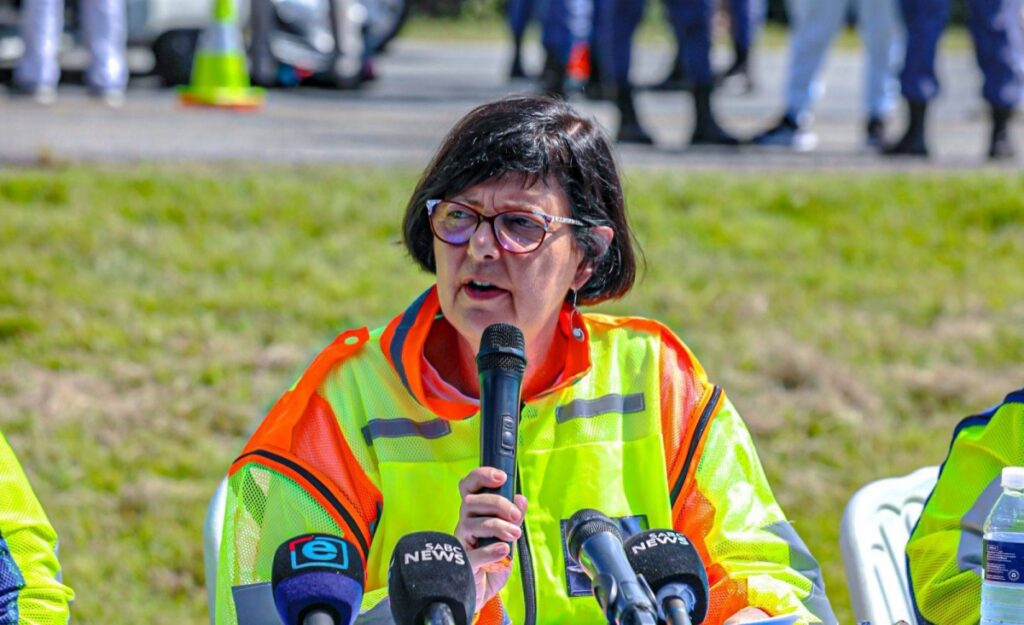
This is according to Transport Minister Barbara Creecy, who recently spoke to Newzroom Afrika about the department’s plans for the licence card overhaul.
Creecy said that the DoT isn’t rushing the process to give South Africa a longer eight-year licence validity period to avoid “unintended consequences.”
She added that the extension will definitely take place, but that the DoT is waiting for the results of its study to determine the financial repercussions of the change.
“Once we take the decision, we should not be in a situation where later we say, ‘Whoops, there were unintended consequences,’” said Creecy.
“But I do hope that this year, this is something we can put to bed once and for all.”
The minister explained that increasing the validity period will result in less frequent renewals and a loss of revenue for the Driving Licence Card Account (DLCA), the entity under the DoT responsible for producing the nation’s licence cards.
As a result, the department is considering hiking renewal fees to cover the difference.
“There could be an implication that there isn’t enough revenue if it’s every eight years, and we may have to increase the tariff,” said Creecy.
“So, that’s the issue that one is looking at, how we balance what it costs to produce the licence with the fact that we will be giving the public a longer period of time for licence validity.”
The transport department is not about making money – Outa

The three-year extension equates to a 46% increase in the driver’s licence validity period, which is expected to have a noticeable impact on the DoT’s revenue from renewal fees.
A loss of revenue from less frequent renewals was even cited as one of the primary reasons why the department should not increase the validity period.
This is despite the fact that South Africa’s five-year licences are well below the international norm, as driver’s licences in most countries are valid for eight to 10 years.
This stance was condemned by the Organisation Undoing Tax Abuse (Outa), which argues that revenue should not be a primary concern for the DoT.
Outa CEO Wayne Duvenage previously stated that revenue should not be a priority for the government, as it is not intended to generate a profit and must only be sufficient to cover expenses.
“Our view is that the government is not in the business of making money. It is in the business of covering costs,” he said.
“If you have fewer licences to issue, you will have fewer costs and will therefore need less revenue to cover those costs.”
Outa argued that the validity period should be increased further to 10 years, as this would drastically reduce the administrative burden faced by citizens and the state.
“It is not about costs or money for the government. It is about the efficiency of the government and to reduce the administrative burden and the costs we have to suffer as the public to renew these licences.”
“Plus, it takes a lot of the pressure off the government with regards to the printing machine breaking down and services not being delivered.”
New digital licences

South Africa is also working on a new digital driver’s licence that could replace the need for physical cards altogether.
Last year, the DoT signed a Memorandum of Understanding with the Government Printing Works (GPW) to outsource driver’s licence producing after the department’s only printing machine broke down.
“We want to bring Home Affairs in, in the interim, to assist us with printing cards. We have integrated our IT systems. We have a prototype card,” said Creecy.
“Obviously, we need to go to Cabinet now that the Idemia tender has been ruled as irregular by the courts. We need to update Cabinet, and then we would want to move forward.”
Importantly, this collaboration between the Department of Transport and the Department of Home Affairs is part of a future plan to integrate South Africa’s driver’s licences and IDs into a single document.
“That obviously improves the integrity of both documents, but what it also does is it presents us with an opportunity going forward that we may only need to have one card and over time, that one card could become digital,” she said.
Minister of Communications and Digital Technologies Solly Malatsi showcased a working prototype of South Africa’s new digital licences at the Global DPI Summit in 2025.
“It has all the credentials, including the names, the card number, and in there, it will also have the category of the licence, including whether you’ve got any traffic fines or not,” he said.
It is accessed via the MyMzansi App, which also lets users renew their licences.





 Loading ...