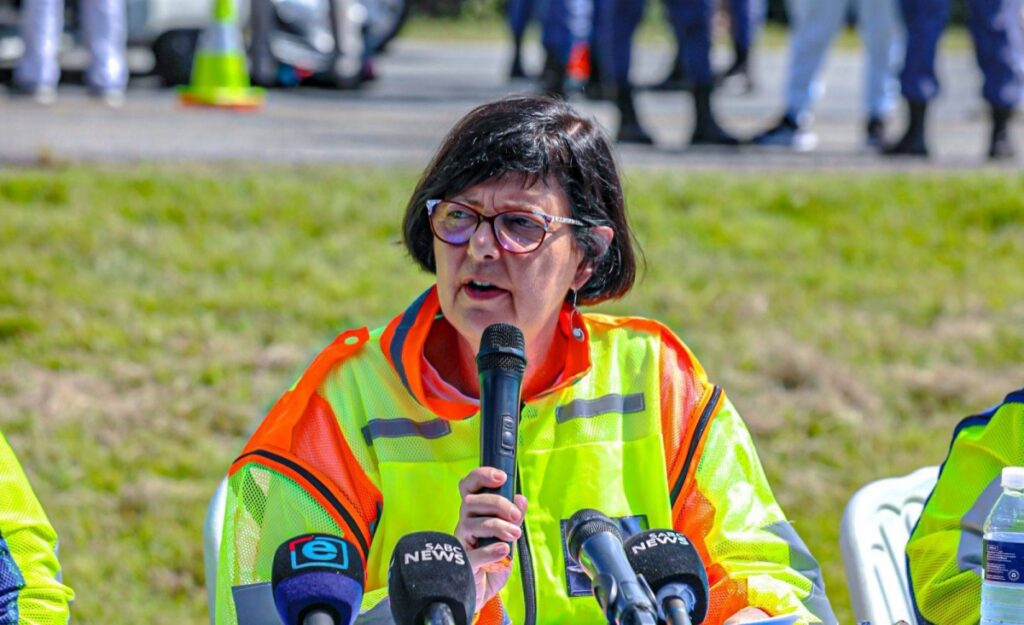
Following the release of last year’s road safety report by Transport Minister Barbara Creecy, there have calls for motorists to prioritise roadworthiness tests to save lives.
The Vehicle Testing Association (VTA) welcomed the reported 5% reduction in festive season road crashes and fatalities, but also raised its concerns regarding ongoing road crises.
It warned that the loss of more than 1,400 in a period of slightly more than a month highlights a road safety crisis demanding stronger preventative interventions.
Minister Creecy announced that 1,427 fatalities from 1,172 crashes between 1 December 2025 and 11 January 2026 were recorded, which was the lowest number of crashes recorded in five years.
The VTA said that although this represents progress, the high number of crashes during peak festive season periods, coupled with the continued loss of life, highlights the need for a more holistic approach.
The association’s National Director, Julian Pillay, believes that while improved enforcement and awareness campaigns are important, they will not succeed in isolation.
“Road safety cannot rely solely on driver behaviour interventions. Vehicle fitness must form part of the solution,” he explained.
The 2025/26 Festive Season Road Safety Campaign data shows that passenger vehicles accounted for approximately 55% of all crashes during last year’s festive period.
The VTA highlights that passenger vehicles fall outside of South Africa’s periodic roadworthiness testing regime.
“Smaller vehicles represent the majority of vehicles on our roads, yet they are not subject to regular or periodic roadworthiness testing,” said Pillay.
“Without comprehensive accident investigations, it is impossible to determine how many of these vehicles may have been mechanically unroadworthy at the time of a crash.”
He further highlighted that even in accidents where driver impairment is to blame, which includes drinking and driving, vehicle condition can also significantly influence the severity and survivability of a crash.
“Mechanical failures caused by worn tyres, faulty brakes, suspension defects or lighting issues can turn an otherwise avoidable incident into a fatal one,” he explained.
Pillay noted that periodic vehicle testing is not about blame, but rather about prevention.
Time for change

The Festive Season Road Safety Campaign report shows that more than 40% of road incidents and fatalities occurred during the peak festive season, between 15 and 28 December.
Travellers had already reached their destinations by this stage, and were likely engaging in social activities, which the VTA says reinforces the need for prevention measures that extend beyond enforcement.
The Retail Motoring Industry Organisation (RMI) has joined the VTA in its advocacy for a phased introduction of periodic testing for all vehicles.
This, it says, aligns with international best practice as a complementary road safety intervention which supports existing enforcement and education efforts, but does not look to replace them.
The RMI is looking to engage with the Department of Transport and other relevant stakeholders in hopes of strengthening road safety outcomes.
It hopes to include in its discussions the role of periodic vehicle testing as part of a comprehensive national road safety strategy.
“If we are serious about reducing fatalities in a sustained and meaningful way, we must address the condition of the vehicles sharing our roads every day,” noted Pillay.
“Periodic testing provides an objective, preventative safeguard that protects all road users.”





 Loading ...