
BMW’s warning over 25% price hike for new cars in South Africa


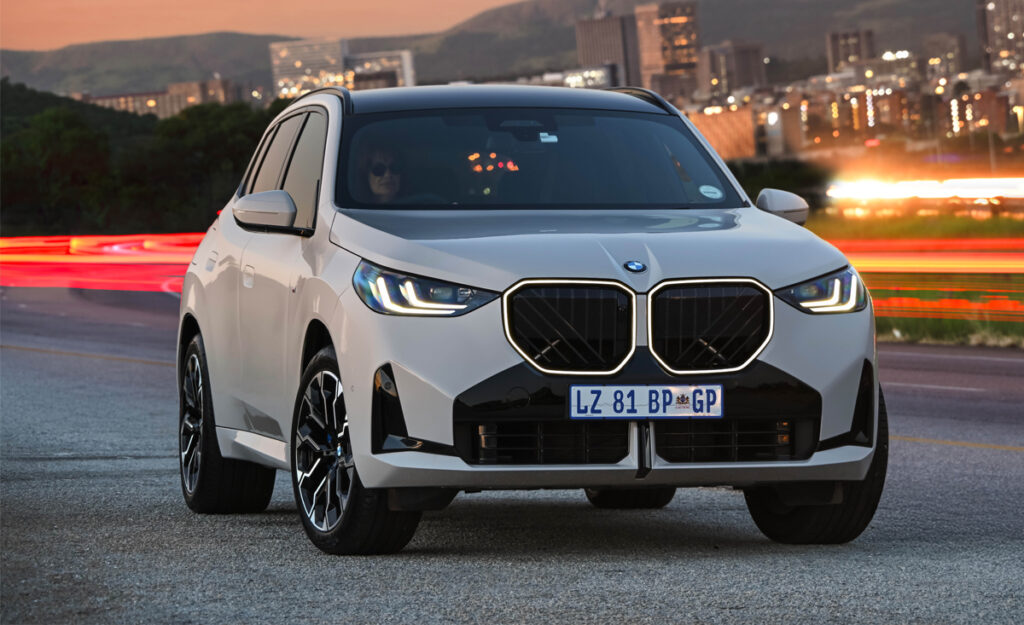
BMW South Africa CEO Peter van Binsbergen has warned that the government’s plan to potentially double import duties on new vehicles will have a detrimental effect on the automotive industry as a whole.
In late January, it was revealed that the Department of Trade, Industry, and Competition is currently running an internal review to assess measures to stem the tide of imported cars, particularly from India and China, out of concerns that they are undermining local manufacturers.
One of the options under consideration is an amendment to South Africa’s tariff schedule, which would raise import levies in line with the World Trade Organisation (WTO) concessions for most-favoured nations.
South Africa currently imposes an import tariff of 25% on passenger cars, but the government is thinking of doubling this to 50% – the maximum allowed under WTO agreements.
However, while this move is ostensibly meant to protect local carmakers, original equipment manufacturers (OEMs) like BMW are urging the government to reconsider, warning that using tariffs as a blunt instrument will have long-reaching and unintended consequences for the industry.
Van Binsbergen, who is also the president of the Automotive Business Council (Naamsa), said that OEMs do not want tariffs to be used as a “big hammer” to deter cheap imports.
He explained that simply hiking import duties is likely to disrupt the entire market and will ultimately make cars much more expensive for consumers.
“A 50% maximum tariff would make all imported cars radically more expensive,” he said, adding that the entry-level market would be hit the hardest.
A loss for consumers and carmakers

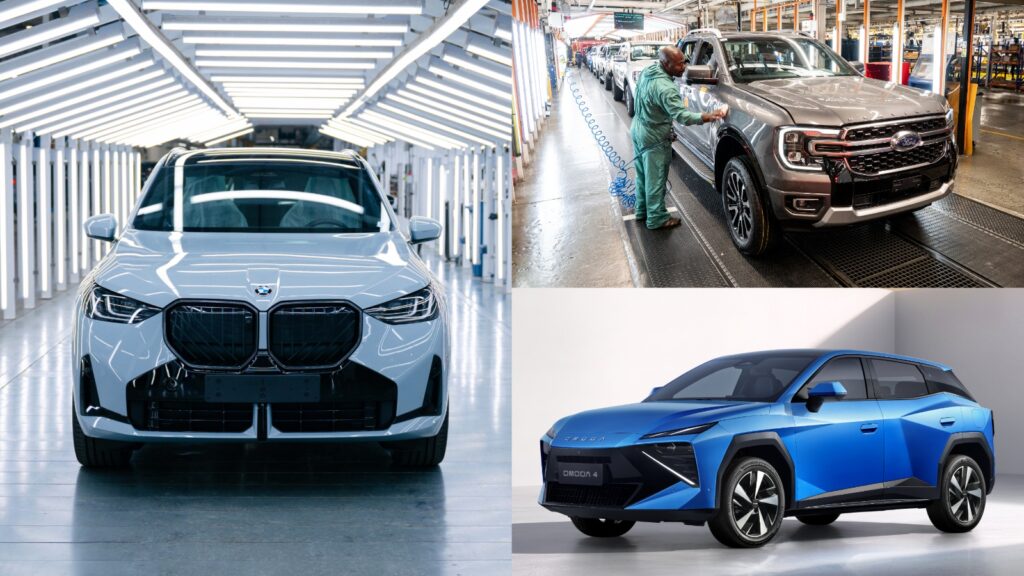
Van Binsbergen noted that higher import tariffs would not only affect foreign brands like GWM and Tata, but also OEMs such as BMW, VW, Ford, Mercedes-Benz, Nissan, and Toyota.
The only model that BMW produces in South Africa is the X3 SUV, meaning that the rest of its catalogue could potentially be impacted by the new tariffs.
“If you went up to 50% duties, I would have to use double the incentives to import my cars and probably run out of offsetting mechanisms for the import duties on those cars as well,” Van Binsbergen said.
“That is the unintended consequence; it would affect all of us, and it would hurt the consumer as well, as it would make cars more expensive for everybody. That’s not what we want. That’s a blunt instrument.”
The labour union Solidarity has expressed similar concerns, warning that doubling import tariffs will not help the local auto sector and will put even more pressure on households.
Theuns du Buisson, an economic researcher at the Solidarity Research Institute, cautioned that this could devastate the entry-level market in South Africa.
“By raising the tariff from 25% to 50%, the prices of the cheapest vehicles on the South African market could increase from around R180,000 up to approximately R225,000,” he said.
This issue would be compounded by the fact that more cars would be pushed into the luxury tax bracket, raising prices even further.
Du Buisson questioned the logic of the proposed tariff hike, arguing that cheaper imports do not directly compete with locally-made cars.
“Ironically, the cheapest locally manufactured vehicle costs about R100,000 more and is therefore beyond the reach of many entry-level buyers,” he said.
For context, the cheapest passenger car available in South Africa right now is the Indian-made Renault Kwid, which costs R178,799, making it R93,101 cheaper than the most affordable domestic model – the R271,900 VW Polo Vivo.
Du Buisson warned that higher tariffs will fuel the perception that all cars are unaffordable, which will negatively impact consumer sentiment and sales.
Solidarity argues that South Africa should explore alternative solutions to assist the auto industry, like encouraging carmakers with semi-knocked-down assembly facilities (such as Mahindra) to upgrade their operations to full manufacturing.
Du Buisson noted that this won’t be enough to solve the issue on its own. “Manufacturers already complain that the local motor market is too small. Either cars must become cheaper, or people must become wealthier.”
One of the key issues is not that imported cars are cheap, but rather that locally-made cars are too expensive – the result of South Africa’s high electricity costs, load-shedding, collapsing infrastructure, and heavy taxes.
“There must be an urgent review of the taxes imposed on local manufacturers, as well as incentives to ensure that this remains in the best interests of taxpayers, consumers and manufacturers, said Du Buisson.




 Loading ...