Traffic light theft is so common that South Africa is switching to stop signs


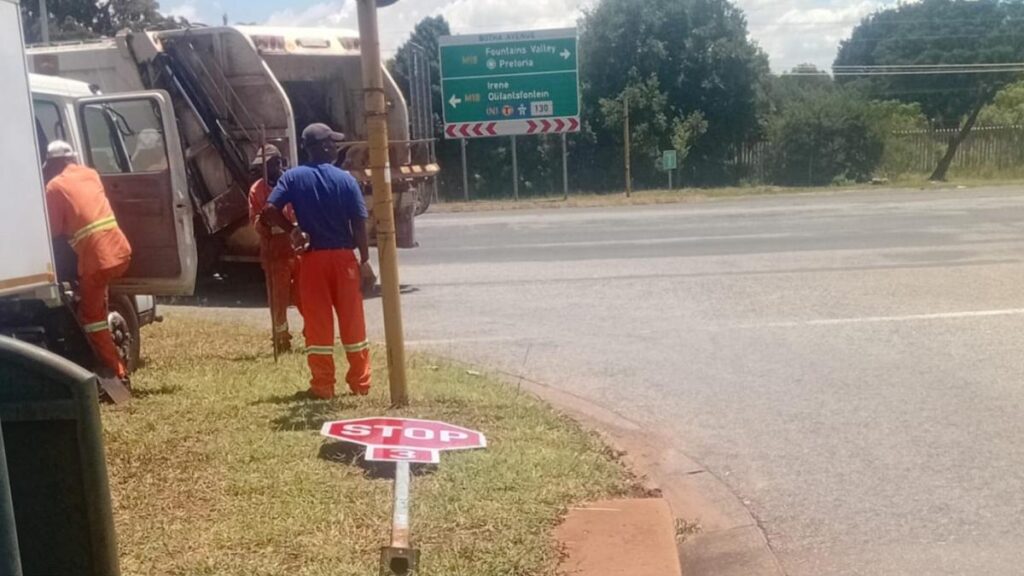
Across South Africa, municipalities are replacing traffic lights with stop signs to minimise losses from vandalism and cable theft.
This week, Freedom Front Plus councillor Wesley Jacobs announced that traffic lights have been decommissioned at an intersection in Centurion, Gauteng.
“The traffic signals at the three-way at Botha and Hoffmeyer has been decommissioned due to constant vandilism,” he said.
Jacobs explained that it has become too costly to keep repairing the traffic lights due to the constant theft of city infranstructure.
Consequently, the roads have been downgraded from robots to a three-way intersection with stop signs.
He urged motorists to comply with the new stop signs and to follow the rules and regulations of the Road Traffic Act.
This is not a phenomenon unique to Centurion, as metros around the country have switched from traffic lights to stop signs due to rampant theft and vandalism.
Most notably, the City of Johannesburg previously identified at least 400 non-functioning signalised intersections.
Many of these traffic lights have had their cables stolen for scrap, while others have been damaged in car accidents, prompting Gauteng Premier Panyaza Lesufi to call on motorists to “stop kissing traffic lights with their vehicles.”
Traffic light repairs and replacements now cost the metro approximately R12 billion per year. One intersection has been vandalised 14 times, forcing the city to replace the lights with stop signs.
Similarly, the City of Ekurhuleni has ceased repairs at several high-risk intersections.
The metro spent roughly R120 million on replacements in a single financial year before calling it quits and de-warranting certain robots.
“Although the installation of the stop signs is a temporary measure, some intersections may have the stop signs permanently,” it said.
In the City of Tshwane, many signalised intersections have essentially become four-way stops after going dark for months at a time.
As a result, the city has publicly weighed the possibility of permanently installing stop signs at high-risk intersections in rural or remote locations that lack 24-hour surveillance.
Replacing robots with stop signs typically results in increased congestion and creates new opportunities for criminals as cars idle in areas where they may otherwise have been able to keep moving.
Cape Town’s solution for traffic light theft

Over the last two years, the City of Cape Town has implemented “tamperproof” traffic lights at high-risk intersections to curb vandalism.
These robots store all of their valuable components in a large concrete base, which is stored underground.
Unlike regular lights, which are connected to the city’s power grid, these signals run on an uninterrupted power supply (UPS) with lithium-ion batteries.
This means they do not have exposed cables that could be a target for thieves, and it comes with the additional benefit that the lights are independent and unaffected by load-shedding.
They are also fitted with vibration sensors, which send an alarm to law enforcement when they detect that a person may be trying to dig out the chamber.
Cape Town’s mayoral committee claims that these traffic signals have been a massive success and that the City of Tshwane and Nelson Mandela Bay have expressed interest in adopting the new strategy.



 Loading ...