
Major changes on the cards for petrol and diesel in South Africa


For years, South Africa’s low petrol quality has stopped major car manufacturers from introducing their newest models, but that is set to change when the country introduces Clean Fuels 2 (CF2).
CF2 was slated for introduction in 2017 to align South Africa’s standard with the Euro 5 standard, which has been in place in Europe since 2011, but several delays pushed the target to next year.
This cleaner fuel regulation limits the sulfur content of diesel from 50ppm to 10ppm, and lowers the threshold for benzene and metal substances in petrol, which already adheres to the 10ppm limit.
Until July 2027, global carmakers will have to contend with poor local fuel quality, postponing high-performance models until at least then.
Karl Beyleveld, an automotive engineer at VW Group Africa and a fuel quality representative for Naamsa, speaking to Cars.co.za, confirmed that there are regions with high levels of metal contamination in their petrol.
“The reality is, the effects of iron and also of manganese, for that matter, are irreversible,” he explained.
Beyleveld explained that these metals can cause several issues, including coating the internal surfaces of catalytic converters, which damages the unit and effectively disables the emissions equipment.
Manganese build-up on spark plugs can cause misfires and lowered fuel economy, while long-term metallic build-up can damage the vehicle and worsen performance.
The delay in the implementation of CF2 can be attributed to the high costs of retrofitting local refineries to produce cleaner fuel.
South Africa’s refineries have, however, committed to the deadline, including both Astron and Sasol, the latter also committed to lower-emission diesel.
The following summary, compiled by our sister publication, MyBroadband, outlines the regulations that will need to be adhered to from next year.
| Component | Current specifications | CF2 specifications (Effective 1 July 2027) |
|---|---|---|
| Sulphur particulates (petrol and diesel) | Up to 10ppm for petrol Up to 50ppm in diesel, 500ppm in commercial applications | Up to 10ppm for both |
| Lead (petrol) | Only trace amounts up to 5mg per litre | Only trace amounts up to 5mg per litre |
| Benzene (petrol) | Up to 5% | Up to 1% |
| Aromatics (petrol) | Up to 50% | Up to 35% |
| Olefins (petrol) | High variance | Up to 18% |
| Manganese (petrol) | Up to 36mg per litre | Up to 18mg per litre (strictly labelled as LRP) |
| Potassium (petrol) | Up to 10mg per litre | Up to 10mg per litre Strictly labelled as LRP |
| Phosphorus (petrol) | Up to 14mg per litre | Up to 14mg per litre Strictly labelled as LRP |
Green light for high-performance vehicles

Three major global automakers, Toyota, Ford and VW, have been lobbying the government to implement the CF2 specifications, which would allow them to bring high-performance vehicles into our market.
Commenting on this, Beyleveld said VW was unable to introduce the Golf 8.5 GTI within its planned window without further testing on how South Africa’s “dirty fuel” would affect the car.
“The challenge for us, which remains, is that there is always something to do with fuel quality that we need to address, but it was a step-by-step process,” he said.
Once introduced, the CF2 programme will mean national availability of these clean fuels, which Beyleveld calls “a big step for South Africa”, despite it being a long time coming.
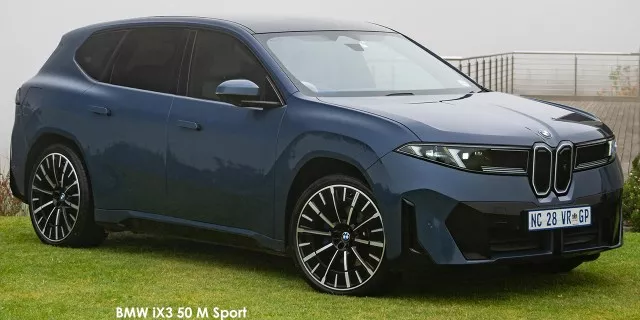
The availability of these cleaner fuels will allow even more high-performance models to launch locally, particularly several New Energy Vehicle (NEV) offerings from VW.
“We need the clean fuels to unlock various different models,” Beyleveld admitted.
The German automaker has been unable to introduce the plug-in hybrid electric versions of the Tiguan and Touareg, while Ford has been unable to bring the Puma ST.
Poor fuel quality also forced the American carmaker to cap the Mustang GT’s power outputs in South Africa.



 Loading ...
-2026.10.webp)


-2026.10.webp)