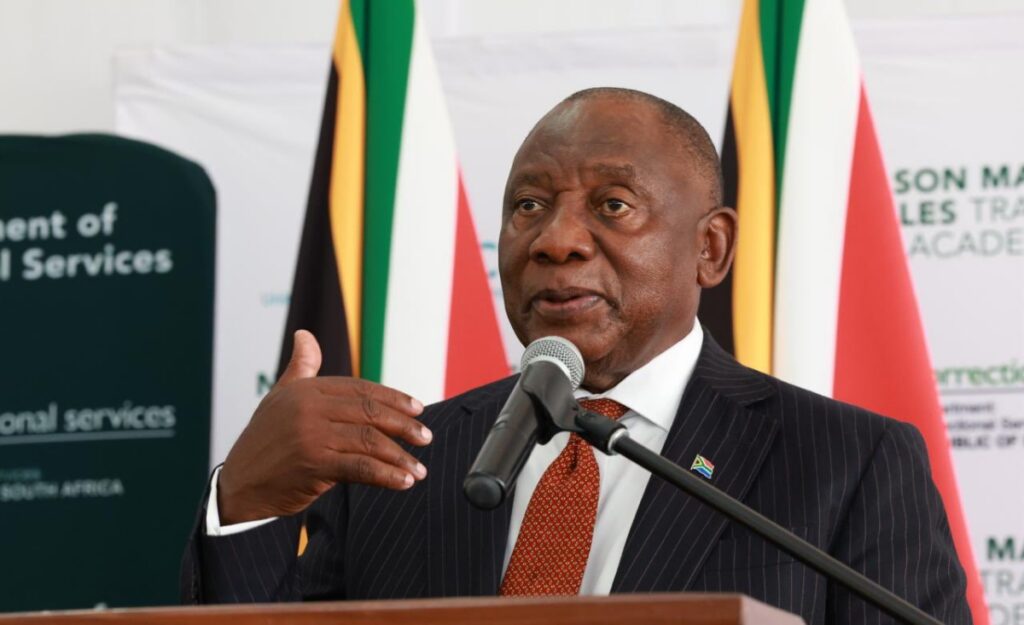
President Cyril Ramaphosa has assured motorists that the government is investigating ways it can reduce the impact of the record-high petrol and diesel price hikes coming this April.
The president made these comments during his address at the ANC Limpopo elective conference on Sunday, 29 March 2026.
The Department of Mineral and Petroleum Resources has yet to announce the official fuel price adjustments that will take effect on Wednesday, 1 April 2026.
Based on the latest data from the Central Energy Fund, petrol is likely to increase by around R6 per litre, while diesel is facing an even larger hike of R10 per litre.
Ramaphosa mentioned that Finance Minister Enoch Godongwana is deeply concerned about the looming increases.
“Finance Minister Enoch Godongwana told me that he is having sleepless nights over what is happening. I told him I am not sleeping at all,” he said.
The war in the Middle East has caused a surge in the global price of oil, with a barrel of Brent Crude soaring from $69 per barrel at the start of the year to $115 per barrel this March.
At the same time, the rand has depreciated against the US dollar, dropping from R15.85 to over R17 per USD.
This means it is more expensive to purchase and import oil, compounding the effects of the higher oil price.
Ramaphosa warned that these price hikes could have a severe impact on the economy as a whole.
While the oil price and exchange rate are factors outside of South Africa’s control, the government does have the power to implement relief measures to cushion the blow to households and businesses.
The president stated that Godongwana and other ministers have been instructed to urgently develop interventions to reduce the impact on consumers and the broader economy.
“I have instructed Minister Godongwana and his colleagues to address this matter and develop solutions,” he said.
Task team to investigate petrol price impact

Ramaphosa also said that a ministerial task team has been established to examine how the country can be shielded from the economic fallout of the Iran war.
The Sunday Times reported that team is expected to include Godongwana, Mineral and Petroleum Resources Minister Gwede Mantashe, Electricity and Energy Minister Kgosientsho Ramokgopa, and Trade, Industry and Competition Minister Parks Tau.
The task team’s duties go well beyond the fuel price, as it is will allegedly examine the whole geopolitical situation and its implications for South Africa.
Ramaphosa said his biggest concern is the impact this will have on ordinary citizens, as higher fuel prices will directly raise the cost of living and put more strain on the state.
“It’s going to create more hardships, and it’s also going to create reduced fiscal space for our governments,” he said.
The presidency is not the only one sounding the alarm over Apri’ls fuel hikes, as FNB has warned that the Iran war could keep inflation elevated and delay interest rates cuts.
This could potentially stall South Africa’s economic growth at a time when the country is finally starting to gain momentum.
The bank also warned that consumer spending will drop as household budgets are strained and confidence levels decline.
The South African Reserve Bank echoed FNB’s claims, noting that inflation is trending upwards.
It highlighted that higher fuel costs are already starting to be reflected in public transport and other everyday expenses.



 Loading ...