Roadblock and impound warning for motorists traveling this Easter


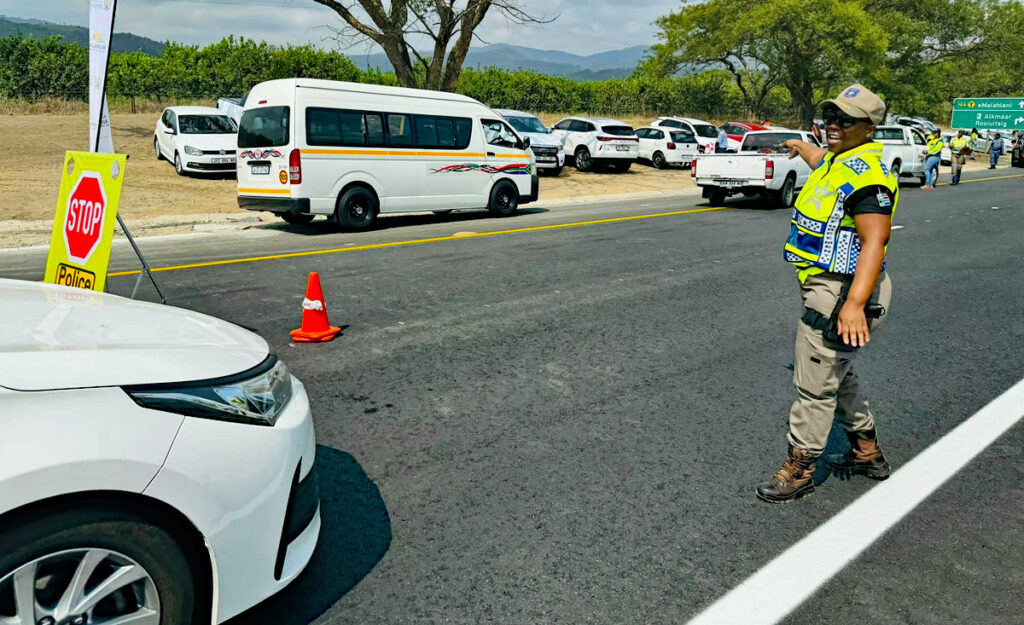
Motorists have been warned to expect surprise roadblocks as they head away this Easter weekend.
While national roads are the primary targets, traffic police have stated that they will also be patrolling routes that no none expects them to cover.
Police will be on the lookout for reckless and drunk drivers, and unroadworthy vehicles, with a particular emphasis on pedestrian safety.
This is according to Transport Minister Barbara Creecy, who revealed the action plan for the nation’s law enforcement during the launch of the 2026 Easter Road Safety Campaign.
She noted that holiday periods are some of the most dangerous times to be on the roads in South Africa, even as the country has made progress towards reducing fatalities in recent years.
“This season is a time of spiritual reflection and family reunion, yet it remains one of the most hazardous times on our national road network,” she said.
“Our mandate is clear, which is to ensure that every South African who sets out on a journey returns home safely.”
The minister said that the preliminary figures from 1 January to 15 March 2026 showed the lowest number of road fatality numbers in six years.
Car crashes over this period dropped 11% compared to the same interval in 2025, and fatalities were down 10%.
Every province in South Africa recorded a drop in crashes, and six out of the nine provinces also saw a reduction in road deaths.
While this is a positive indicator for the country, Creecy warned that law enforcement will not relax its efforts to improve road safety.
“This progress was not accidental; it is the direct result of coordinated law enforcement, strategic partnerships with civil society, and a shift in the collective consciousness of our road users,” she said.
She said the authorities will focus heavily on major freight and passenger car corridors, including the N1, N2, N3, and N4.
More roadblocks and checkpoints

Creecy emphasised that there will be an “unprecedented saturation” of both mobile and static checkpoints on major roads as the department intensifies policing with the National Traffic Police.
While this may cause some to consider taking alternate routes, the minister warned that motorists will encounter roadblocks on less-frequented roads as well.
“As we deploy our traffic officers, road safety educators and communicators, we are also aware that some road users will try to thwart our policing efforts by re-routing their travel onto secondary roads.”
“Through round-the-clock monitoring of traffic trends, we will be able to monitor such diversions. Our plans are agile and will follow traffic patterns and allow for surprise patrols at times and routes nobody expects us to cover.”
Roadworthiness is a key focus of this year’s safety campaign, as NATIS data indicates that there are over 342,048 unsafe vehicles – mostly minibuses, buses, and trucks – out on the roads.
Any vehicles found with defects like faulty brakes, worn tyres, or steering faults will be impounded on the spot.
This also applies to critical problems like leaking engine oil, defective lights, or cracked windscreens.
Driver’s licences are also in the crosshairs, as 338,659 driving permits are currently expired.
Drunk driving, as always, will be treated as a severe offence, but motorists are also advised to avoid driving while fatigued.





 Loading ...