


The South African National Roads Agency (SANRAL) is undertaking an extensive overhaul of the Huguenot Tunnel in the Western Cape valued at R4 billion.
The Huguenot Tunnel is the longest road tunnel on the African continent, measuring 3.9 kilometres in length.
The South Bore Tunnel opened in March 1988, while the North Bore Tunnel is closed to traffic.
In 2024, SANRAL initiated plans and tenders for the North Bore Tunnel to expand the network from two to four lanes.
The North Bore is currently in the commissioning phase and will be fully operational for live traffic once complete.
At the same time, the South Bore is being refurbished to bring it up to modern standards.
Right now, the South Bore accommodates travel in both directions, but SANRAL’s goal is to separate traffic with a two-lane, one-way system for the south and north routes.
“The electrical and mechanical systems have, however, neared the end of their life and need replacement to ensure compliance with international safety standards,” said the agency.
SANRAL confirmed the tenders for the North Bore project in October 2024.
Construction was expected to start in the first half of 2025; however, the project is still in the procurement phase.
According to a “Milestones in Motion” document Sanral published in 2024, the project will cost approximately R4 billion.
“A R4 billion project upgrade is set to change the Huguenot Tunnel from a single, bi-directional tunnel to two separate carriageways, each in single-directional tunnels,” it said.
“Using the latest technology, the upgraded dual tunnel will greatly improve the efficiency of traffic on the N1.”
According to SANRAL’s statistics from its 2024 Milestones report, the Huguenot Tunnel has seen over 100 million vehicles pass through since it was opened in 1988.
It sees an average of 13,000 cars pass through daily, saving motorists roughly 26 minutes compared to travelling via the Du Toitskloof Pass.
As an added benefit, the Huguenot Tunnel is estimated to have saved motorists around 5.5 million barrels of fuel.
Big upgrades for the Huguenot Tunnel

Back in 2024, SANRAL CEO Reginald Demana stated that the tunnel’s upgrade plans were still in the design phase.
He added that the project would bring the Huguenot Tunnel in line with international standards.
This will include several new features and safety measures, including:
- Sensors for monitoring air quality, traffic conditions, and lighting conditions
- An intelligent, distributed jet fan ventilation system for optimal fresh air supply
- Wind turbines installed next to the tunnel entrances to reduce energy demand
- An additional high-level reservoir to provide water in the event of fire emergencies
- Transparent wind barriers on the River Viaduct to minimise the risk of trucks overturning
The construction is expected to take up to five years to complete, assuming it doesn’t run into any unforeseen challenges.
The project’s sequence will start with the opening of the North Bore Tunnel, which will then allow SANRAL to close the South Bore for refurbishing without disrupting traffic.
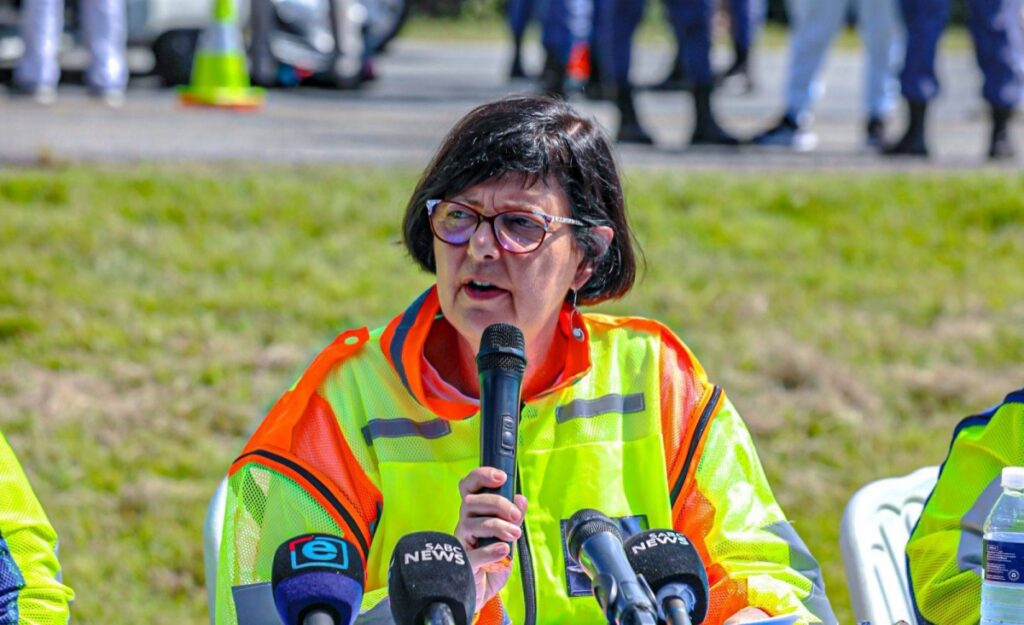
In 2024, former transport minister Sindisiwe Chikunga inspected the Huguenot Tunnel, describing it as an example of engineering excellence in South Africa.
The tunnel has garnered significant scientific interest due to its unique geology and the research opportunities it presents, reported BusinessTech.
Professor Richard Newman, a nuclear physicist at Stellenbosch University, has proposed creating an underground physics research facility within part of the tunnel.
Such a lab would be the first of its kind in Africa, and Newman pointed out that the SANRAL upgrade would be the perfect time to build it.
The proposed facility, dubbed the Paarl Africa Underground Laboratory (Paul), would be designated for use by postgraduate students and professional researchers.




 Loading ...