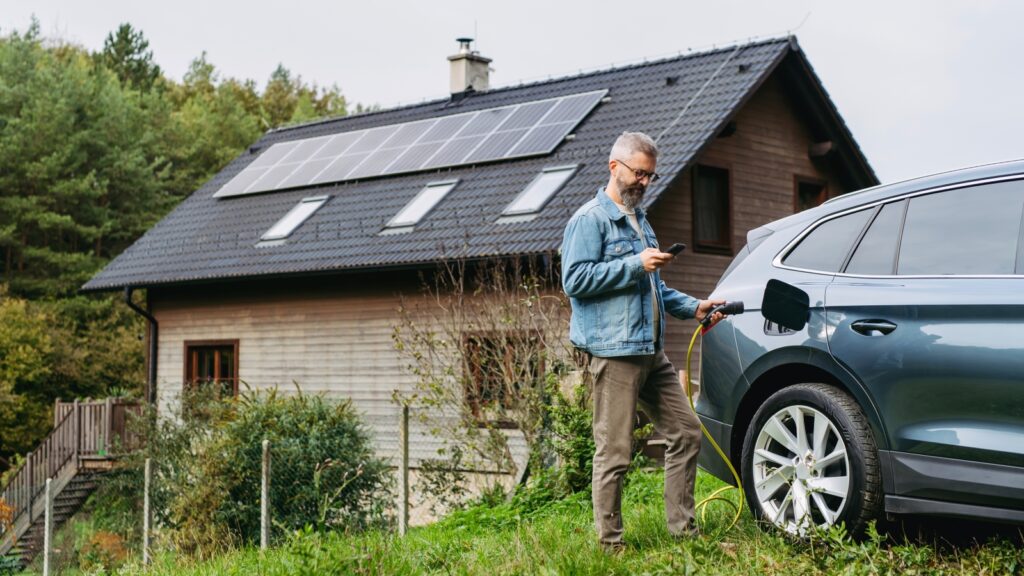
Despite the government’s best efforts, petrol prices in South Africa increased by more than R3 per litre in April and look set to increase again in May, with all but one group of motorists bracing for higher driving costs.
These are the motorists who have made the switch to fully electric cars, whose “refuelling” costs remain largely unchanged, especially when compared to the unpredictability of petrol and diesel prices.
While hybrid electric cars (HEVs) and plug-in hybrids (PHEVs) offer drivers some relief thanks to improved fuel economy, neither can compare to the savings of a fully electric car (EV).
A calculation by Zero Carbon Charge (Charge) determined that EV drivers may spend up to R200,000 less than traditional internal combustion car owners in seven years.
| Category | Petrol Hatchback | Electric Hatchback | Savings |
|---|---|---|---|
| Purchase Price | R400,000 | R400,000 | R0 |
| Energy Cost | R416,742 | R234,596 | R182,146 |
| Maintenance & Repairs | R45,000 | R28,000 | R17,000 |
| Estimated Total | R861,742 | R662,596 | R199,146 |
This calculation takes the current inland 95 octane petrol price into account, and also assumes that the EV owner charges at home half the time, and spends R9.15 per kWh on public charging for the rest.
As part of this calculation, Charge assumed an annual driving distance of 25,000km for both drivers, using an average of 8.0l/100km for the petrol car, and 16.0kWh/100km for the electric. Insurance is assumed to be equal.
To account for inflation, both petrol and electricity prices are assumed to rise by 8% annually, while public charging inflation is assumed to increase by 5%.
“Actual costs will still vary depending on how far you drive, where you charge, future fuel and electricity price changes, and the specific vehicle you choose,” notes Charge.
“The table should therefore be read as an illustrative ownership comparison rather than a guaranteed saving.”
While EVs used to be far more expensive than traditional petrol-burning vehicles, prices have come down significantly, thanks to affordable options from markets like China.
For example, the cheapest EV in South Africa, the Geely E2, has a price tag of R339,900, making it an affordable entry point into the EV segment.
A practical example

To date, only one person in our office has made the transition to electric mobility, and by his calculations, he managed to save R10,000 in a year by making the switch.
In his article for MyBroadband, Hanno Labuschagne chronicled his year with a used 2023 GWM Ora 03 GT, which he bought not to save money, but for smoother, quieter travel.
“I calculated how much I spent on electricity to recharge our EV for our year’s driving, which covered a distance similar to the average driver’s annual mileage in South Africa,” he explained.
“Between the start of April 2025 and the end of March 2026, I drove 15,000km and consumed 2,860kWh of energy.”
Below is a breakdown of the energy used throughout the last twelve months, including where the car was charged and the costs associated with each type of charging.
| Energy source | kWh consumed | Average cost per kWh | Cost |
|---|---|---|---|
| Home AC charging | 1,924kWh | R3.55 | R6,836.66 |
| Public DC charging | 332kWh | R7.35 | R2,442.63 |
| Other paid charging | 127kWh | R3.82 | R473.08 |
| Free public AC charging | 476kWh | R0.00 | R0.00 |
| Total | 2,860kWh | R3.41 | R9,752.37 |
In total, Labuschagne spent R9,752 on charging his GWM Ora, which averages out to R0.65 per kilometre, while the car managed 5.24km per kWh, or 19.0kWh/100km.
By comparison, had he been driving the Kia Sonet he traded in when he bought the Ora, Labuschagne would have spent R20,116 based on petrol at a monthly price of R21.63 per litre of unleaded 95 petrol.
This is based on the assumption that the vehicle could maintain its claimed average consumption of 6.2l/100km.
“Therefore, I spent roughly R10,300 less on electricity to drive 15,000km in an electric car than I would have spent on petrol in our old Sonet,” said Labuschagne.




 Loading ...