


The South African government is looking to strengthen its administration and control over the taxi industry, particularly when it comes to the issuance of operating licences.
Gauteng Roads and Transport MEC Kedibone Diale-Tlabela reaffirmed the government’s commitment to a constructive and transparent partnership with the taxi industry, but noted the need to strengthen governance over the operating licence system.
This comes after the Gauteng Taxi Industry (GTI) raised concerns about the department’s stakeholder engagement programme and the current operating licence-issuing model.
“The taxi industry remains a critical pillar in the provision of public transport services, moving millions of Gauteng residents daily,” said the MEC.
“The department values its long-standing relationship with organised taxi leadership and remains committed to building a safe, reliable and commuter-centred public transport system.”
Diale-Tlabela added that ongoing engagements with operators and taxi associations across Gauteng are aligned with the department’s mandates.
She noted that the provincial government is obligated to ensure an efficient, integrated and accountable public transport system.
Regarding the issuance of operating licences, the MEC clarified that the current review of the licensing model is a necessary governance intervention, informed by concerns raised within the industry.
“These interventions are a direct response to allegations of irregularities, inconsistent administrative practices and possible corruption within the system,” she said.
“We have a responsibility to act decisively to protect legitimate operators and restore public confidence.”
Preliminary findings from the current review process have already identified several discrepancies that require further verification, which reinforces the need for stronger oversight and better systems integrity.
According to Diale-Tlabela, Transport Operating Licence Administrative Bodies (TOLABs) execute their statutory responsibilities within the country’s taxi industry.
However, the department retains overall accountability to ensure that the licensing system remains lawful, transparent and free from irregularities.
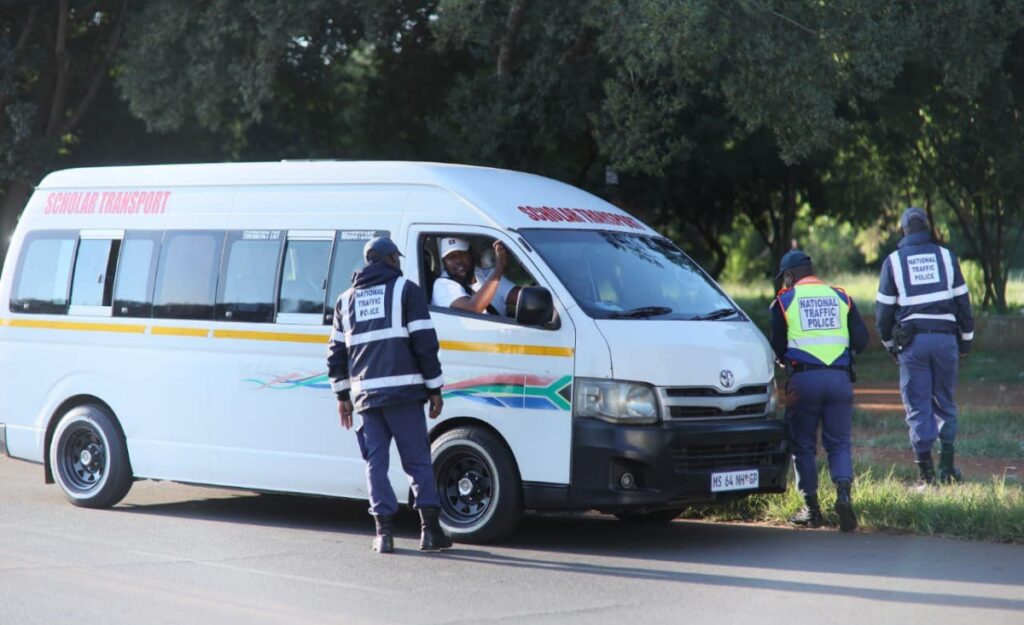
Crackdown on scholar transport in South Africa

Earlier this year, Transport Minister Barbara Creecy and her Deputy Minister, Mkhuleko Hlengwa, called for stricter policing and tighter governance over the scholar transport sector, in which the taxi industry plays a big role.
This came after the horror accident that claimed the lives of twelve learners on their way to school in January.
The head-on collision, which involved a scholar transport minibus taxi and a truck, occurred on the R553 Golden Highway in Vanderbijlpark, with the 22-year-old driver facing several murder charges.
Since then, the ministers have instructed traffic law enforcement agencies, including the Road Traffic Management Corporation (RTMC) National Traffic Police, to increase law enforcement operations.
They added that the Transport Department was close to finalising the review of the National Learner Transport Policy, which aims to tackle issues relating to the access and safety of learner transport.
Following these proclamations, scholar transport operators voiced their concerns about challenges hindering the issuance of operating licences.
In late January, more than 500 operators gathered at the Gauteng Department of Roads and Transport Head Office to engage with Diale-Tlabela about gaps in the application process.
Following engagements, the MEC stressed that the department is only willing to work with scholar transport operators who are genuinely interested in regulating their operations.
Earlier this month, she was forced to remind more than 400 operators who have applied for operating licences, particularly minibus and scholar transport operators, to collect their operating licences or risk cancellation.
Since November last year, the department has prioritised issuing operating licences to qualifying public transport operators, with more than 2,000 valid operating licences handed over to compliant operators to date.






 Loading ...
-2026.10.webp)



-2026.10.webp)