
R6,000 fine for drivers who ignore a 15-year-old warning in South Africa


Motorists who use their phones while driving can face fines totaling up to R6,000 and have their devices confiscated.
This is according to MiWay Insurance, which recently warned of the dangers associated with using distracting devices while driving, and the consequences that motorists face for doing so.
The insurance company highlighted that the World Health Organisation issued its first warning about distracted driving 15 years ago, stating that using phones while on the move was a “serious and growing threat to safety.”
This statement came at a time when mobile phone ownership was rapidly growing worldwide. MiWay noted that in the time since the WHO issued its warning, distractions in the car have become more widespread.
“From real-time navigation apps and hands-free calls to voice-activated AI assistants, streaming services, and connected infotainment systems, modern vehicles offer unprecedented convenience,” it said.
“Yet each notification, voice prompt or moment of divided attention can pull focus away from the road.”
Sherry Sibeko, Executive Head of Personal Lines at MiWay Insurance, warned that even a few seconds of inattention can have significant consequences.
“We see time and time again how taking your eyes off the road can quickly lead to an accident, placing both you and other road users at risk.”
Sibeko explained that driving distractions generally fall into three categories, visual, manual, and cognitive, and that the greatest risk occurs when these distractions overlap.
“Looking away from the road, taking your hands off the steering wheel and shifting your mental focus away from driving, even briefly, can significantly increase the likelihood of an accident.”
Cellphone use continues to be one of the main distractions while driving despite the rise of hands-free technology in modern cars.
Under the South African National Road Traffic Act, the use of hand-held communication devices, including phones, is prohibited while driving.
“It is illegal to drive a vehicle while holding a phone in your hand or with any other part of your body – regardless of whether the vehicle is moving or not”, said Sibeko.
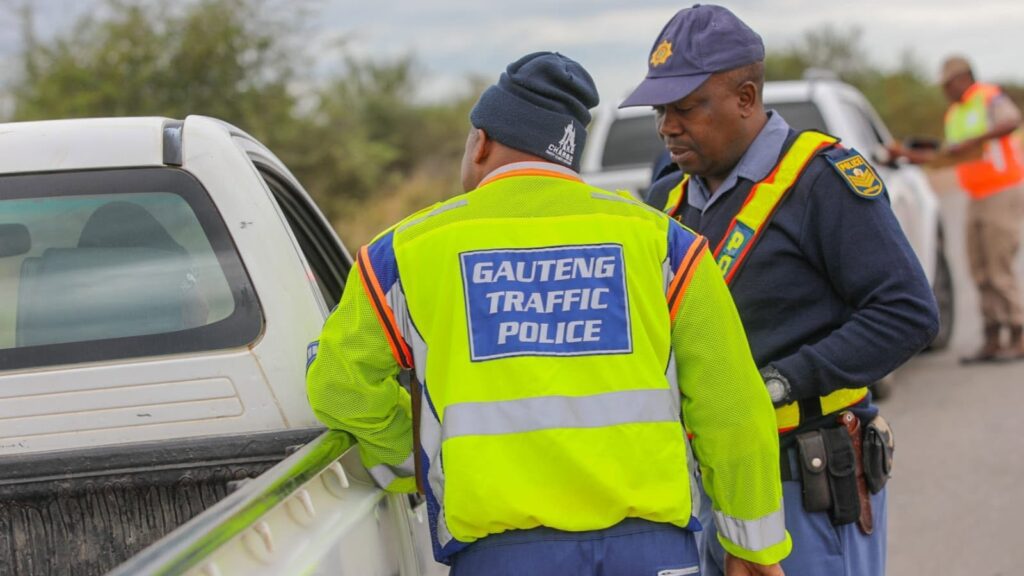
She noted that individuals who are caught using a phone can face a spot fine of between R500 and R1,000, depending on the metro.
Some metros also have a confiscation law, allowing the police to take the phone for 24 hours with a release fee of R5,000 to get it back.
What driving with a phone means for insurance
Sibeko said that all insurance claims are assessed on their own merits and according to the terms of the relevant policy.
Using a phone while driving does not mean the insurer will automatically reject any claims arising from an accident, as it becomes a matter of negligence.
Most comprehensive car insurance policies cover driver negligence, such as getting distracted or minor traffic violations.
For an insurer to deny the claim, they need to prove gross negligence, which refers to an individual’s reckless disregard for the consequences of their actions.
Drunk driving is a prime example, but using a mobile device while driving could be viewed as reckless depending on the circumstances leading up to the accident.
Insurers like Discovery now use tools to track smartphone usage while the car is in motion, allowing them to see whether the device was unlocked and in use at the time of impact, making it far easier for the company to link the phone as a contributing factor.
Sibeko said motorists should avoid the risk and set up their device before starting their journey, programming the navigation and setting up a music playlist beforehand.
“Technology will continue to evolve and play an important role in making our lives easier. The challenge for drivers is using that technology responsibly,” she said.
“The safest and most cost-effective journey is always the one where your attention remains exactly where it should be: on the road ahead.”




 Loading ...
-2026.10.webp)


-2026.10.webp)