
Chinese auto giant responds to AA concerns about its most popular SUV


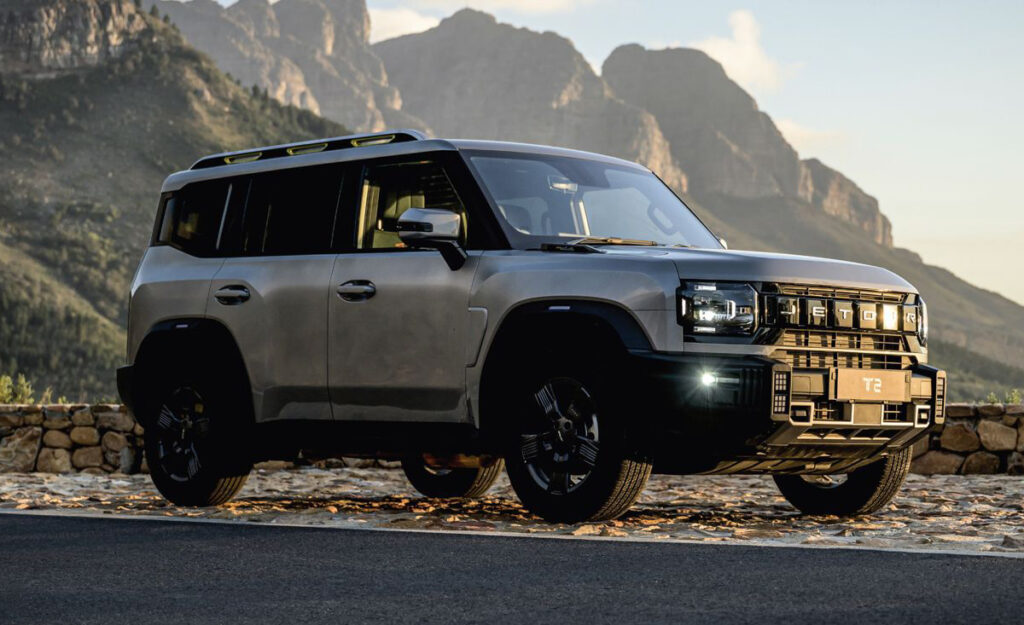
After landing in hot water over the sudden payload-capacity uprating for two of its most popular models, Chery sub-brand Jetour has clarified how it calculated the new ratings.
Last month, the manufacturer announced that the T1 and T2, which had maximum payload capacities of 300kg, were bumped up to a maximum of 475kg, inclusive of the driver.
The Automobile Association (AA) of South Africa raised concerns that the manufacturer did so without making any changes to the vehicles’ structures.
That said, Jetour has now backed its decision by clarifying how the original and uprated payloads were calculated and where the confusion arose.
It explained that the original payload at the time of the local launch of the T-Series in October 2025 was calculated using the formula: GVM (Gross Vehicle Mass) less the MIRO (Mass in Running Order).
MIRO represents a vehicle’s mass in running condition, typically including standard equipment, operating fluids and fuel and a driver.
“When concerns regarding the Jetour T-Series payload capacity were first raised, Jetour South Africa identified that this calculation is, in fact, not the formula commonly used in South Africa and therefore does not provide a like-for-like basis for comparison,” it said.
Most South African original equipment manufacturers (OEMs) instead calculate a vehicle’s payload by subtracting its tare weight from the GVM.
Tare is a vehicle’s unladen mass, excluding the driver, passengers, luggage, or cargo, but including standard equipment and 10 litres of fuel.
According to the manufacturer, TÜV NORD, a German testing and certification organisation, conducted braking performance and brake efficiency assessments to assess the T2’s payload capacity.
Jetour noted that by applying the revised calculation and conducting further testing, the new payload figures are directly comparable with those of other OEMs in the South African market.
AA and Jetour worked together to test the revised payloads
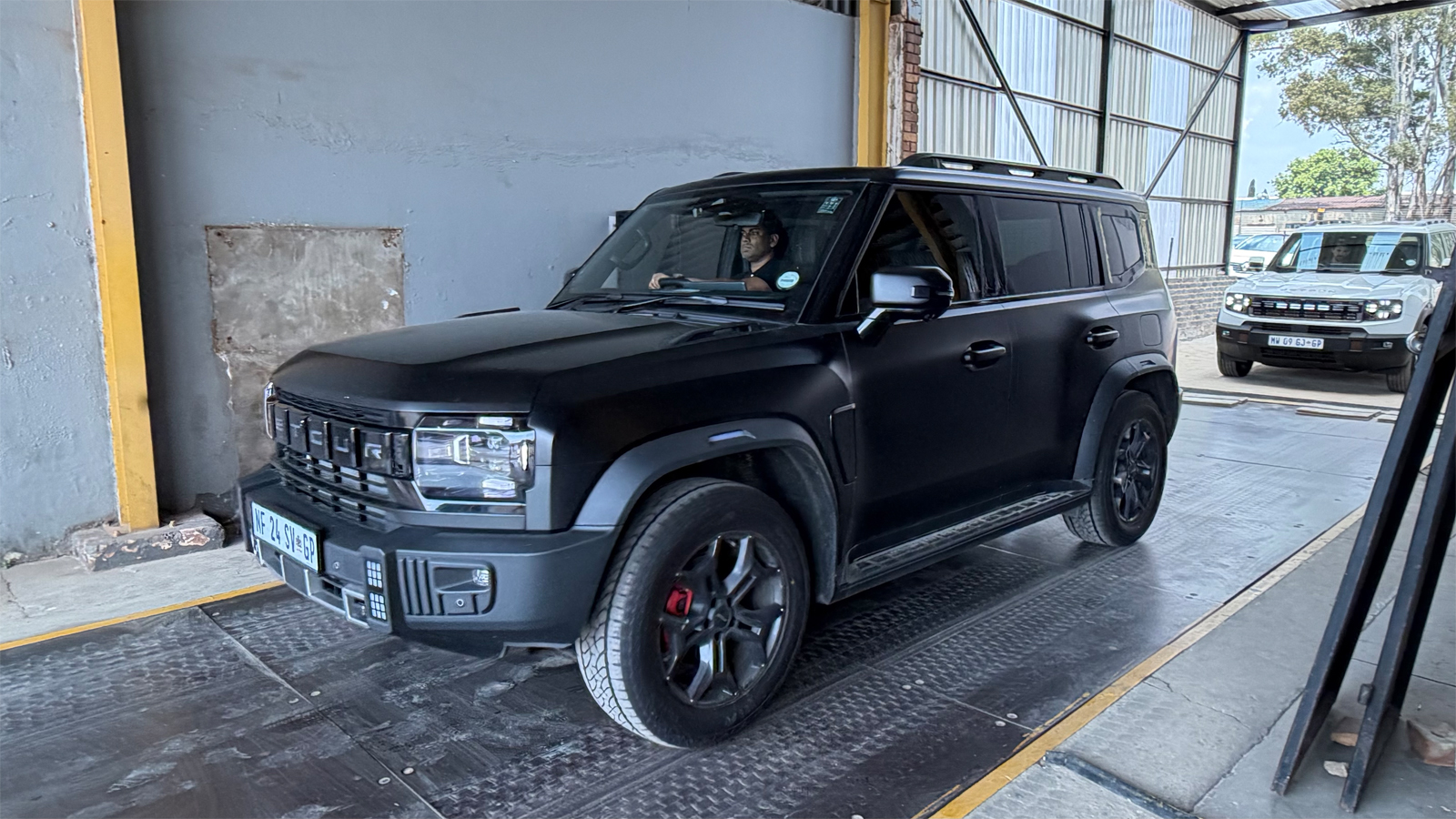
To prove its new payload ratings, Jetour South Africa conducted its own formal weighing exercises in the presence of the AA and the National Regulator for Compulsory Specifications (NRCS).
According to the Chinese carmaker, the weigh-in results correspond with the GVM and tare weight calculations, confirming the revised payload figures.
During the testing, which was done at the Clayville Testing Centre in Gauteng, Jetour, the AA, and NRCS put the T2 range through a series of tests, with the following results:
| Vehicle model | Actual weight | Revised Gross Vehicle Mass | Payload variance |
|---|---|---|---|
| Jetour T1 Odyssey 2.0TD | 1,780kg | 2,308kg | 538kg |
| Jetour T1 PHEV 1.5T | 1,940kg | 2,448kg | 508kg |
| Jetour T2 Odyssey 2.0T | 1,880kg | 2,380kg | 500kg |
| Jetour T2 PHEV 1.5T | 2,060kg | 2,538kg | 478kg |
| Jetour T2 Xplora 2.0T | 1,900kg | 2,355kg | 455kg |
According to Jetour, the T2 Xplora actually managed a payload of 479kg, exceeding the claimed 475kg; however, the AA flagged the 455kg result as a concern.
It added that a bigger concern is that Jetour’s application for the revised payload rating for the T1 has yet to be approved, meaning both new and existing customers are still subject to the original homologated 300kg payload rating.
The AA said this contradicts the manufacturer’s claim that the NRCS approved the payload capacity uprating for both vehicles.
It also raised concerns about the lack of mechanical improvements to justify the T1’s and T2’s revised payload capacities.
“The AA can also confirm that a solution for updated licensing of existing T1 and T2 cars, which reflect the revised GVM numbers, has not been reached with the road traffic authorities,” it said.
“This implies that existing owners are, by law, still subjected to the lower weighting listed on their licence discs in a roadblock or at a weighbridge.”
Jetour said it is prioritising a licensing solution for its T2 customers in consultation with the NRCS, since it is an urgent matter.




 Loading ...
Conversation
8 commentsI like the T1 and T2 but this concerns me greatly, a 1.5L can surely not manage the same payload as a 2.0L, I would hate to be bounding along the N2 toward Knysna with my wife and Ridgeback overtaking an auto carrier and an uber and halfway along a Discovery (I own) appears on the horison at full tilt – NO SIR!