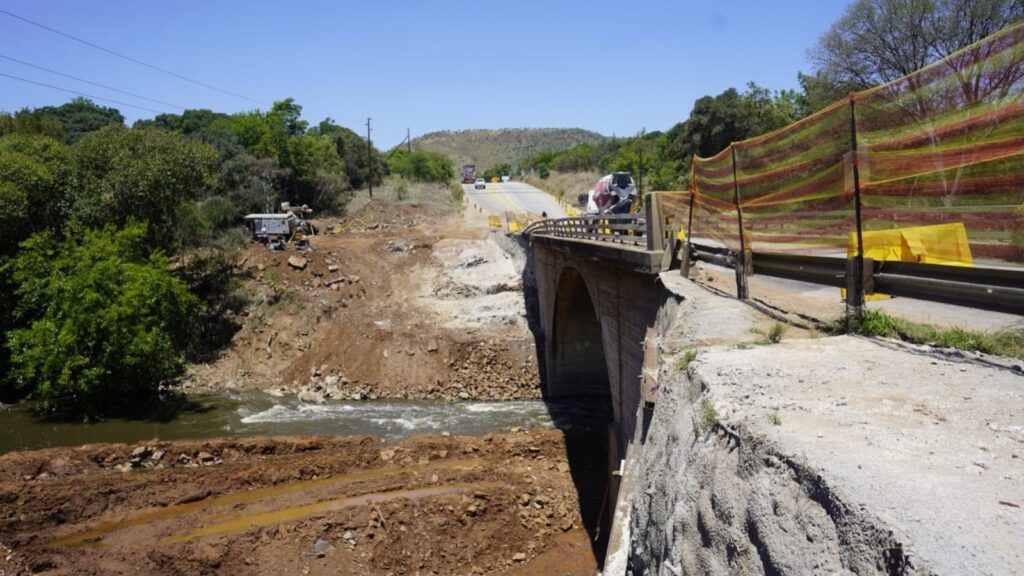
The Gauteng Department of Roads and Transport is rehabilitating seven bridges in the City of Tshwane to improve road safety and protect critical infrastructure.
The project was implemented as part of the Bridge Management System with a range of rehabilitation and maintenance interventions tailored to each bridge’s condition and requirements.
This includes repairing existing bridge rails and parapets, painting steel structures, replacing bridge joints, sealing cracks, and repairing spalled concrete.
Work will also include widening selected bridges and road approaches, resurfacing bridge decks and approaches, installing or improving guardrails, and constructing road pavement layers.
During the sod-turning ceremony earlier this week, MEC for Roads and Transport Kedibone Diale-Tlabela said the project demonstrates the provincial government’s commitment to protecting public infrastructure.
She added that it will ensure Gauteng’s road network remains safe, functional and supportive of economic activity.
“Our provincial road infrastructure is essential to the movement of people, goods and services,” the MEC said.
“Through this rehabilitation project, we are taking practical steps to preserve our bridges, improve their structural condition and ensure that they continue to serve our communities safely and efficiently. “
The bridge structures earmarked for rehabilitation are located along key provincial routes within the Tshwane Regional District, including:
- Bridges B59 and B1015 located along the R101 over the Hennops River, south of Valhalla.
- Bridge B2114 located along gravel road D775, southwest of Atteridgeville.
- Bridges B637, B649 and B760, located along the R511, southwest of Atteridgeville.
- Bridge B142 located along the R514, also known as Van der Hoff Road, northwest of Tshwane.
“Bridges are vital links within our road network, and their deterioration can affect mobility, safety and economic activity,” said Diale-Tlabela.
“By rehabilitating these seven structures, we are investing in the long-term sustainability of our infrastructure and helping to ensure that our roads remain dependable for the communities and businesses that rely on them every day.”
Repairs in Joburg and Pretoria

Earlier this year, the provincial roads department launched a drive to repair traffic lights across Gauteng, focusing on intersections in Ekurhuleni and Johannesburg, omitting Pretoria.
The province has more than 4,500 signalised intersections, and the Gauteng Department of Roads and Transport is responsible for 547 of them.
Diale-Tlabela said the programme will be implemented over the next 36 months, focusing on restoring vandalised infrastructure, modernising existing traffic signals, and strengthening their protection and management.
Contractors started restoration work at several priority intersections, with further interventions planned and scheduled across key development corridors and strategic routes.
The department said the programme represents a significant ongoing effort to modernise the traffic signal infrastructure in the province.
It is doing this by utilising the latest technology and by addressing persistent challenges like cable theft, infrastructure vandalism, illegal connections, and damage caused by car crashes.
MEC Diale-Tlabela confirmed a list of priority intersections across the province, which are all located either in the greater Johannesburg area or Ekurhuleni.
While the priority intersections will be repaired over the next three years, Pretoria and Centurion continue to grapple with failing traffic signals.
Several high-traffic areas in South Africa’s capital and surrounds currently lack working traffic lights as a result of vandalism and infrastructure theft.
In Centurion, the situation is so severe that traffic lights at key intersections are being replaced with stop signs to keep them from being stolen.




 Loading ...
-2026.10.webp)