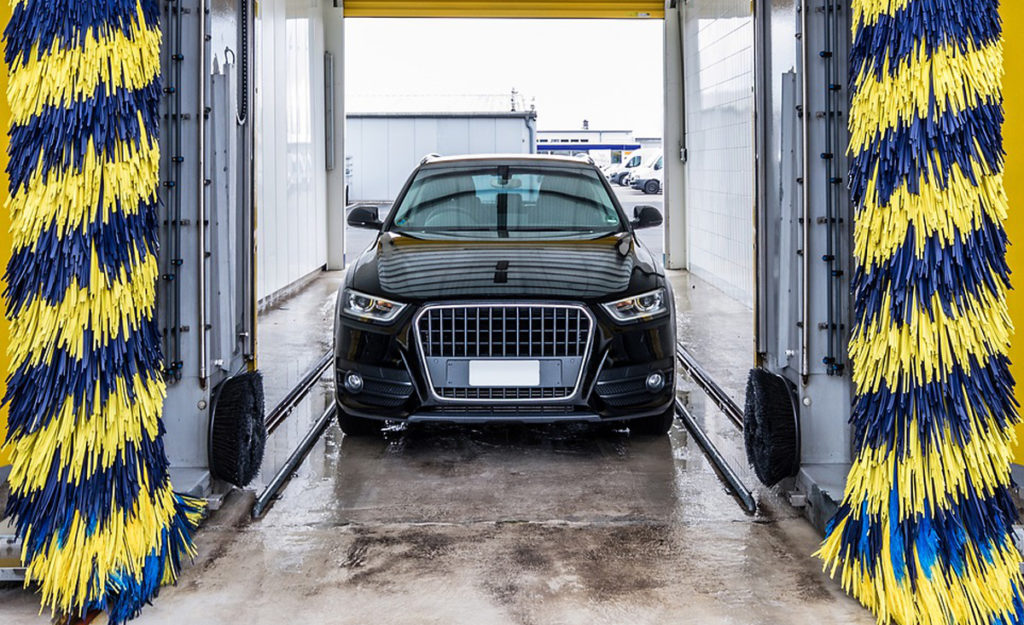
Fidelity ADT has warned that it has seen a concerning uptick in vehicle theft at car washes in South Africa.
Just last week, five incidents of vehicle theft at car washes were reported in the West Rand area in Gauteng.
“Criminals continue to find new ways to commit vehicle theft, focusing on areas of vulnerability to strike,” said Charnel Hattingh, Group Head of Marketing & Communications at Fidelity ADT.
“A concerning new modus operandi has emerged where suspects are targeting vehicles at local car washes.”
She notes that after arriving at a car wash, unsuspecting customers often leave their cars and keys behind to shop and run errands.
Criminals then take advantage of the situation, claiming the vehicle as their own, getting into it, and driving away before any alarms are sounded.
“In recent incidents, suspects arrive at the car wash telling the car wash attendants that they were sent by the owners to collect the car,” said Hattingh.
“Thefts have also occurred where the keys were left in the ignition, and in some cases, suspects even checked for unattended keys before quickly seizing the opportunity.”
Fidelity ADT urges motorists to follow these precautions:
- Inform the attendant that only you will be collecting your vehicle
- Make sure you are waiting in a spot where you can watch your vehicle
- Don’t leave your car keys with the attendant when you are at a car wash
- Watch if you were followed to a car wash or if there are suspicious persons around
- Remain vigilant of suspicious individuals and report any unusual behaviour to mall or local security.
“While these incidents began locally, such tactics can spread quickly, making this a relevant concern for all motorists,” said Hattingh.
She urges motorists to report suspicious individuals hanging around car washes to the police or security providers in the area.
“We cannot allow bad elements to take advantage of our communities,” she said.
Remote jamming resurgence
Fidelity ADT’s warnings come mere days after South Africa’s largest insurer, Santam, cautioned motorists of a resurgence in theft and hijacking of vehicles with keyless entry features.
Santam has similarly seen an increase in claims for high-end cars that were thieved through remote jamming tactics.
Remote jamming refers to when criminals jam the signal sent from the key fob to the car, which stops the doors from locking when the owner presses the “lock” button.
The sophisticated interference devices used in these crimes can influence various types of wireless equipment, including alarm panels, cellphone communication, detectors, fleet tracking systems, and radio reporting to a control room.
“At Santam, we have seen a significant rise in crime-related vehicle claims for both theft and hijacking with the trend continuing to worsen over the last two years, particularly for high-value vehicles,” said Marius Kemp, Head of Personal Lines at Santam.
“We have also noted an increase in claims for the theft of certain keyless vehicles through both hijacking and car jamming methods.”
With the rise in popularity of keyless vehicles, criminals have also adapted their modus operandi accordingly, said Kemp.
They often work in pairs; one remains close to the vehicle and the other follows the driver to intercept the radio wave signal sent from the keyless remote to the receiver unit.






 Loading ...
-facelift-2-2025.10.webp)
-2025.11.webp)