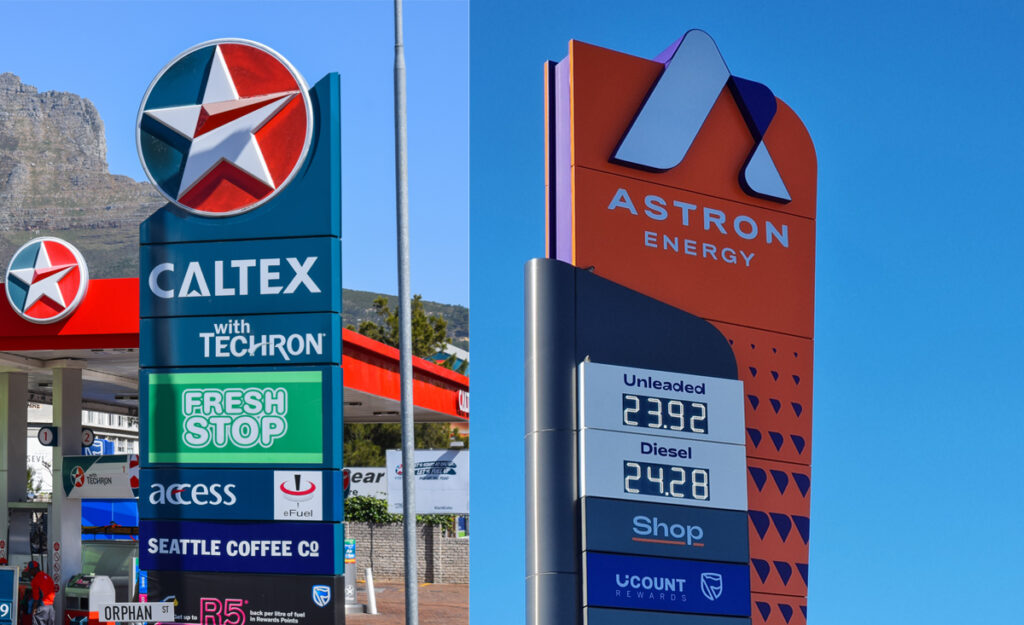
Astron Energy this month unveiled its 400th service station on La Roche Drive in Gqeberha, Eastern Cape.
For those unaware, Astron Energy entered the country in 2018 when Glencore, owner of Astron, purchased Chevron South Africa.
Since then, it has been operating the Caltex brand through a licence agreement with Chevron and is currently on a campaign to rebrand over 800 Caltex petrol stations in South Africa.
It announced its 300th station revamp earlier in 2024, with the Astron team converting an average of approximately 20 sites per month.
“The rebrand from Caltex to Astron Energy, initiated in 2022, is the biggest change in the South African fuel industry in three decades,” said Astron Energy CEO Thabiet Booley.
“Our 400th rebranded station is a tremendous milestone. We’re reimagining the fuel experience across the country, and creating spaces that reflect the energy and pride of our communities. Each station brings us closer to becoming a brand that South Africans love and proudly call their own.”
To date, over 450 people have been employed to work on the Caltex overhaul, and as part of its Enterprise and Supplier Development (ESD) initiative, Astron Energy has also empowered more than 30 local installation teams, providing training, resources, and mentorship to help small and medium-sized businesses create a name for themselves.
“Looking ahead, the company is looking forward to their next milestone of 500 rebranded sites as the rebranding journey continues, with a strong commitment to growth and community,” said Booley.

Eastern Cape emerging as petrol station haven
While Astron may have only been rebranding an existing Caltex petrol station in the Eastern Cape, the province is emerging as one of the premier destinations for new investment by petroleum companies.
As per data analytics firm Kalibrate, major energy companies have traditionally focused their attention on Gauteng, Cape Town, and Durban/KwaZulu-Natal, where wealth and infrastructure are concentrated.
However, as these regions have matured they have become increasingly saturated and in turn, rendered growth opportunities more difficult to find.
This has led to other regions in the country catching the eyes of investors, with the Eastern Cape in particular becoming an attractive destination.
At present, the province houses around 490 service stations with a further 13 under construction.
The number of open sites increased by 15 between 2023 and 2024, indicating interest by oil companies in investment in this region.
“The Eastern Cape has historically suffered from high unemployment and a weak economy. The province contributes 7.6% to GDP, ranking 7th out of the nine provinces in terms of GDP output,” said Kalibrate.
“The province is technically in recession having experienced three consecutive economic contractions up to Q1 2024. However, there are many areas along the Eastern Cape coastline that are very attractive tourist destinations resulting in pockets of attractive growth and opportunity.”
Key growth areas identified in the Eastern Cape include the towns of Cape St Francis, George, Kenton on Sea, Knysna, Mossel Bay, Plettenberg Bay, and Port Alfred.
The Eastern Cape is also home to the National Roads Agency’s flagship N2 Wild Coast Road Project.
The undertaking comprises a major 110km upgrade to one of the country’s most important connectivity roads which will reduce travel distances and by extension, travel times, between four of the nation’s biggest provinces – the Western Cape, Eastern Cape, KwaZulu-Natal, and Mpumalanga.
It will furthermore allow for the freer movement of people and goods between previously underserviced areas in the province.
For example, the R1.7-billion Msikaba Bridge near the town of Lusikisiki – which will be billed as the longest suspension bridge in South Africa upon completion in 2025 – will slash travel times for vehicles driving from the Eastern Cape to KwaZulu-Natal, with the current road consisting of an 80km inland diversion passing Kokstad.
The N2 Wild Coast Road Project boasts a budget of R20 billion and is expected to be completed by the last quarter of 2027.




 Loading ...