


Speed cameras are one of the most common sources of frustration for car owners, as they can often feel like an unfair punishment for a minor offence.
Furthermore, they are often criticised as being little more than a money-making scheme for the authorities, who charge motorists for driving above an unreasonably low speed limit while neglecting to take more proactive measures to reduce road accident rates.
Adding to this frustration is the fact that many speed traps are not clearly visible to road users, often intentionally so, which can make them seem more like an underhanded tactic than a legitimate safety enforcement tool.
One of the most contentious aspects of speed cameras is the ongoing debate over whether they should be visible to motorists and have signage warning of their presence, or if municipalities should be free to conceal their traps to catch unsuspecting speeders in the act.
Speed cameras, or “speed measuring equipment” as they are often referred to in legal texts, are regulated by the Technical Committee for Standards and Procedures (TCSP) guidelines.
The TCSP guidelines set out the conditions under which speed measuring equipment (SME) can be used, including distances, device calibration, and operator requirements.
For example, the National Road Traffic Law Enforcement Code stipulates that speed measuring instruments must be calibrated at intervals not exceeding six months, as required by the TCSP Prosecuting Guidelines for SME and Traffic Light Violation Equipment.
However, there are no specific guidelines that state that all SMEs must be visible to road users.
The exception is average-speed-over-distance (ASOD) camera systems, which use two cameras placed at the start and end point of a route.
ASOD systems scan a car’s plates when it enters and leaves the zone, and then use the time between the two points to calculate the speed it was travelling.
Because of this, ASOD prosecutions are required to have information signs displayed at the approach of a section.
On the other hand, authorities are free to conceal fixed and mobile speed traps without warning signs, provided the devices comply with TSCP requirements.
These matters are handled at the municipal level, which is why the use of cameras can vary across regions.
It’s also worth noting that unmanned speed traps were unlawful prior to 2012, as the 2006 TCSP required that any non-permanent SME had to be operated by a qualified traffic instructor.
However, this method was legalized in 2012 when the TSCP was amended to allow for non-permanent SMEs.
Speed cameras around South Africa

In 2018, the City of Cape Town approved the Traffic and Speed Camera Policy, which sets out rules on signage, visibility, and conspicuousness, which states the following:
- Signage – For fixed speed camera sites, the first speed limit and camera warning sign should be placed not more than 1 km from the camera housing, in the direction being enforced.
- Visibility – Speed camera housings, including mobile camera units, must be visible to approaching or departing motorists from the point where the enforcement occurs.
- Conspicuousness – Where a fixed camera has been installed and it is in the interest of road safety to reduce the occurrence of speed at a particular location, the fixed speed camera housings must be fully painted in yellow. The front and back of the housing must either be painted in yellow or fitted with retro reflective sheeting.
Despite this, Mayoral Committee Member for Safety and Security Alderman JP Smith recently announced that the city will receive new cameras that are less conspicuous to motorists.
“The cameras are of a slightly more modern design. We’re less likely to see a flash because they use optical systems that don’t require visible flash enhancement. The infrared flash is not visible to the human eye,” he said.
Smith argued that mobile speed traps are more effective because their location is unpredictable.
Moreover, he said that speed cameras would be more effective and reduce loss of life if they were hidden, but that the public insists that cameras should be visible.
“You should, of course, never be speeding, so you shouldn’t be worried about where the cameras are,” Smith said.
“However, many people spend a vast amount of energy arguing with us about whether cameras are too concealed. Our speed enforcement policy, therefore, emphasises visibility—though I don’t think it necessarily aids road safety.”
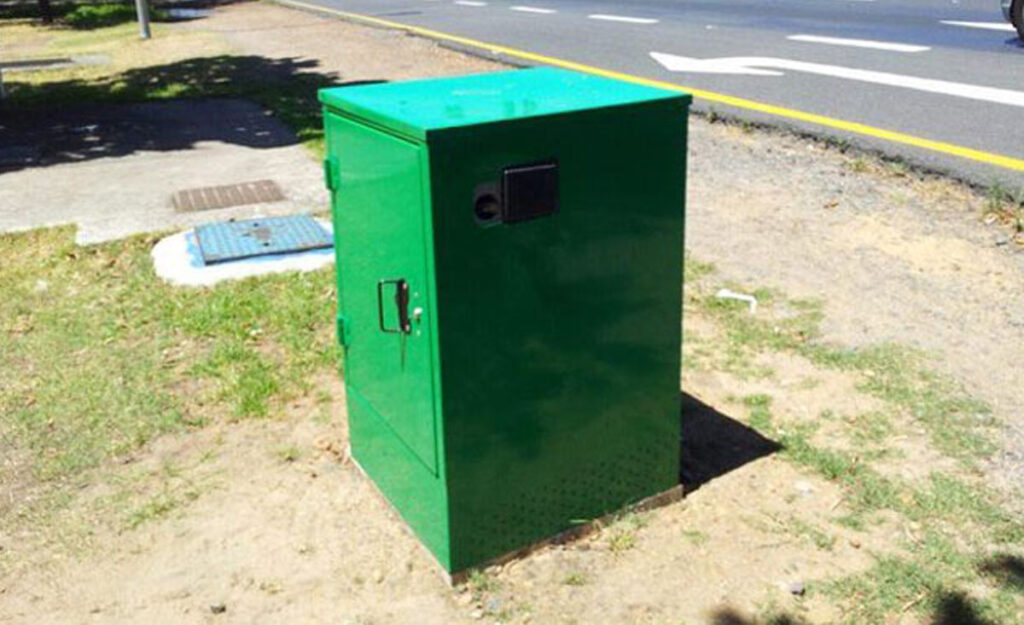
Along the Garden Route, you may come across smaller cameras that resemble utility boxes, or camera poles that are painted green or grey, rather than yellow, to blend into the surroundings better.
While frustrating for travelers, these subtle fixed cameras are perfectly legal, according to the firm LawForAll.





 Loading ...