The refinery producing 100,000 barrels of petrol a day in South Africa


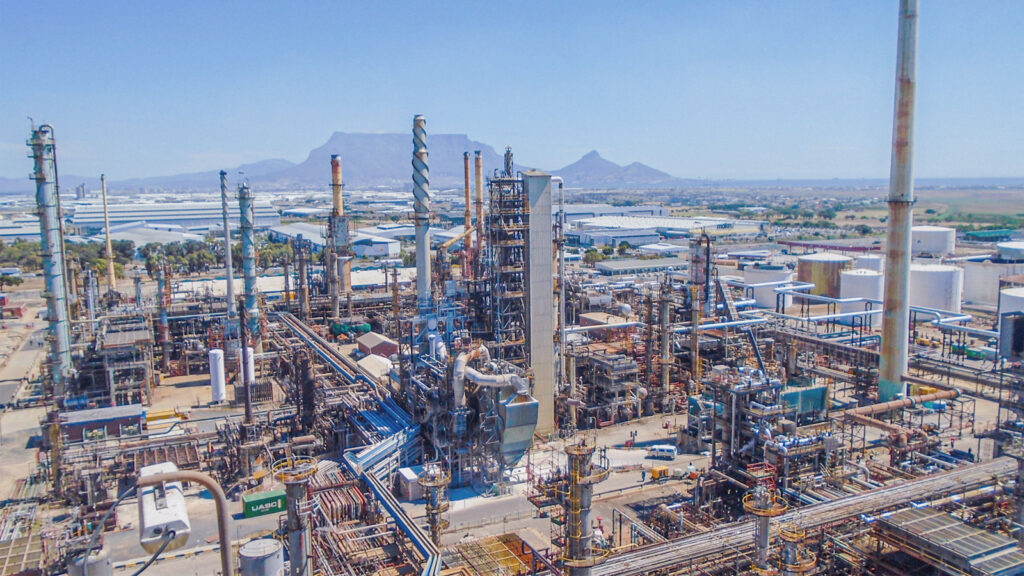
South Africa has lost most of its petrol refineries since the start of the decade, but a few facilities still produce vital fuel supplies for the country.
One of these is the Astron Energy refinery in Cape Town, which produces 100,000 barrels of refined petroleum products every day.
It is currently undergoing a R6-billion upgrade to ensure that it will remain operational for years to come, acting as a bulwark against South Africa’s increasing reliance on imported oil.
Astron Energy’s facility, along with Sasol’s Secunda refinery, are the only sites left producing refined petroleum products for the local market.
South Africa’s fuel refining capacity has collapsed in recent years, making it more reliant on fuel imported from the Middle East and Asia.
This has made the country more susceptible to global price shocks. This was the case in 2022 when Russia launched its invasion of Ukraine.
Likewise, the war between Iran and the United States caused the international price of oil to skyrocket in March 2026, resulting in massive fuel price hikes in South Africa.
Increasing the country’s refining capacity would allow South Africa to shift suppliers from refined products from the Middle East to crude oil from Brazil, Nigeria, and Angola.
However, this process has been severely limited by South Africa’s stagnant economy and difficult operating environment, making the margins on fuel production incredibly thin.
Because of this, companies are reluctant to invest in upgrades or maintenance for their refineries, leaving them to be mothballed the minute they run into problems.
This was the case with Engen’s refinery in Durban, which was shut down after a fire broke out in 2020.
The site has since been converted into a storage and import terminal, taking 135,000 barrels of capacity offline.
Similarly, the Sapref facility was shut down in 2022. This was the largest refinery in the country with a capacity of 180,000 barrels.
On a positive note, Sapref has been bought by the Central Energy Fund, which plans to restart it.
All of this makes Astron Energy’s refinery in Milnerton a remarkable exception, as its owner, Glencore, has invested R6 billion to upgrade the site.
Glencore noted that the refinery is cash-flow positive for the commodities trader, run by the South African Gary Nagle.
Nagle was preceded by the South African-born billionaire Ivan Glasenberg, who is still Glencore’s largest shareholder.
The upgrades to Astron’s refinery represent one of the largest private investments in South Africa in recent years.
Cape Town’s fuel refinery

Astron Energy is not the original owner of the Cape Town refinery, which has a history dating back 60 years.
The original site was built by Caltex in 1966. Formed as a joint venture in Africa between Texaco and Standard Oil of California, Caltex became one of the continent’s leading petroleum companies.
It had already been operating in South Africa for over 50 years before it established its refinery, importing fuel, lubricants, and other chemicals.
At the time, South Africa’s economy was highly industrialised, resulting in a huge demand for fuels and lubricants.
One key issue was that Cape Town was relatively isolated from the industrial hubs in Gauteng, which were supplied by the ports in Durban.
As the Western Cape’s economy grew, Cape Town began to import crude oil from Nigeria, the United States, and South America.
This presented a golden opportunity for Caltex to establish a refinery in Milnerton in 1966, which became the primary supplier for South Africa’s west coast.
The refinery imports crude oil, which is converted into petrol, diesel, jet fuel, and liquified petroleum gas.
The site officially rebranded to Astron Energy in 2018 when Glencore purchased Chevron South Africa for $1 billion.
To unify its assets across the continent, Glencore began rebranding Caltex forecourts to Astron Energy, replacing the iconic red colours with a new orange-and-purple theme.
This process is still ongoing, with more than 600 locations rebranded thus far.
Astron also has a lubricants manufacturing plant in Durban, which can produce 60 million litres of lubricant fluids per year.
Its refinery is considered a key national asset, generating approximately R95 billion in revenue per annum while supporting over 50,000 direct and indirect jobs.





 Loading ...