
New proposal to change South Africa’s petrol prices every 2 weeks


South African motorists may need to keep a closer eye on fuel prices, following a proposal to move from monthly to bi-weekly fuel price adjustments to react more quickly to changes in global oil markets.
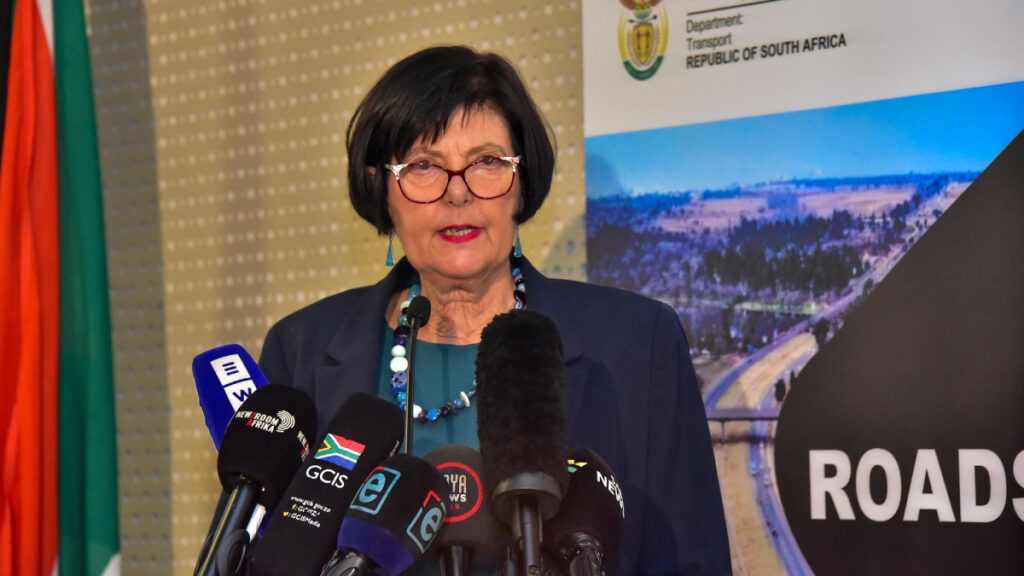
ANC MP Fasiha Hassan-Duma suggested this at a meeting of the Portfolio Committee on Mineral and Petroleum Resources during a discussion on ways to soften the impact of severe fuel price swings on local motorists.
This follows one of the steepest fuel price increases in recent years, due to the Middle East conflicts which erupted at the end of February and led to the closure of the Strait of Hormuz – a passageway for 20% of the world’s oil.
Between March and May, petrol prices increased by R6.53 per litre, while diesel’s per-litre price rose by more than R13 per litre.
However, diesel motorists were the first to feel relief when wholesale prices dropped by R2.62 per litre in June, as petrol prices saw yet another increase of R1.43 per litre when Treasury ended its fuel levy relief.
At the start of July, both petrol and diesel prices were slashed by R1.96 and R3.59 per litre, respectively.
Despite this, petrol prices remain R6.00 per litre higher than before the Middle East conflict, with diesel prices still R7.22 per litre higher than in February.
Because of South Africa’s heavy reliance on diesel for transport, freight, and general agricultural operations, fuel price increases led to significantly higher cost-push inflation in food production.
This led the South African Reserve Bank (SARB) to increase interest rates by 25 basis points.
As a result, the repo rate was raised to 7.0%, while the prime lending rate has increased to 10.50%, affecting motorists taking out car loans.
The Fuel Retailers Association also warned that fuel price shocks threatened petrol stations’ sustainability due to fixed margins, increasing working capital needs, and declining sales.
This forced fuel station operators to consider reducing trading hours or cutting jobs to avoid bankruptcy.
Adjusting prices bi-weekly to avoid price shocks

During the meeting, Mineral and Petroleum Resources Committee members warned that the effects of fuel inflation extend throughout the local economy.
They also criticised the government’s communication during the crisis, arguing that uncertainty “created an artificial supply problem” as anxious motorists rushed to fill vehicles.
To reduce the impact of future price shocks, Hassan-Duma proposed moving away from monthly fuel price adjustments towards reviews every two weeks.
She noted that while South Africa cannot control global oil prices, it can change how it responds to rapid fluctuations by adjusting fuel prices more frequently.
“We understand that this is a global problem, an international one, but there are interventions that we can put in place that I think we need to push for,” she said.
“Instead of increasing diesel by R10 or R7, or whatever the case may be now, you don’t do it immediately. You don’t look at it once a month; you look at it every two weeks.”
She argued that South Africa should be able to adapt more quickly to changing international factors, even those beyond the country’s control.
“Even if the price increase is going to be horrific in the next 24 hours, let’s relook at it in two weeks. Let’s push to do that so that maybe we can bring it down by a rand or two,” Hassan-Duma said.
She acknowledged that introducing bi-weekly price adjustments would create challenges, but suggested that the benefits would outweigh the drawbacks.
The MP added that a more flexible pricing system could reduce the impact of rising fuel costs on households and ease pressure from the cost-of-living crisis.
No further details were offered, but our sister publication, BusinessTech, reached out to the Department of Mineral and Petroleum Resources to ask whether it would consider this proposal.





 Loading ...


-2026.09.webp)