


South Africa’s fuel taxes make up roughly a third of the retail price of petrol and diesel, but these funds are not being put to good use, as the Road Accident Fund (RAF) is technically insolvent and the General Fuel Levy (GFL) is not being used for its original purpose.
The managing director of Driving.co.za, Rob Handfield-Jones, argues that these fuel taxes should be scrapped.
Handfield-Jones noted that the money generated by the GFL is intended for road maintenance. However, the funds are not ringfenced and the government is free to use it as it sees fit.
“But that was a political decision taken several decades ago. The government could reverse it if they wished, but it seems that general spending priorities rank higher than road maintenance,” he told MyBroadband.
“I have previously suggested that the GFL be scrapped and South Africa move to a kilometres-based tax levied on all vehicles. That remains my opinion for the GFL.”
Handfield-Jones said that such a tax would charge motorists in proportion to the distance they travel.
He explained that this could put pressure on the government to explain why the tax should be used for anything other than road maintenance.
“I have a feeling that it might be politically sensitive, which might account for the Minister’s decision to finalise it only in 2027,” he said.
This is in reference to the Department of Minerals and Petroleum Resources’ plan to complete the review of the fuel price formula by the end of the 2026/27 financial year.
Handfield-Jones said the government is unlikely to impose a potentially unpopular new tax scheme before the local elections in November 2026.
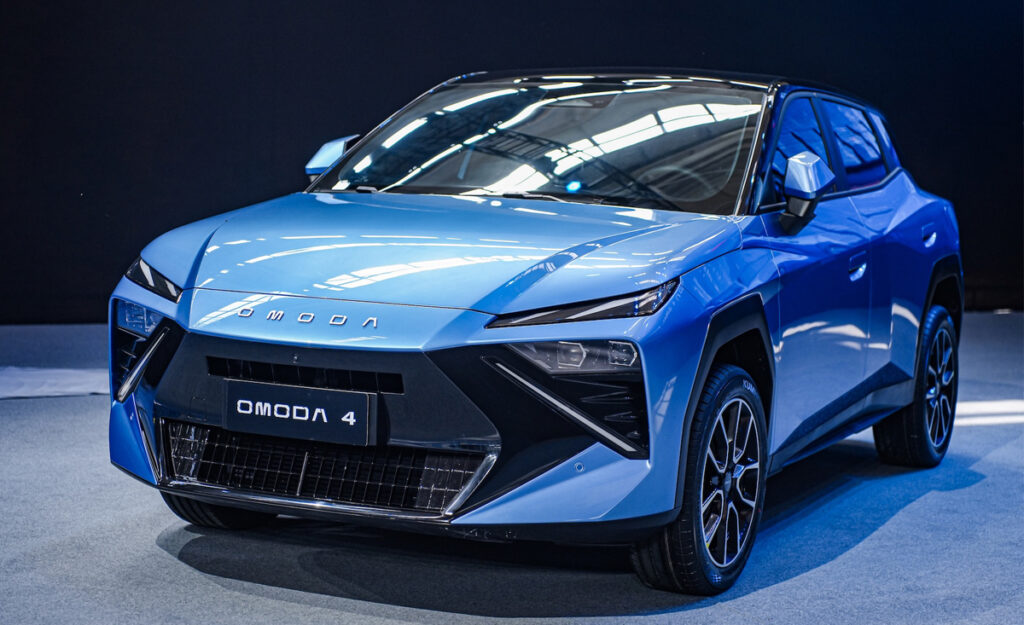
He also touched on the recent government statements that hybrid and electric vehicles were taking away a significant portion of the country’s fuel tax revenue.
“The total number of new energy vehicles on South Africa’s roads is currently less than one ten-thousandth of the total and barely constitutes a rounding error in GFL collections,” he said.
He said that while new energy vehicles may become an issue in the future, South Africa was still far from a point where it would need to adapt its policies.
Calls to get rid of the Road Accident Fund

Commenting on the RAF Levy, Handfield-Jones said South Africa should follow the rest of the world’s example and scrap the Road Accident Fund.
“Scrap the idea of a monolithic central fund to handle crash injury claims, since it’s clearly wasteful, inefficient, and prone to incompetence and corruption,” he said.
“Instead, legislation should be passed to place the onus on each vehicle owner to purchase this insurance.”
This sentiment is shared by the CEO of the Automobile Association, Bobby Ramagwede, who argues that South Africa should move toward a compulsory third-party insurance policy.
The government, meanwhile, is working to create a new funding scheme to support the technically insolvent RAF.
Transport Minister Barbara Creecy recently announced that her department is reviewing the RAF’s funding framework, and that it is considering a new tax linked to vehicle licence registrations and renewals.
This new tax was proposed to generate additional revenue for the RAF to offset the rise of electric vehicles.
Handfield-Jones claimed the minister has not presented any evidence that the proposed new scheme would address the RAF’s problems or generate additional revenue.
Creecy said her department would publicly announce its findings once the review process is complete.
The next steps would be to present the selected funding model for additional policy, legislative, and stakeholder processes.
“As part of the research and assessment, the proposed model must be designed to ensure it is equitable, sustainable, and appropriate for the South African context,” Creecy said.
She clarified that this would ensure no unintended disparities among different categories of vehicle users in the country.
This is notable as the current ambiguity around the proposed licence disc tax suggests that it would apply to all road users, not just EV owners.
This would essentially be a double tax for the vast majority of motorists in South Africa, who already pay for the RAF via fuel taxes.


 Loading ...
-2026.10.webp)


-2026.10.webp)