The number of young car buyers in South Africa has dropped significantly over the past 10 years, relative to those over 35 who continue to buy both new and used vehicles.
According to a recent study by Lightstone Auto, this can be attributed to stagnant personal income among young South Africans, high youth unemployment levels, and rising living costs, which have squeezed disposable income.
It added that increased fuel, insurance, and maintenance costs, coupled with a relatively extensive public transport network, have further dampened new-car demand.
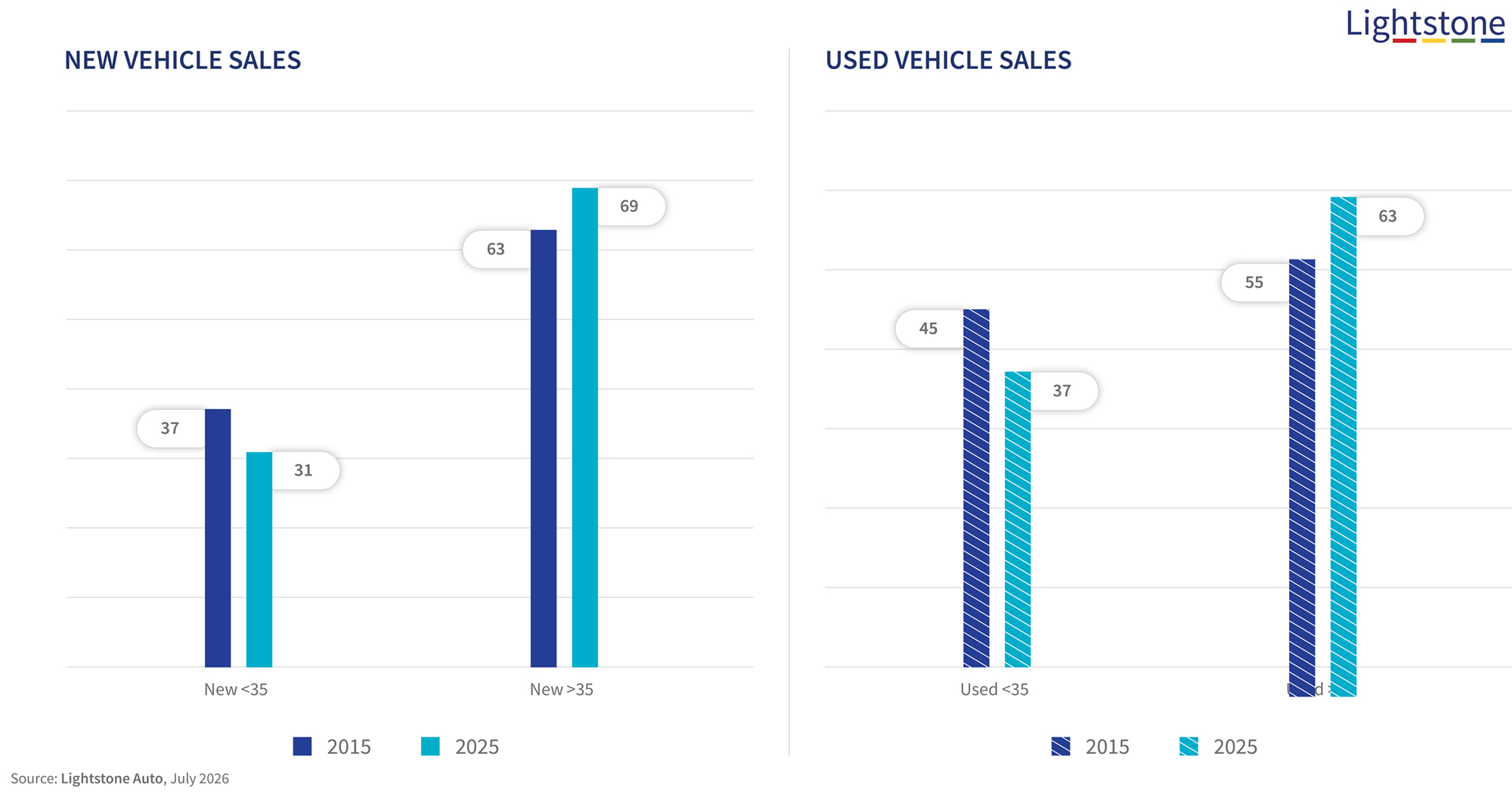
Lightstone’s data reveals that the under-35 share of new vehicle purchases has dropped 6% in ten years – from 37% to 31% between 2015 and 2025.
It also highlights that the under-35 share of used-vehicle purchases over the same period fell from a high of 45% to only 37% by 2025.
Buyers under the age of 25 had the largest proportion of used-to-new purchases, which Lightstone suggested is likely due to the fact that this group has the least disposable income.
As a result, these buyers turn towards the most budget-friendly vehicle options, which, more often than not, can be found on the used market.
What the market intelligence provider found is that new light vehicle sales peaked in 2015, following five years of strong growth.
Another five years later, in 2020 – in the middle of the COVID-19 pandemic – the used-vehicle market gained market share, as new-vehicle sales contracted across all age groups.
New vehicle sales have since strengthened and recovered against used-vehicle sales, with last year’s sales the strongest since the 2015 peak.
A massive shift in buyer preference

Lightstone found that buyer preference has shifted towards affordable Chinese brands, including Haval, Chery, and BYD, while many buyers are also moving towards new energy vehicles (NEVs).
Its findings show that in 2015, under-35s purchased 27% of all Chinese-brand vehicles in South Africa, though this made up only 1% of all purchases in this group, while over-35s made up 73% of Chinese car purchases.
However, last year, under-35s made up 30% of all Chinese vehicle purchases, accounting for more than 10% of all the purchases for the group as a whole.
Petrol-powered internal combustion engine (ICE) vehicles remain the favourite across all age groups, especially for buyers under 35, accounting for around 80% of all vehicle sales in 2025.
Diesel vehicle purchases, on the other hand, made up a little over 20% of all vehicles purchased by under-35s, while Traditional Hybrid (HEV), Plug-in Hybrid (PHEV) and Battery Electric (BEV) vehicles combined made up around 1%.
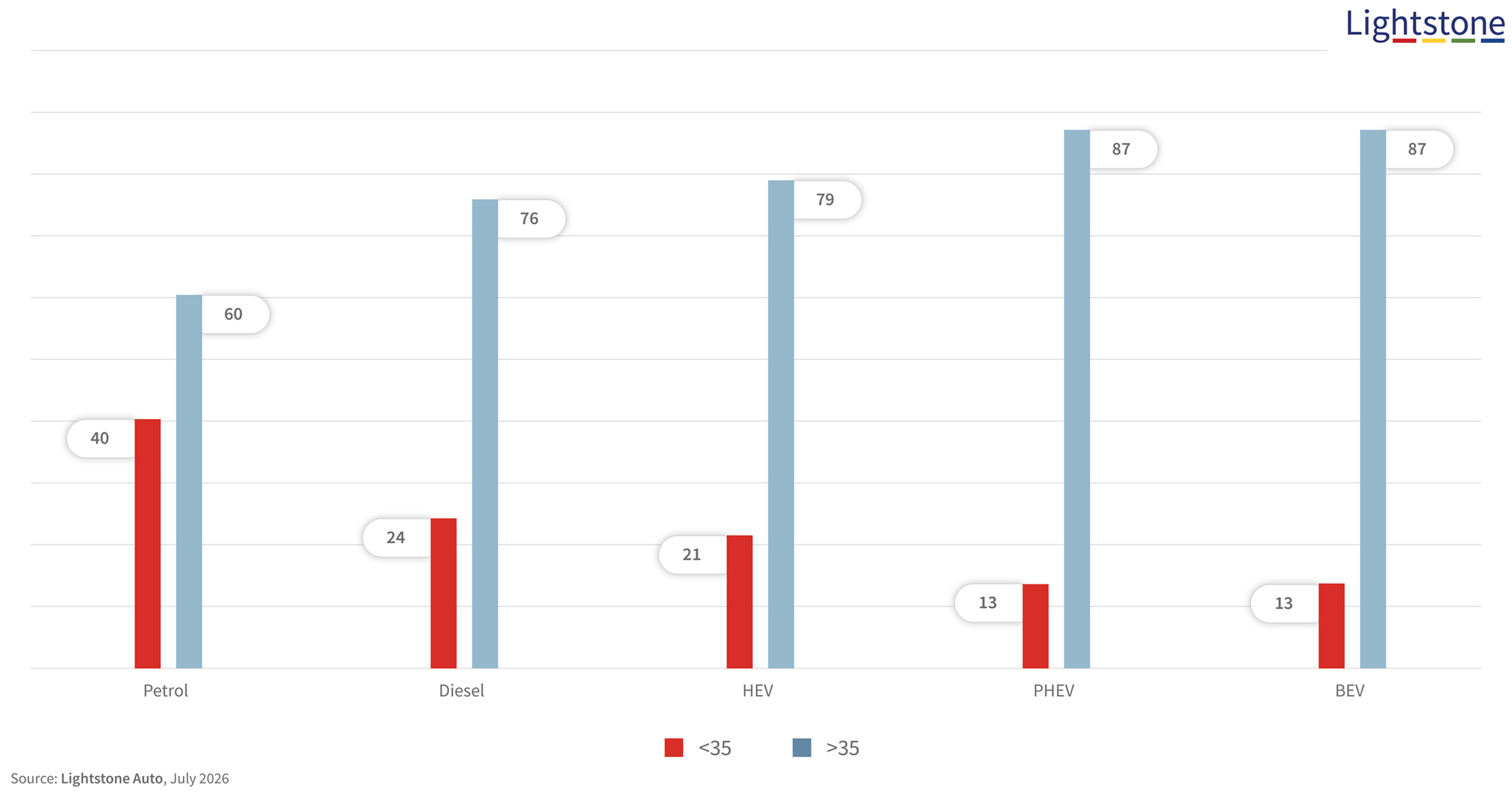
Overall, 40% of all petrol-powered vehicles sold in 2025 were bought by buyers under 35, with 24% of all diesel vehicles, 21% of HEVs, 14% of PHEVs and just 13% of BEVs being purchased by under-35s last year.
Lightstone Auto’s findings highlight a complete shift in buyer behaviour from both younger buyers and more established car owners since 2015, as well as changes in the used and new-vehicle market.
Today, both younger and older buyers are more likely to opt for a Chinese vehicle than ten years ago, and younger buyers are far more likely to go shopping in the used segment than before.
Car buyers over 35 are also far more likely to buy a new energy vehicle than their under-35 counterparts, likely due to the higher prices of these vehicles.




 Loading ...