Ford and Geely agreed to form a joint venture at the US carmaker’s underused factory in Spain to co-develop electric cars and bring four new models to the plant to better compete in Europe.
Ford will own two-thirds of the venture with Geely holding the remainder, the companies said Thursday.
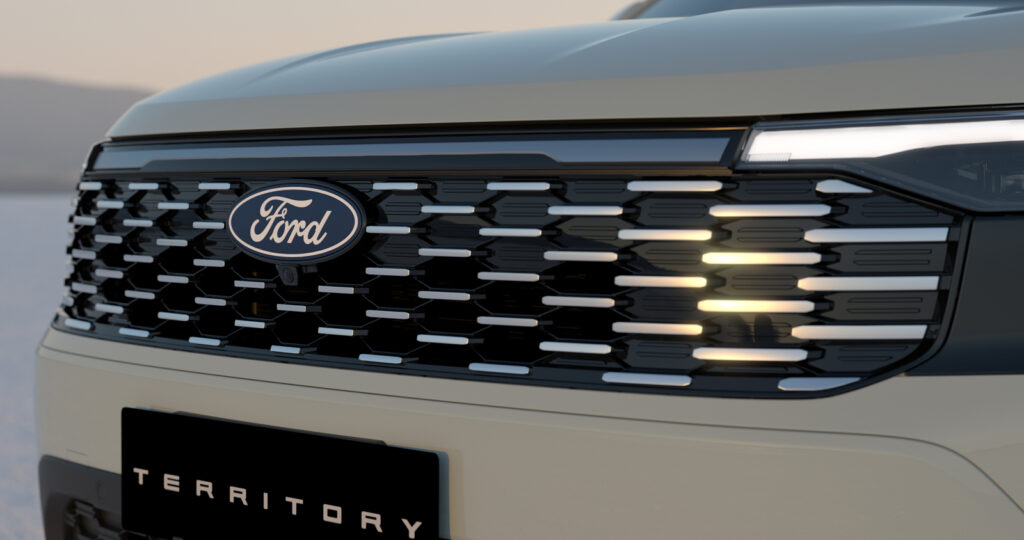
The plans at the facility in Valencia include jointly developing a new Ford crossover, as well as an additional member of the Bronco sport utility vehicle family. The first cars will start to roll off the production line in 2028.
Ford currently produces the Kuga crossover at the Almussafes facility. The venture with Geely is expected to begin operating in the first half of 2027, subject to regulatory approval, while Kuga production will continue uninterrupted.
The pact “addresses the new realities of the European market — intense global competition, relentless cost pressure and tightening regulation,” Ford said in a statement.
The collaboration, in the works for months, highlights Sanchez’s determination to increase Spain’s role in European automaking as the segment restructures.
The premier has been courting Chinese carmakers by providing a local manufacturing base to sidestep European Union tariffs on their EV imports, while offering a deep supplier network, skilled labour and low energy costs.
Sanchez visited the Valencia plant Thursday for the announcement, which Ford said would provide the facility with long-term stability and the potential to create high-tech manufacturing jobs.
The companies aim to pool their production volumes and purchasing strength to reduce the cost of every vehicle made there.
The push is gaining urgency as Chinese manufacturers win a larger share of Europe’s car market, strengthening the case for producing vehicles closer to local buyers.
MG, owned by SAIC, and BYD together accounted for 5.4% of registrations last month, compared with 3.4% a year earlier.
The Ford-Geely venture also reflects a broader convergence between European carmakers seeking cheaper technology and fuller factories and Chinese groups looking for a local manufacturing foothold.
Stellantis and Leapmotor are pursuing a similar model in Spain, with plans to build the Chinese company’s B10 electric SUV alongside a new Opel model at the group’s Zaragoza plant and allocate further Leapmotor vehicles to its Madrid facility.
The Geely deal will also support Ford’s plan to introduce five new passenger vehicles in Europe by 2029.
The new crossover will be designed by Ford and developed jointly with Geely, while the compact Bronco will be tailored for European roads and positioned as an adventure-focused SUV. Both will be offered with a choice of powertrains.
Geely plans to build two fully electric SUVs at the site, marking a significant expansion of its European manufacturing presence.
The Chinese company has been rolling out models including the EX5 electric SUV across the region as it seeks to establish the Geely brand alongside its existing Volvo, Polestar, Zeekr and Lynk & Co. operations.
Chery and Spanish brand Ebro have revived a former Nissan factory in Barcelona that now employs more than 1,500 people.
BAIC is set to produce off-road cars with the resuscitated brand Santana in the Andalusia region.
The most ambitious plan is the partnership between Stellantis and CATL for a €4.1 billion (R78.43 billion) battery factory in Zaragoza that is set to start operations in 2028.
Sanchez and his team contend the Chinese investments can help safeguard manufacturing jobs while speeding the transition to electric vehicles.
The government has said Chinese investments will create thousands of jobs while acknowledging that some projects initially will rely on Chinese workers and technology.
Ford has a longstanding relationship with Geely, having sold Volvo to the Chinese company 16 years ago. Bringing Geely in could help boost utilisation in Valencia and preserve or restore jobs.
The Almussafes plant, once Ford’s largest outside the US, has been running at less than a quarter of its annual capacity of 450,000 vehicles.
Geely has been expanding across Europe with models including the EX5 electric sport utility vehicle.
Producing cars in the region would also help the company lower shipping costs, while signalling to dealers and customers that it plans to remain in the market and provide parts and service support over the long term.
Factory collaborations are common in the auto industry, allowing manufacturers to spread fixed costs and share established workforces and supplier networks.
Stellantis produces Toyota-branded vans at plants in France, Spain and Italy, for example, while Ford builds VW’s Amarok pickup alongside the Ranger in South Africa and its Transit Custom alongside the VW Transporter in Turkey.





 Loading ...