
Portable tool lets South Africans test diesel quality to protect their vehicles – and we tested it


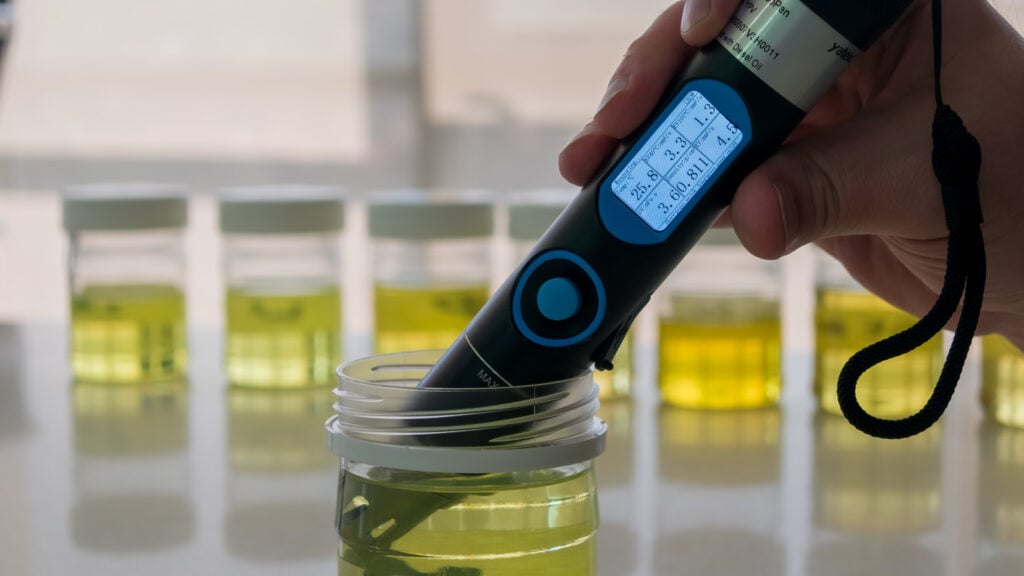
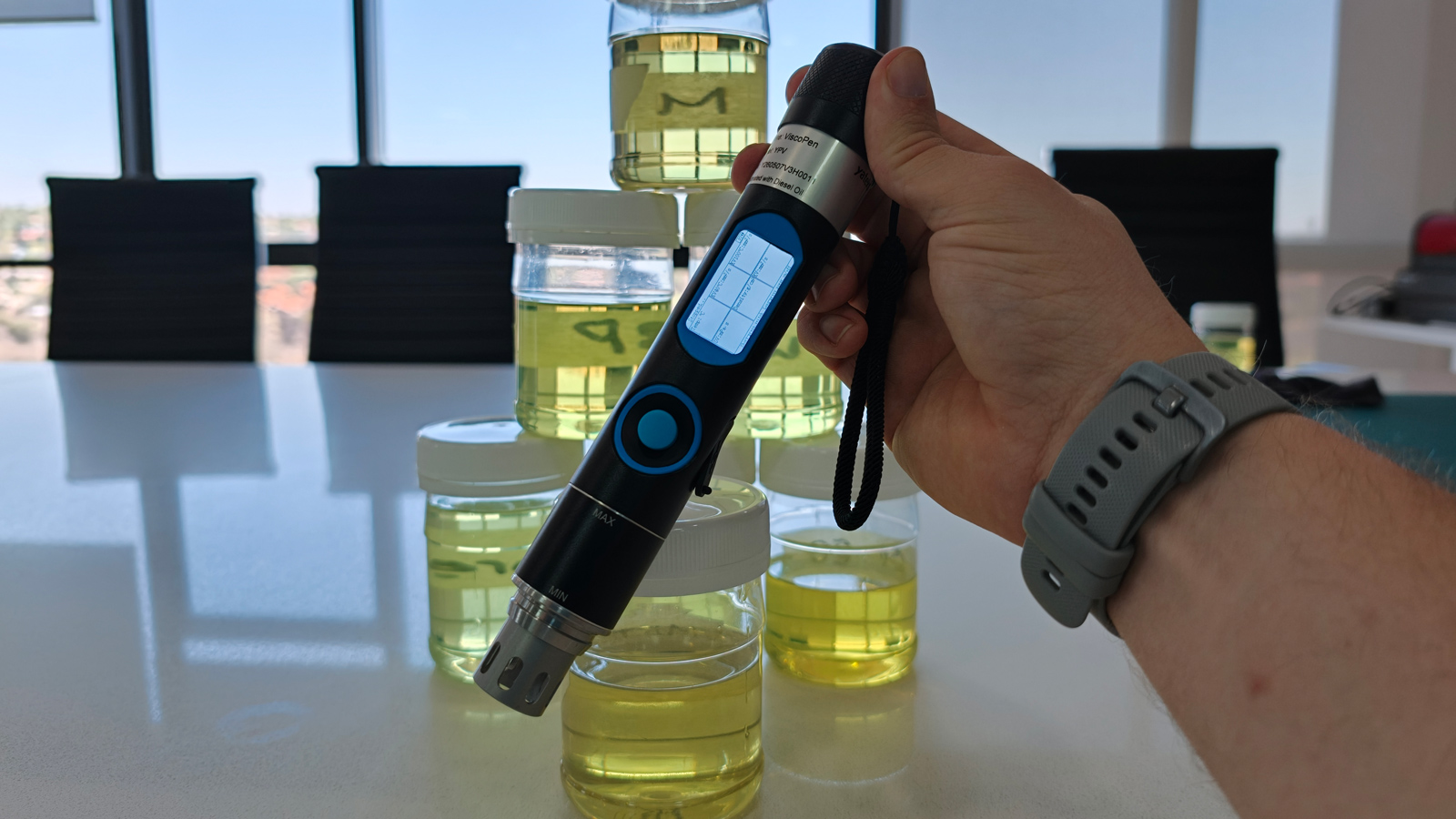
TopAuto, together with MyBroadband, recently tested a handheld electronic diesel quality sensor, which gives users an accurate reading of the density and viscosity of a test sample.
We used it to test a variety of diesel samples from fuel stations across Gauteng, and although all samples were within approved ranges, several showed concerning results.
“Dirty diesel” has become a growing concern in South Africa, as reports of adulterated diesel have skyrocketed – especially amidst high fuel prices.
The illegal practice of adulteration occurs when fuel sellers dilute diesel with cheaper substances, like paraffin, to reduce costs.
In May 2026, ESG Analytics economist Sifiso Skenjana, in an interview on 702, warned that the practice was on the rise, with hundreds of petrol stations involved.
He highlighted data shared by Bidvest Protea Coin COO Waal de Waal in an interview on eNCA, stating that Bidvest identified more than 100 suspected illicit fuel depots across South Africa.
“Mixing and blending have been around for years, but on a very small scale. But these days, it’s just getting out of hand,” De Waal said.
Poor-quality or adulterated diesel can have severe effects on diesel vehicles – especially modern diesel engines, which are typically designed to run on high-quality, clean diesel fuel.
Most modern diesel engines run at very high pressures with extremely tight tolerances, which requires fuel with specific chemical characteristics to perform well.
For example, diesel that has been diluted using paraffin has a lower lubricity factor, which means it might not meet the lubricity requirements of modern engines.
The result is additional wear and tear on an engine, as it can wear out expensive injectors and high-pressure fuel pumps much faster.
This damage is not always instantaneous, and may only present itself much later, making it difficult to link it to a specific source of fuel, but the result can be damage totalling tens of thousands of rands.
The Yateks Viscopen
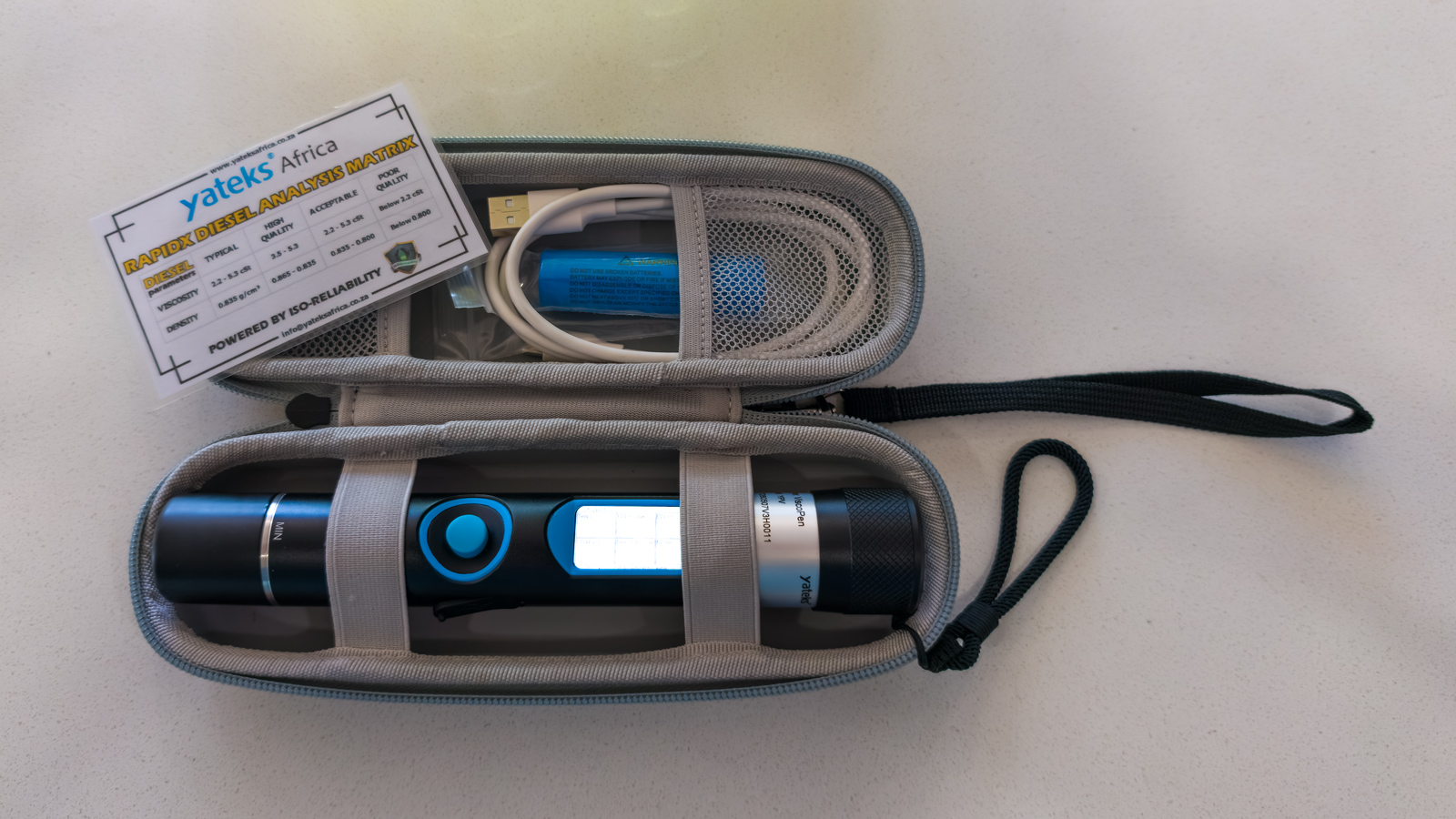
The Yateks Viscopen lets you test a sample at a garage before filling up, giving you the option of filling up at a different station if the diesel appears to be low-quality or adulterated.
Density and viscosity are among the first indicators available to a consumer about diesel quality, and the possible mixing of paraffin.
According to SABS standards, diesel in South Africa must have a density of 0.800 to 0.847 kg/l at 20 degrees Celsius.
Kinematic viscosity at 40 degrees Celsius needs to be between 2 and 4.5 cSt.
Diesel density and viscosity need to fall within these parameters regardless of the sulphur content, typically labelled in parts per million at the pump (500ppm or 50ppm).
Illuminating paraffin generally has a density of around 0.790-0.800 kg/l and a kinematic viscosity of around 1.3 cSt.
As a result, the lower the number for both density and viscosity, the higher the chance of adulteration, as a higher paraffin content will lower the overall density and viscosity.
However, it is merely an indicator of potentially poor-quality diesel, not necessarily definitive proof of adulteration.
Our tests
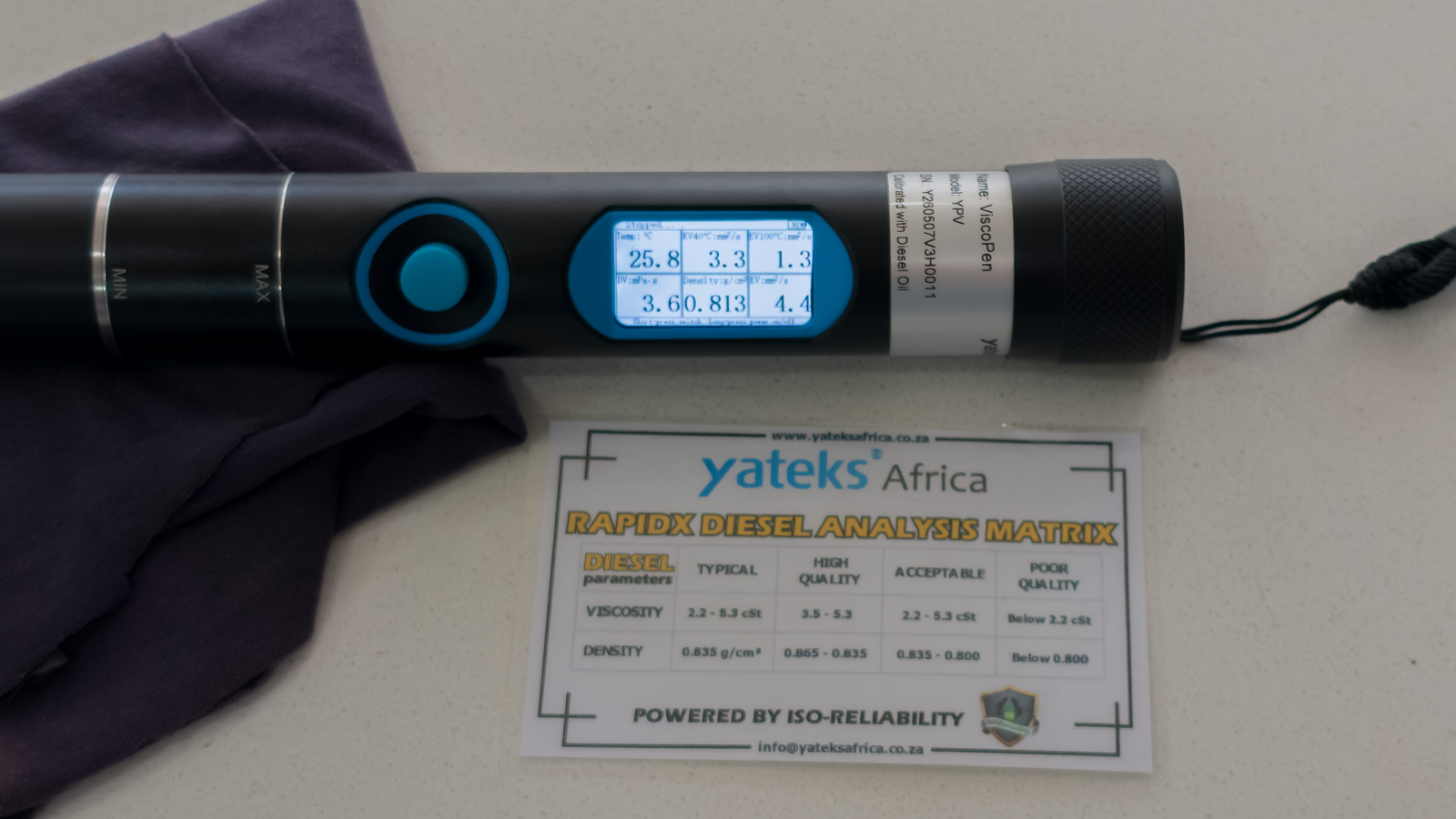
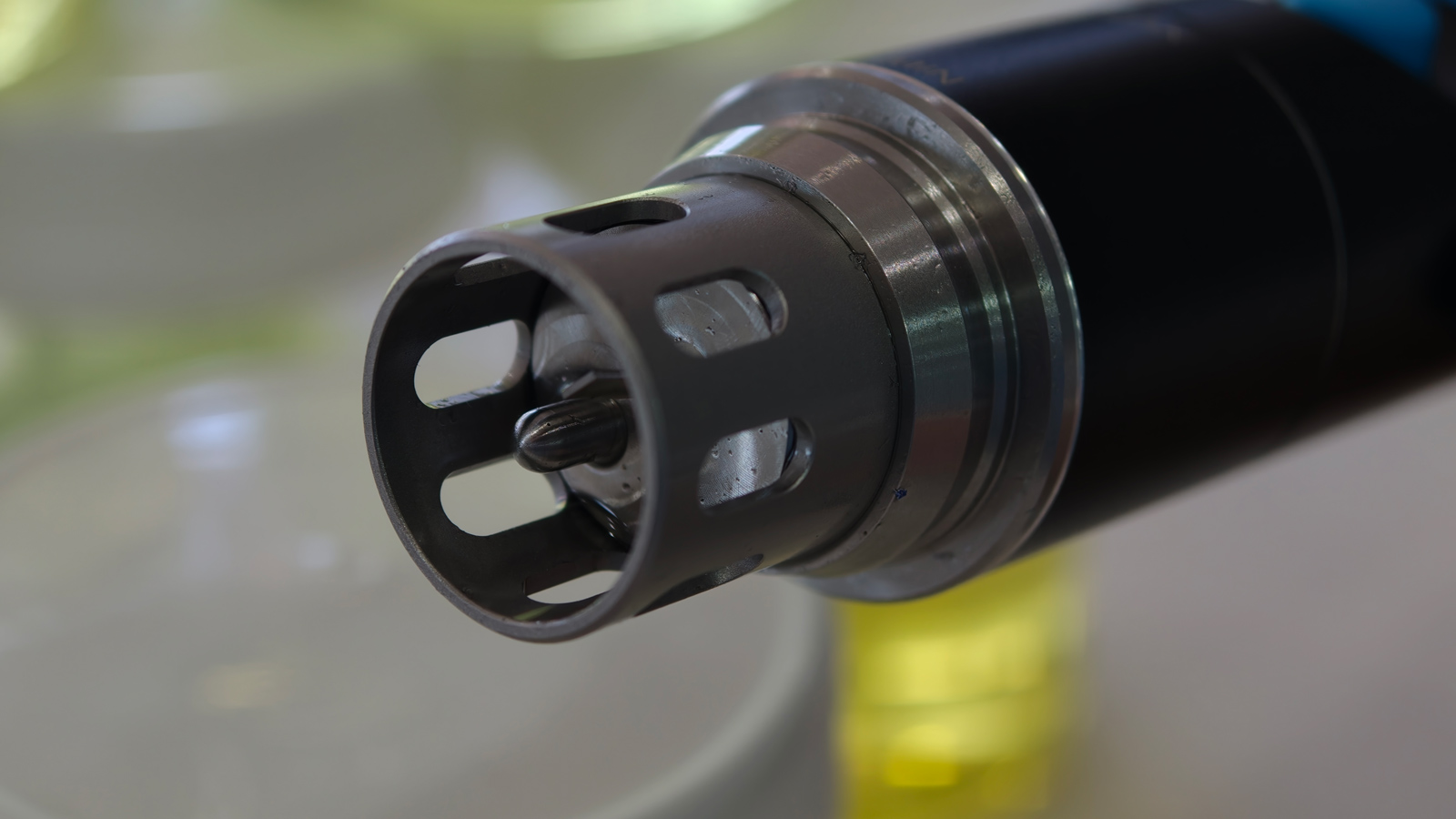
Chemical engineering degrees are not required to use the Viscopen. You hold the power button to turn it on. Then place the sensor in your diesel sample and hit the button a second time to start testing.
Hold it there for a few seconds to get a reading, and then you can press the button again to stop the reading and hold the values on the screen.
MyBroadband tested fuel from nine different garages in Gauteng, and found that several of the most expensive fuel samples had the lowest density and kinematic viscosity.
Many of the cheaper samples significantly outperformed the more expensive options.
However, all the tested samples fell into the approved ranges for density and viscosity.
The table below lists all the tested diesel samples.
| Garage type | Sulphur content (ppm) | Price/l | Density (kg/l) | Kinematic viscosity at 40C (cSt) |
| Local brand | 10 | R29.73 | 0.830 | 3.7 |
| Local brand | 10 | R29.45 | 0.821 | 2.2 |
| National brand | 10 | R29.29 | 0.831 | 3.2 |
| National brand | 50 | R29.26 | 0.824 | 2.5 |
| Local brand | 50 | R29.18 | 0.823 | 2.6 |
| Local brand | 50 | R28.99 | 0.822 | 2.4 |
| National brand | 50 | R28.83 | 0.836 | 3.6 |
| National brand | 50 | R28.82 | 0.829 | 3.0 |
| Local brand | 50 | R28.30 | 0.840 | 3.9 |
| National brand | 50 | R27.31 | 0.826 | 3.5 |
| Private Garage | 50 | R26.98 | 0.832 | 3.4 |






 Loading ...
-2026.10.webp)



-2026.10.webp)
Conversation
1 commentsWhy not provide a link and price of the device in the article? Just for interest this product cost about R17500. Not something the average HiLux owner is going to keep in his glovebox.