BMW’s profit from carmaking in the second quarter was slightly better than expected after the German company reduced spending and benefited from strong demand for its new models.
The manufacturer’s automaking EBIT margin came in at 2.3% in the period, BMW said Thursday. While that’s sharply down from a year ago, it was slightly ahead of estimates and within the 1% to 3% forecast range for this year.
Competition in the global auto industry has “sharpened noticeably,” Chief Financial Officer Walter Mertl said in a statement.
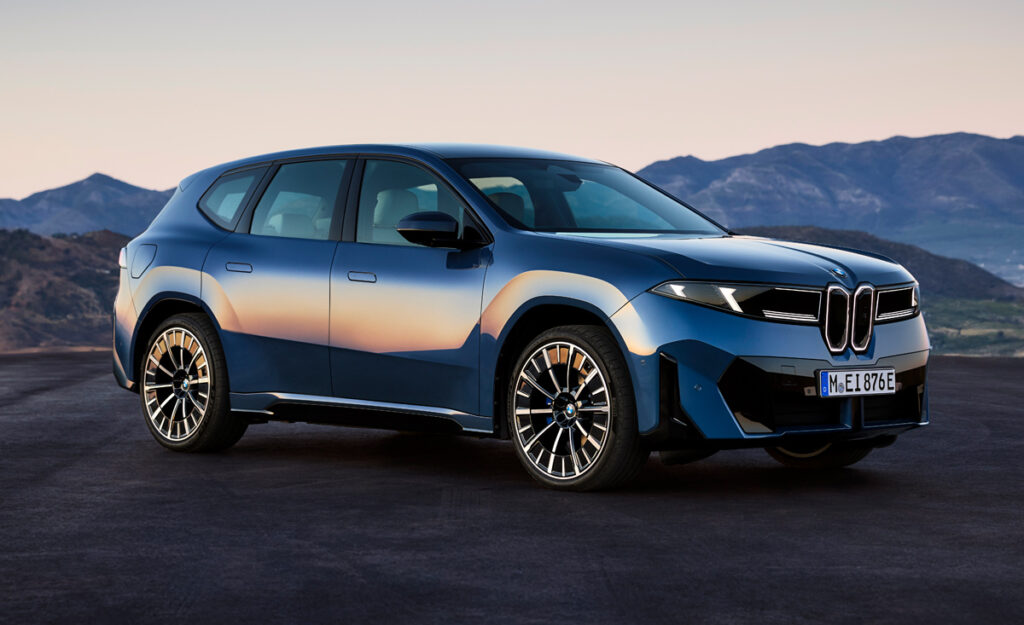
Still, new models like the iX3 SUV, the first model of BMW’s Neue Klasse lineup, continue to sell well, with the i3 sports sedan, launched in June, seeing strong orders.
BMW rose 0.7% in early trading in Frankfurt. The stock is down about a third so far this year.
The Bavarian carmaker is following in the footsteps of peers like Mercedes-Benz in looking to accelerate cost cuts, as broad challenges beset much of Europe’s automotive industry.
These include slumping business in China, US tariffs as well as fallout from the Middle East that’s hitting consumer sentiment.
Import duties to the US and Europe shaved BMW’s EBIT margin by about 1.25 percentage points in the second quarter, the company said Thursday.
BMW is also dealing with unfavourable currency swings and higher commodity prices, it said.
The main new lever for cuts, following savings of €2.5 billion (R47.4 billion) last year, is a plan to shed 8,000 jobs, roughly 5% of its workforce, with BMW this week reaching a deal with workers to start offering severance packages.
The manufacturer also recently decided to pull out of the Paris car show as the company shifts its priorities.
“The sales decline in China has had a dramatic effect on BMW automotive profitability, and despite BMW’s continued optimism, we see no recovery for BMW (and peer) performance in that region,” Citigroup analyst led by Harald Hendrikse said in a note.
“BMW will have to sharply improve its European and US profitability.”
BMW intends to return to a long-standing EBIT margin target of 8% to 10% by the start of the next decade, Chief Executive Officer Milan Nedeljkovic said in prepared remarks.
The company is also considering new partnerships and better tailoring its products to local tastes, he added.
“The automotive industry is faced with rapidly escalating challenges,” Nedeljkovic said. “That’s why it’s important to be lean and agile.”
Belt-tightening measures are also gaining speed in part thanks to more use of artificial intelligence in its development unit, Mertl added.
Beyond China, the increased competition led by Chinese exports from the likes of BYD has also escalated across the Asia-Pacific region, dragging down car sales for the company globally.
Even so, BMW is seeing growth in both Europe and the US, where deliveries expanded nearly 12% in the second quarter.
BMW confirmed the 2026 outlook from last month’s warning that negatively surprised investors. The new prediction puts it on course to be the least profitable major European automaker.
The most pressing challenge remains China, BMW’s largest single market.
The combination of mounting competition from local manufacturers such as smartphone maker Xiaomi — especially on electric vehicles — and a property crisis is weighing on all carmakers there.
In the second quarter, BMW’s car sales in China came in below the levels recorded in the Americas for the first time in a decade.



 Loading ...
-facelift-2-2025.10.webp)
-2025.11.webp)