South African transport authority held responsible for serious crash on a dangerous road


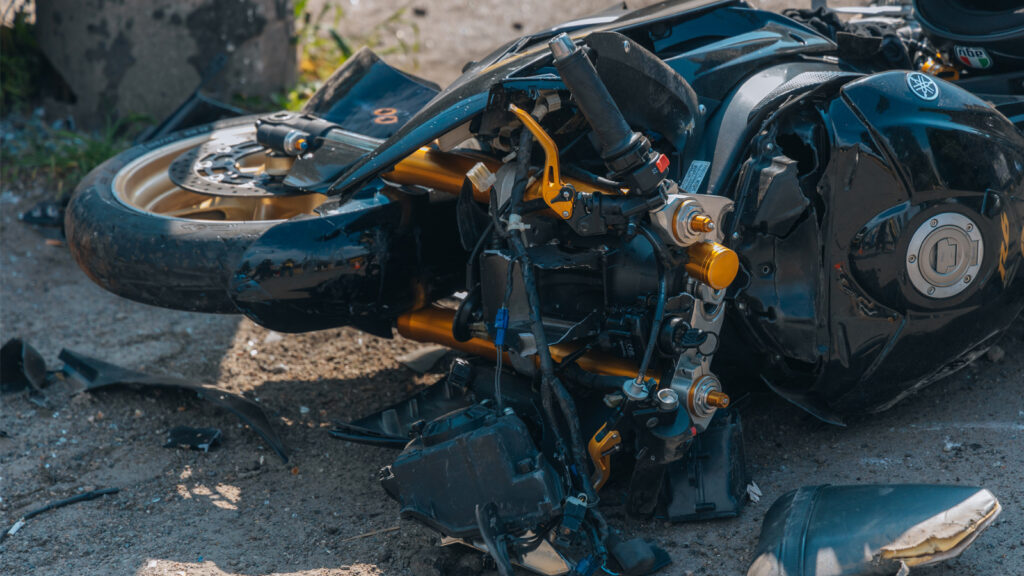
The Western Cape Department of Transport and Public Works is being held liable for a vehicle accident that occurred on one of the province’s roads, setting a precedent for road authorities to be held accountable for injured road users across South Africa.
In a landmark High Court judgement, the department was held fully liable for a serious motorcycle crash on the R43 near Villiersdorp back in October 2010.
The crash took place on the Rooihoogte Pass and involved two persons, motorcyclist Andries Kruger and his wife, Elaine Blanckenberg, who were travelling to Worcester for a motorcycle rally.
As they reached the top of the hill, the road appeared to continue straight ahead. However, immediately beyond the rise was a sharp right-hand bend.
With insufficient warning and inadequate signage, the motorcycle left the roadway, leaving both riders seriously injured. Kruger was unconscious for three days following the collision.
During the trial, evidence was presented showing that the bend had long been recognised by residents as an accident “black spot.” Witnesses shared examples of several other accidents and fatal crashes that occurred at the same location.
Testimony revealed that residents had repeatedly warned the authorities about the dangers posed by the concealed curve and that there were inadequate warnings.
Some of the key chevron signs meant to signal the sharp bend were missing entirely, while others only became visible once motorists had already entered the bend, leaving them without enough time to react safely.
The court accepted the evidence of the plaintiffs’ road engineering expert, who concluded that the signage failed to provide motorists with adequate warning of the hidden hazard.
Additionally, the court rejected much of the evidence presented by the department’s expert witness and drew an adverse inference from the department’s failure to call its own roads engineer to explain why the warning signage was substantially upgraded after the accident.
Consequently, the High Court determined that the Western Cape Department of Transport and Public Works was fully liable for the crash. It rejected allegations of contributory negligence by the injured couple.
The court also awarded damages and punitive legal costs against the department after it rejected a reasonable settlement offer and forced the injured party to sit through years of litigation.
What the ruling means for South African transport authorities
Kirstie Haslam, Partner and personal injury attorney at DSC Attorneys, who represented the plaintiffs, stated that the High Court judgment sets an important precedent for road authorities across South Africa.
“This judgment reinforces that road authorities cannot ignore known hazards. When there is evidence that a dangerous stretch of road has caused repeated accidents, authorities have a legal obligation to assess the risk and implement appropriate safety measures,” she said.
“If they fail to do so and someone is injured, they can be held fully accountable.”
Haslam added that the punitive costs awarded against the department were equally significant, as it establishes that the defendant in these cases cannot drag out the process unnecessarily at the plaintiff’s expense.
“The court made it clear that defendants cannot simply force injured people through years of expensive litigation where liability is reasonably apparent,” she said.
“Punitive costs orders are relatively uncommon and reflects the court’s disapproval of litigation conduct that unnecessarily prolongs proceedings and increases costs for victims.”
She argued that the case also highlights an important issue often overlooked by motorists, which is that the driver is not always the primary cause of an accident.
“People often assume every road crash is the driver’s fault. This judgment demonstrates that sometimes the condition of the road itself, inadequate maintenance or defective signage is the real cause of the collision,” said Haslam
“Where that is the case, injured road users may have valid claims against the responsible authority.”
Haslam believes that this case will become more relevant as time passes, given the deteriorating state of South Africa’s road infrastructure, and that legal practitioners and road authorities will take note of the judgment.
The case will now proceed to the quantification phase, with the amount of damages due to both of the plaintiffs set to be finally determined.
“For motorists injured because of unsafe road conditions, the judgment reinforces an established legal principle,” explained Haslam.
“Authorities responsible for public roads owe road users a duty to take reasonable steps to ensure those roads are safe, and may face substantial liability where they fail to meet that obligation.”






 Loading ...
-facelift-2-2025.10.webp)