Transport Minister Barbara Creecy has accelerated her department’s push towards a zero-alcohol-tolerance driving policy, but several stumbling blocks, including enforcement, remain.
This is according to Kashifa Ancer, Project Lead of DG Murray Trust’s Alcohol Harms reduction campaign, Rethink Your Drink.
She told CapeTalk that enforcement remains a key weakness, as police and traffic officials are already struggling to enforce the current 0.05g per 100ml limit.
“If we’re proposing to have a 0.0 limit for a zero-tolerance attitude toward drinking and driving, a perfect legal limit achieves very little if the drivers believe that they’re unlikely to be tested or they’re unlikely to be caught,” she said.
“It would be beneficial for the Ministry of Transport, when drafting this new legislation, to consider how exactly they’re going to be enforcing a true analytical zero.”
Ancer added that if a motorist has had a small amount of medication, something fermented, or a slice of Christmas cake, there could be residual alcohol in their mouth.
“So, does somebody with that residual amount of alcohol who’s not really at a true analytical zero deserve the same kind of criminal consequences as somebody who is very clearly over a legal limit that causes risk on the road?” she asked.
According to Ancer, an absolute zero-tolerance policy would remove variables that determine whether someone is above or below the legal limit, including their weight, their gender, or how they metabolise food and alcohol.
That said, several enforcement measures need to be considered, including increased policing and testing, and more equipment in the hands of law enforcement.
Other complementary policy measures will also need to be considered, including alcohol pricing, limiting advertising, and even limiting alcohol sellers’ trading hours.
Ancer explained that South Africa’s criminal justice system is also not equipped to cope with more cases or follow through on prosecuting every single person arrested for driving over the absolute zero limit.
She added that if authorities reach capacity dealing with those barely over the limit, it creates a situation where those who are well over the limit and pose a real danger may not be prosecuted at all.
Zero-alcohol driving law one step closer to implementation
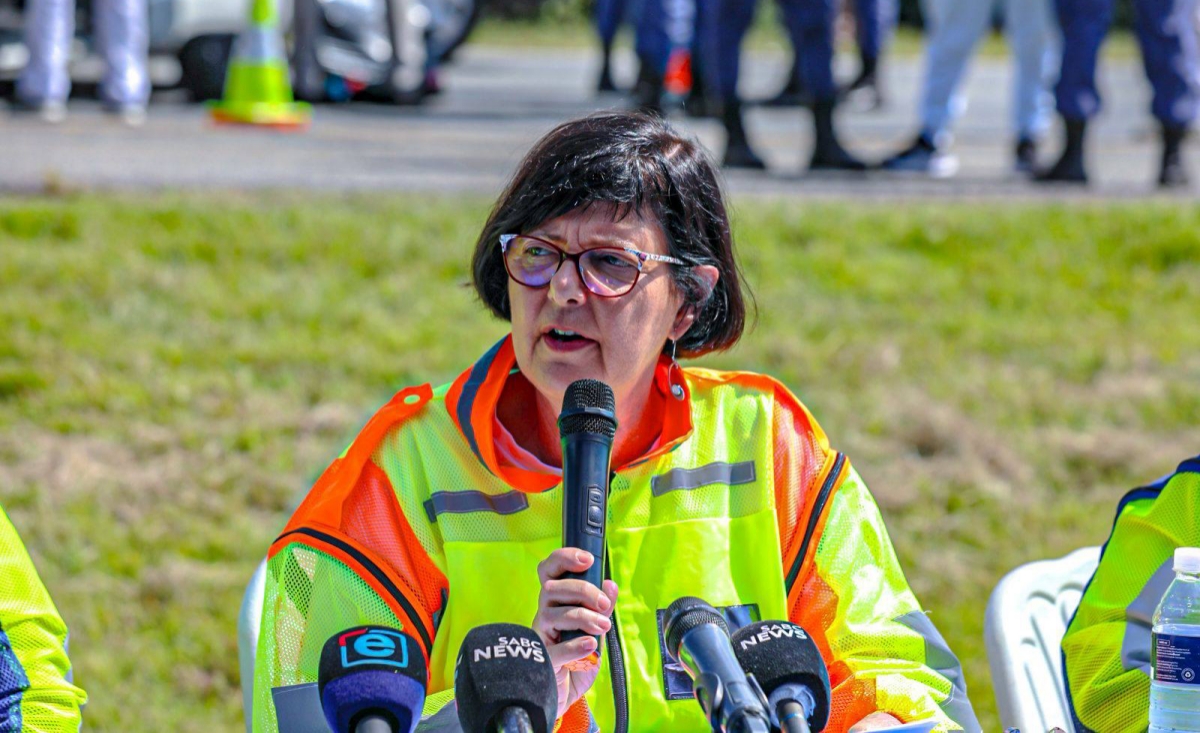
Despite the relatively widespread objections and concerns, Minister Creecy’s plan to reduce South Africa’s legal drink-driving limit to zero is one step closer to implementation.
Creecy explained at the Road Safety Practitioners’ Colloquium that her department is seeking approval to amend Section 65 of the National Road Traffic Act by the end of the year.
“We are acquiring approval from the Chief State Law Advisor and the Socio-Economic Impact Assessment System (SEIAS) to secure cabinet concurrence for this amendment by the end of 2026,” she said.
The minister revealed that 18,000 people were arrested for drunk driving between March and August 2026, accounting for a third of all traffic violation arrests during that time.
While not all were directly linked to alcohol use and driving under the influence, nearly 12,000 road deaths are recorded in South Africa every year.
To combat this, and in line with the United Nations Sustainable Development Goals, the country is targeting halving road deaths by 2030.
Progress has already been made towards this goal, as 6% fewer annual crashes and fatalities were recorded last year compared to 2024.
“During the 2026 Easter long weekend, the Road Traffic Management Corporation (RTMC) recorded the second-lowest crashes and fatalities over the past 4 Easter periods,” the minister revealed.
Compared to 2024’s Easter road death statistics, this year’s crashes declined by 24% and fatalities by 39%.
“While these statistics are commendable, the numbers remain too high. We therefore need to ramp up and intensify our existing efforts to continue seeing a reduction in these figures,” Creecy said.



 Loading ...