New rules for traffic police in South Africa – including when they can arrest you


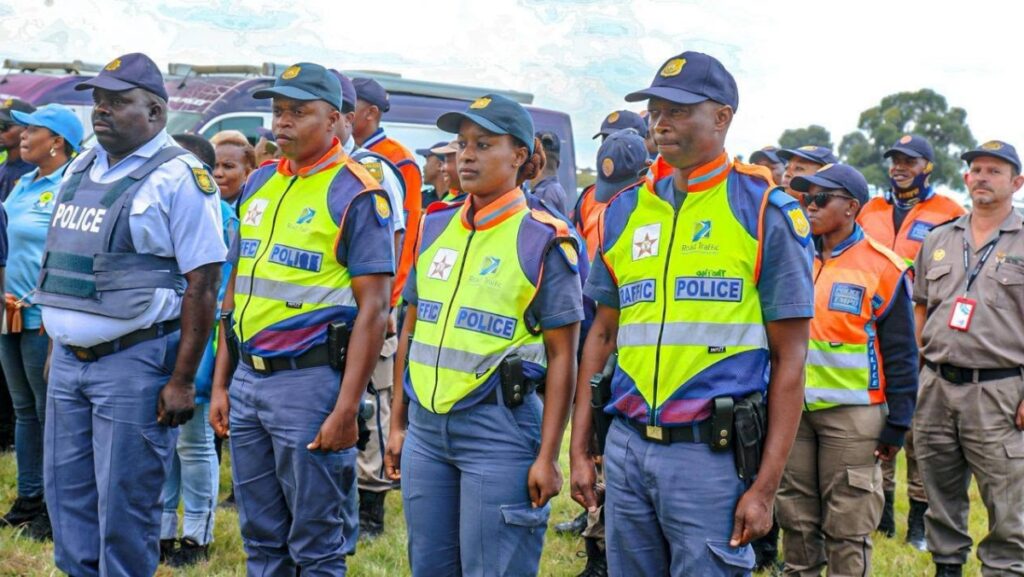
The Department of Transport gazetted a determination by the CEO of the Road Traffic Management Corporation (RTMC) regarding the powers, enforcement duties, and minimum training standards for traffic wardens.
Dated 18 September 2026, the notice was issued by Advocate Makhosini Msibi, CEO of the RTMC and states that traffic wardens must first complete an accredited qualification or skills programme.
The determination outlined that only accredited programmes meeting strict criteria will be accepted under the new standards.
These criteria include being approved by the Quality Council for Trades and Occupations (QCTO) or the relevant Sector Education and Training Authority (SETA).
Additionally, qualifications must be registered on the National Qualifications Framework (NQF) under the Occupational Qualifications Sub-Framework where applicable.
Finally, programmes must be conducted at an officially approved Traffic Training Centre under the National Road Traffic Act, following a curriculum determined by the RTMC.
Once qualified, traffic wardens can exercise their authority subject to the National Road Traffic Act, the Criminal Procedure Act, the Adjudication of Road Traffic Offences (AARTO) Act, and local traffic by-laws.
Under these, their duties include controlling traffic on public roads to ensure safe and efficient flow, conducting point duty, performing foot patrols, and managing road closures.
Beyond this, the determination outlines their role as law enforcement officials, enabling them to issue Section 56, Section 341, and AARTO 31 notices for parked vehicle infringements.
Traffic wardens are responsible as first responders to secure and protect incident and accident scenes, offering roadside assistance to the public, and even enforcing regulations regarding stray, injured, or dead animals on public roads.
The Gazette also outlined pedestrian enforcement responsibilities, including monitoring pedestrian adherence to road safety rules and performing vehicle area patrols.
While conducting these duties and responsibilities, several infringements could lead to arrests and vehicle impoundment, including warrantless arrests.
When a traffic warden can arrest you and impound your car

Notice No. 7935 in the 18 September Gazette explicitly outlines the conditions under which traffic wardens may execute an arrest or arrange for a vehicle to be clamped and impounded.
Put simply, traffic wardens are empowered to arrest any offender without a warrant when an offence is committed in their presence.
These include drunk driving, reckless or negligent driving, racing, failing to stop after an accident, refusing to present identification documents, and even obstructing an officer in the execution of their duty or acting violently.
During an arrest, wardens can demand the full names and residential address of any person they have the power to arrest, reasonably suspect of committing or attempting to commit an offence.
These arrests are exercised subject to the general provisions of the National Road Traffic Act, the Criminal Procedure Act, and the AARTO Act.
The good news is, motorists cannot be arrested merely for speeding or at a roadblock due to outstanding traffic fines.
That said, if a motorist is arrested for any of the above offences witnessed by a traffic warden, their vehicle will naturally be impounded.
Additionally, a vehicle can be impounded for any number of parking by-law infringements, but this requires wardens to arrange for vehicles to be clamped or removed by traffic tow-trucks to a designated traffic vehicle pound.
Reasons for impounding a vehicle include critical safety defects that pose an immediate danger on the road, being unregistered, having fraudulent licence plates, or displaying a fake disc.
A vehicle suspected of being stolen or used in the commission of a crime can also be impounded by traffic officials.
The Gazette specifically outlines limits on other equipment and licence disc infringements, noting that wardens are limited to issuing written roadside notices for a range of infringements and violations.
These include violations involving licence discs, registration number plate display, and tyre roadworthiness on parked vehicles, which limits wardens to issuing Section 56, Section 341, or AARTO 31 notices.
That said, South Africans have the right to challenge traffic infringement notices and unlawful arrests, provided they follow the correct legal procedures.




 Loading ...