Pretoria in Gauteng is home to three major car factories that have been producing cars for decades, though one of these sites is undergoing a major shift.
South Africa’s smallest province is also one of its largest automotive hubs, manufacturing everything from luxury sedans and SUVs to bakkies over the years.
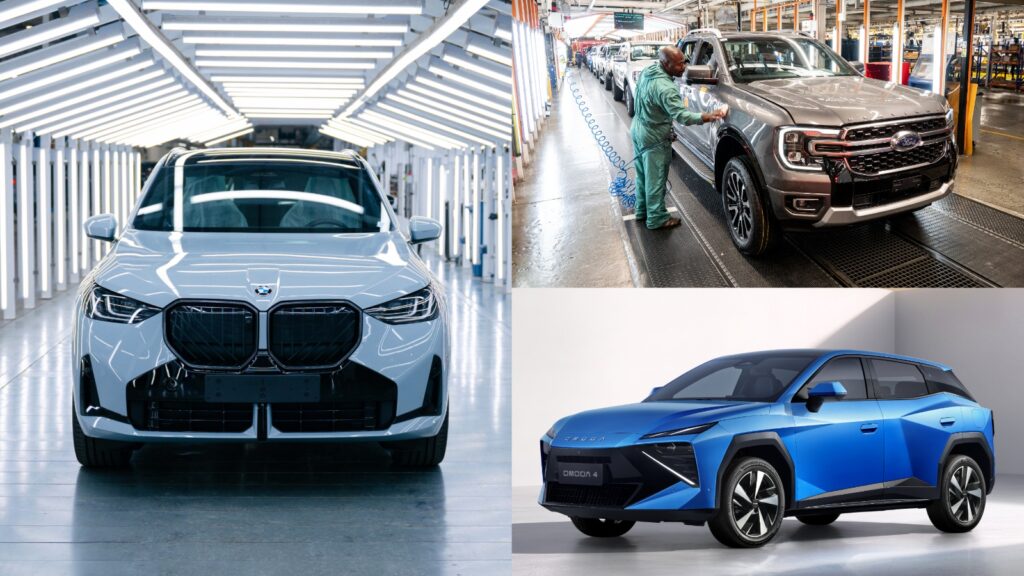
While the Eastern Cape serves as a base of operations for Volkswagen, Isuzu, BAIC, and Mercedes-Benz, Gauteng is home to BMW, Ford, and Chery, though the latter only acquired its factory this year.
The facility in question used to belong to Nissan, which had been producing cars in South Africa for over 60 years.
Back in 1963, Japanese carmaker Nissan began importing and assembling vehicles in South Africa from completely-knocked-down (CKD) kits.
Three years later, the company opened a dedicated manufacturing plant in Rosslyn, an industrial suburb in northern Pretoria.
Over the decades, Nissan invested billions of rands to expand the factory, which produced bakkies like the NP300 Hardbody, the half-tonne NP200, and the Navara.
It also assembled the NV350 Impendulo, a Toyota Hi-Ace competitor, to supply the local minibus taxi industry.
At its peak, Nissan was one of the best-selling car brands in South Africa; however, it slowly began to lose its competitive edge due to an ageing lineup of vehicles.
This wasn’t unique to Nissan Africa, as the brand has been struggling globally for several years and has shut down factories in Japan and other markets.
All of this culminated in an announcement in January 2026, where Nissan revealed that it would sell its Rosslyn factory to the Chery Group.
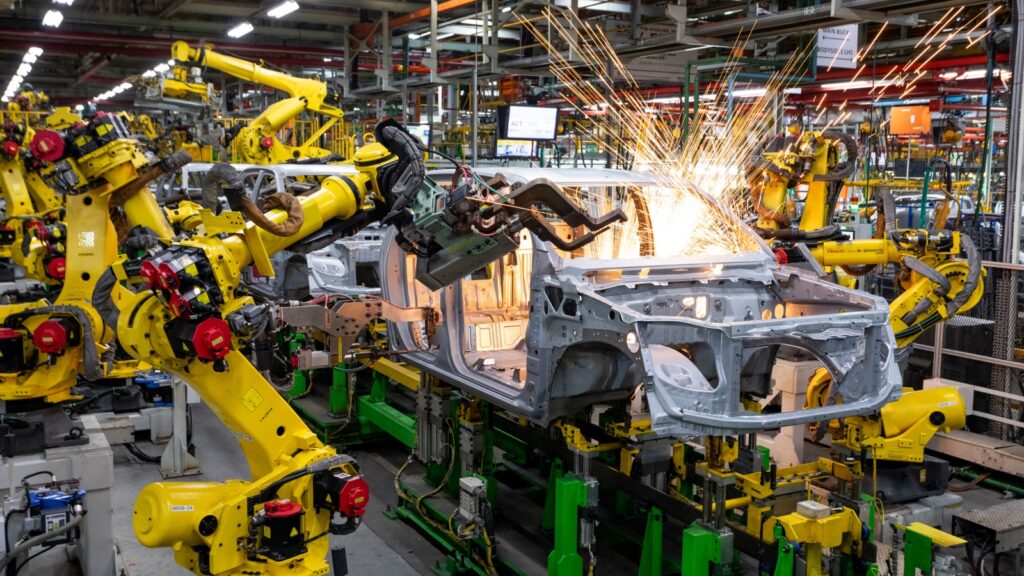
The takeover was finalised in July, and Chery is now retooling the site to produce a wide range of cars from across its family of brands.
Thus far, the list of confirmed models includes the Chery Grootman bakkie; the Chery Tiggo Cross, Omoda C4, Lepas L4, and Jaecoo J5 crossovers; and the Jetour T-Series SUVs.
Production is scheduled to begin in 2027, including internal combustion engine, hybrid, and electric models.
Pretoria’s other factories

While the Nissan-Chery takeover has dominated headlines this year, BMW and Ford’s factories are continuing to pump out vehicles for local and overseas buyers.
Ford’s plant, located in Silverton in Eastern Pretoria, is not its first factory in South Africa, as the American automaker originally started its journey at a small site in Port Elizabeth (now Gqeberha).
Ford established its local division, the Ford Motor Company of South Africa, in 1923, and produced the iconic Model T from an old wool shed in PE.
The company rapidly grew and later established a dedicated engine plant in Struandale in the Eastern Cape in 1964.
In 1985, Ford moved its vehicle assembly plant to Silverton, where it remains to this day. It currently produces the Ford Ranger and VW Amarok bakkies thanks to a global alliance with Volkswagen.
As for BMW, it established its plant in Rosslyn in 1968, making it the first BMW manufacturing facility outside of Germany.
During its 58-year run, BMW Rosslyn has produced South African exclusive models like the 530 MLE, the 333i, and the 325i.
Between 1983 and 2018, it assembled the popular 3 Series sedan for the local market and for export before the company pivoted to the X3 to take advantage of the global shift towards SUVs.
Earlier this year, BMW celebrated the production of its 100,000th fourth-generation X3. The site is also the only X3 factory in the world that produces a plug-in hybrid version of the car.

 Loading ...