
Big problem for anyone who bought a Chinese car in South Africa


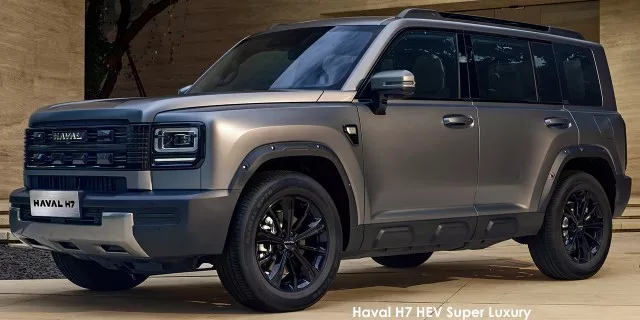
South Africans who bought Chinese cars in recent years are facing severe depreciation when trying to trade them in.
This is due to the enormous influx of Chinese vehicles over the last five years, leading to oversupply issues and uncertainty about the long-term value of these cars.
According to the Combined Motor Holdings (CMH) Group, some motorists are left owing banks more than their cars are worth.
CMH recently touched on the issues presented by Chinese cars in its interim results for the six-month period ended 31 August 2026.
It noted that the rapid growth of these manufacturers, which are considerably more affordable than their legacy rivals, has created new opportunities for buyers in South Africa.
However, it has also introduced uncertainty about resale values, as it is hard to predict which models will stand out in an increasingly saturated market.
CMH highlighted that several new brands have emerged in recent years, and that Chinese marques have seen their market share rise from 14.8% to 20% in South Africa.
“The Group has exposure to a number of the Asian brands, but with the proliferation of products and brands, and increasing each quarter, it is impossible to identify all the potential long-term winners,” it said.
A tricky market to navigate

For those who have already bought a Chinese car, the immediate concern is the pre-owned market.
Chinese cars that first entered the market in the last five years are starting to reach the age at which owners will typically start thinking about trading them in.
For some owners, they are discovering that the depreciation on their cars is far more than anticipated, creating a discrepancy between their trade-in value and their outstanding vehicle finance amount.
“The influx of Chinese/Asian brands that were introduced into the market at discount prices some four to five years ago is now at the recycle stage,” CMH said.
“However, the sharp depreciation in value of these vehicles has surprised owners and forced them to hold on for longer, until the trade-in values align with the residual amounts owed to banks.”
Resale values have also been impacted by competition from new vehicles, according to BusinessTech.
Companies have launched competitively priced models while new-car prices have experienced negative inflation in recent years.
In practice, this means that new cars have become a more attractive prospect for buyers relative to used ones, which negatively impacts people trying to sell their vehicles.
CMH said that demand for used cars has diminished as buyers are moving to the cut-price new-car market.
It reported a 10% contraction in used-vehicle sales during the period, despite increasing its new-vehicle sales by 11.2%, outperforming the national market.




 Loading ...
Conversation
2 commentsThe problem to this statement is that most people are buying with their pockets & keeping their cars for much longer with improved warranty periods. I think there is no point blaming Chinese, Asian, French, etc. In the past the choice seemed like you “getting more for your investment” on the long run. But in fact the exercise of replacing a car on the shorter run. Was that it became more expensive with the “upgraded model” with lights, fender + bumpers. The so called “version 2.0 changes” of the same platform. When replacing the car after or before the short warranty period dealerships would normally benefit from these “trade-in losses”.