
New R3-billion bakkie factory to be built in South Africa – All the details


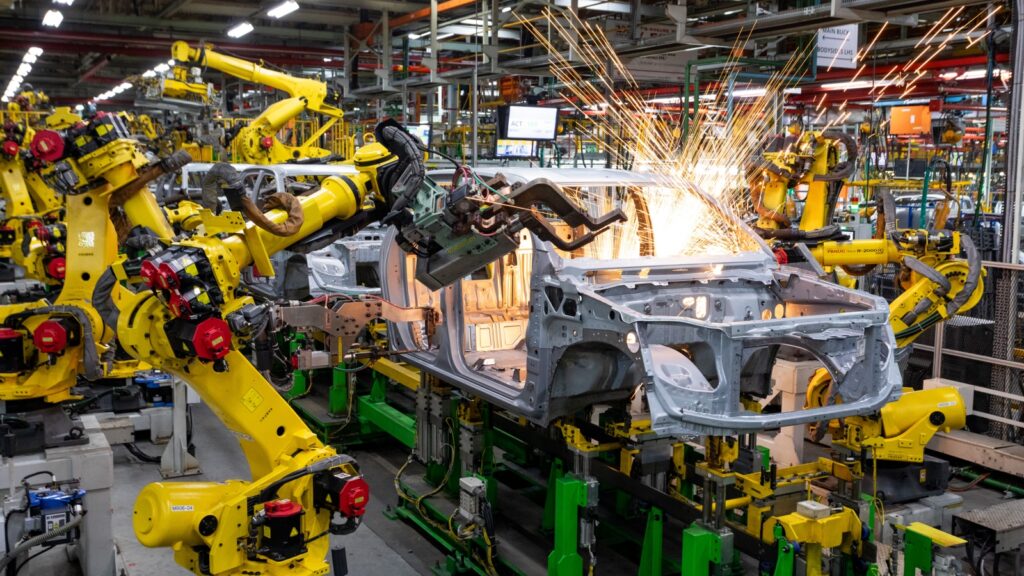
The final preparations are underway to begin construction of South Africa’s newest car factory.
The facility is the brainchild of Stellantis, a relatively new figure in the global motoring scene, which will be used to produce the Peugeot Landtrek bakkie, both for the local market and as a volume export overseas.
A total of R3 billion has already been invested in the project, which is being built in the Eastern Cape at the Coega Special Economic Zone just outside Gqeberha.
An environmental impact study has already been conducted and the Coega Development Corporation (CDC) has since begun prepping the area for construction by relocating all the nearby fauna and flora.
Ambitious plans
Stellantis was formed in 2021 as the result of a merger between the Italian–American conglomerate Fiat Chrysler Automobiles (FCA) and the French PSA Group.
Consequently, it is the third-largest automotive company in the world based on volume with 14 different brands under its wing, eight of which are sold in South Africa including Abarth, Alfa Romeo, Citroen, Fiat, Jeep, Maserati, Opel, and Peugeot.
The Peugeot Landtrek was chosen as the vehicle to be made here, which ties into a much broader strategy that Stellantis is pursuing across its portfolio as it attempts to re-organize its roster of vehicles and ensure that every nameplate has a defined role in the family with minimal price overlaps.
In South Africa, this plan is already being rolled out as Citroen is being re-positioned as an entry-level carmaker with all its products aiming for the under R400,000 bracket while Opel is targeting the mid-range passenger market with the new Corsa hatchback and Frontera crossover.

Peugeot, on the other hand, will be catering to South Africa’s hunger for midsize bakkies, with the Landtrek being the fifth locally-made option in Mzansi alongside the Toyota Hilux, Ford Ranger, Isuzu D-Max, and Nissan Navara.
In order to widen the appeal of the Peugeot to local customers, the carmaker is planning to launch two new models to go alongside the existing Allure and 4Action automatic double cabs.
This includes a new single cab as well as a lower-spec double cab aimed at the commercial sector, both of which feature a six-speed manual gearbox.
However, approximately 60% of the Landtreks produced here will be for export, with the Middle East being the primary target for overseas buyers.
“The construction of this plant is critical to Stellantis’s Dare Forward 2030 strategy,” said Stellantis Middle East Africa (MEA) COO Samir Cherfan.
“This strategy also speaks to the South African industrialization plan, which is a very important tool in helping us achieve our target to produce a million units in the MEA region by 2030 – a factor that will help us attain a 22% market share in this region.”

Stellantis aims to have the Landtrek factory up and running by the end of 2025 with the first units rolling off the assembly line by early 2026.
The plan is to manufacture 50,000 units per year, though this could potentially go as high as 90,000 units per year depending on demand, with the ultimate goal of producing 1.4 million units by 2035.
The company’s long-term objective is to have 90% of the vehicles it supplies to the Middle East manufactured in Southern Africa.
Coega was selected as the ideal location as part of a roadmap to define the region as an automotive hub for the country, as Ford, Isuzu, and Volkswagen already have operations in the Eastern Cape.
At least 35% of the workforce will come from the area, and it is anticipated that at least 1,000 new jobs will be directly created as a result of the factory.


 Loading ...