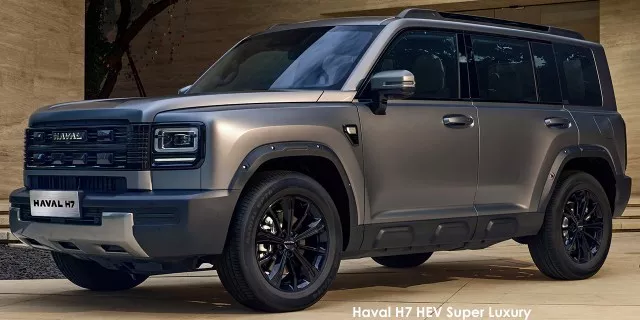
The new Chinese luxury car brand that could be coming to South Africa


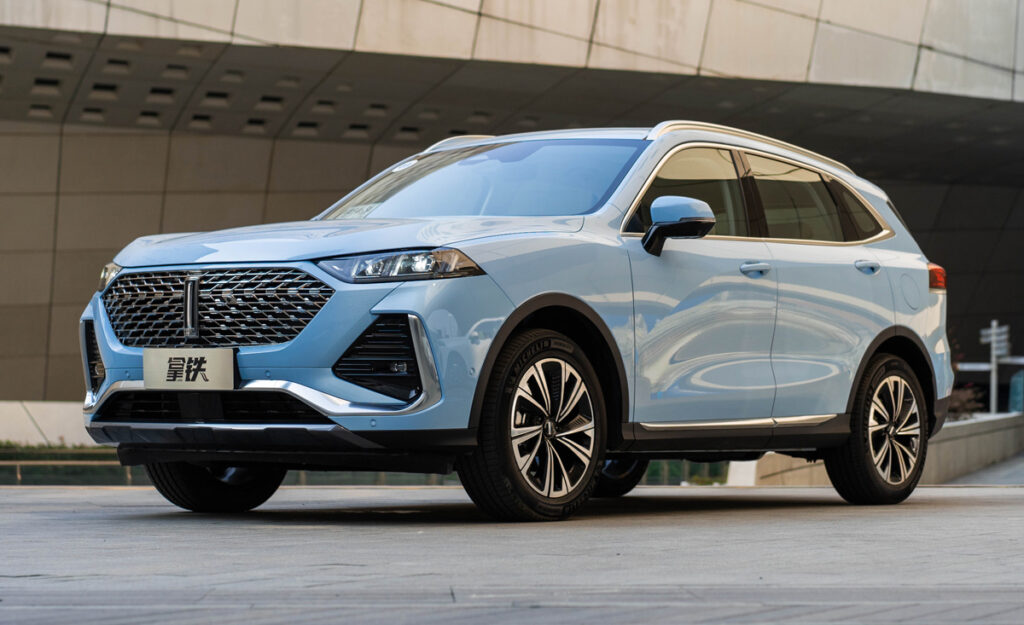
Wey is a Chinese automaker that produces premium crossovers and SUVs, and it could be coming to South Africa.
The luxury marque is one of several brands that operates under Great Wall Motors (GWM), which has been rapidly expanding its presence in South Africa with the introduction of various new models.
GWM has ambitions to become one of the country’s top five manufacturers, which makes Wey’s introduction a strong possibility for our market.
A new luxury player
GWM is already one of the top 10 best-selling carmakers in South Africa, thanks in large part to its varied catalogue of vehicles spread out across several different brands.
This includes Haval, which produces crossovers and SUVs like the Jolion and H6, while GWM’s own stable offers the P-Series bakkies.
In late 2023, the company also introduced its Ora nameplate, which represents GWM’s fully-electric division with models like the 03 hatchback.
The most recent addition to Great Wall Motor’s roster is Tank, which provides high-end 4×4 SUVs like the Tank 300 and 500.
Each of these badges is intended to cover a different aspect of the local market as part of the Chinese automaker’s plans to become a top five brand in South Africa, rivalling legacy nameplates like Toyota and Volkswagen.
Haval is meant for the mass market, as units like the Jolion and H6 are a rival to the likes of the Toyota Corolla Cross and VW Tiguan.
P-Series is tapping into the ever-popular bakkie segment, and Ora is one of the brands leading the charge for more affordable electric vehicles (EVs).
Tank, meanwhile, is GWM’s answer to Toyota’s beloved Land Cruiser models, as the newly launched Tank 500 is primed to take on the next-gen Prado.
This is where Wey enters the picture, as it fills the role of GWM’s luxury subsidiary, similar to the relationship between Toyota and Lexus, or Chery and Omoda.

Wey Gaoshan
Wey’s line-up currently consists of four models, including three SUVs and one MPV, all of which are plug-in hybrids (PHEVs).
The MPV, known in China as the Gaoshan (High Mountain), can accommodate up to seven people with two captain’s chairs for the middle row.
Its powertrain consists of a 1.5-litre turbocharged petrol engine paired with two electric motors, providing a combined output of 358kW and 762Nm.
It also features a 37.96kWh battery, which allows it to travel for 175km on nothing but electricity.

Wey Latte
Meanwhile, Wey’s three SUVs fill the spectrum from small to full-size, starting with the Latte crossover (known as the Wey 03 in the European Union).
The Latte also runs on a 1.5-litre turbo-petrol plant, which is mated to a nine-speed dual-clutch automatic (DCT) gearbox and an e-motor.
The result is an output of 325kW and 685Nm, letting it accelerate from 0 to 100km/h in 5.3 seconds to reach a top speed of 230km/h.
A 34kWh battery gives the Latte an electric range of 136km.

Wey Mocha
One step up from the Latte is the midsize Mocha SUV (Wey 05 in Europe), which uses the same nine-speed DCT box, but gains a more powerful 2.0-litre petrol block mated to two e-motors.
This gives the Mocha a power ceiling of 350kW and 874Nm, allowing for a 0-100km/h time of 5 seconds and a max speed of 235km/h.
Adding to this is a larger 39.67kWh power cell good for 146km of electric driving.

Wey Lanshan
The final model at Wey’s disposal is the flagship Lanshan (Blue Mountain), a full-size SUV with seating for six people.
A 1.5-litre PHEV system gives the Lanshan access to 305kW and 700Nm, letting it race to 100km/h in 4.9 seconds, while its 44.5kWh cell affords an electric range of 175km.
To get a better sense of each model’s size, the Latte is 4,668mm in length, while the Mocha and Lanshan clock in at 4,875mm and 5,156mm, making the three SUVs slightly larger than the VW T-Roc, Tiguan, and Touareg, respectively.
It remains to be seen whether GWM will introduce Wey to South Africa in the near future, but given the Chinese carmaker’s success in the local market, it seems like it will only be a matter of time.
Lending credence to the idea is the fact that GWM Company Limited, based in China, registered a trademark application for Wey in South Africa in 2018, suggesting that the automaker’s parent company is investigating the possibility of introducing its luxury subsidiary here at some point.



 Loading ...