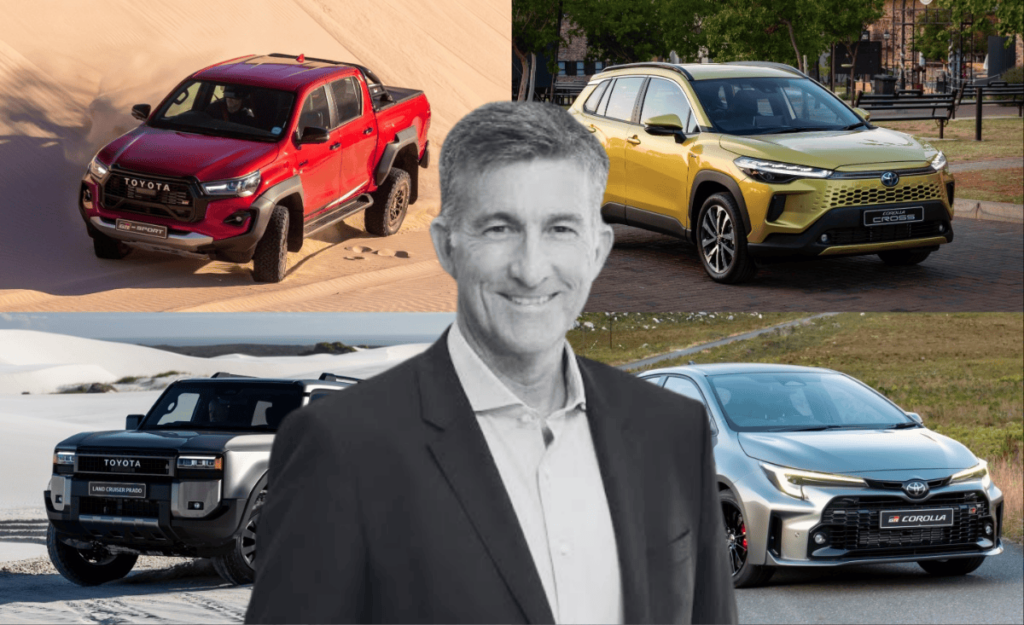
Andrew Kirby is the president and CEO of Toyota Motors, the leading car brand in South Africa.
Under his leadership, the manufacturer has continued to dominate the sales charts for the past several years, with Toyota reporting an incredible 26.1% market share as of January 2025.
Where it began
In an interview with AutoTrader CEO George Mienie, Kirby gave a breakdown of his personal life leading up to his position at Toyota.
In his youth, he considered himself an all-rounder, pursuing academics while also taking a keen interest in sports based on his father’s recommendations, eventually playing rugby, soccer, hockey, tennis, and squash at school.
Kirby’s father was an influential figure in his life who worked in the auto sector, which later became an inspiration for Kirby to work his way up the business ladder.
“I admired my father. He was in the automotive industry in a senior position in the corporate world, and I thought that was cool,” he said.
However, he didn’t initially envision himself in the motoring industry; instead, he pursued a degree in mechanical engineering at the University of Cape Town before getting a job in the gold mining sector for Anglo American – a job he stuck with for three and a half years.

The road to Toyota
Following his time at Anglo America, Kirby entered the automotive industry in 1994, joining BMW to become the brand’s general manager.
His time at BMW proved to be a great success, as he spent the next 11 years with the German marque, including a three-year period working in the United States, though it wasn’t easy.
Kirby said that it was incredibly difficult at first and that he had to learn to work cross-culturally with people who had very different ways of thinking.
“I would honestly say that in the first three months, I didn’t know what they were talking about, even though they were speaking English,” Kirby said. “
“I spent some time on the West Coast and on the East Coast and it was like two different countries.”
Toyota entered the picture in 2005, but it was actually the company that came looking for him and not the other way around.
He revealed that a head hunter approached him under the guise of a customer who wanted to file a complaint, before pitching him the idea of enrolling with Toyota.
Toyota was already one of the top-performing brands in South Africa at this point, and the offer to join was undeniably tempting.
“I started having discussions with former Toyota SA and Europe CEO Johan Van Zyl,” explained Kirby.
“It was a promotion for me, it was a bigger job and [it came with] the opportunity to work in a company that had very strong local leadership.”
It wasn’t long before an offer was concluded, and Kirby became the new senior voice president for sales and marketing at Toyota South Africa Motors (TSAM) that same year.

A difficult transition
The change from BMW to Toyota was not an easy one, as Kirby had to quickly adapt to the mindset and company culture of a Japanese brand rather than a German one.
BMW was centered on a dynamic environment with an emphasis on individual performance, but he found that Toyota was the exact opposite, focusing on a much more structured timeline with greater oversight from Toyota Japan.
“The process in Toyota is a lot of very detailed thought and preparation and very fast execution,” he said.
“I had been used to not a lot of thought. Execute, but then rework, rework, and rework, until you get it right.
“In Toyota’s environment, you cannot really get things wrong; you need to do it correctly in the beginning.”
Kirby eventually settled into the role, which he held for six years before switching jobs to become the general manager of Lexus – Toyota’s luxury sub-brand.
He even went as far to become the global product and marketing general manager for Lexus – a high-profile position that required extensive travel around the world to promote the company’s interests.
However, in 2013, Kirby returned to South Africa and was appointed the senior vice president of corporate administration at TSAM.
A few years later, he was promoted to Toyota’s executive vice president and chief operating officer in 2016.
Only a few months after, he was promoted again to the position of Toyota South Africa’s CEO, while Johan Van Zyl went on to become the CEO of Toyota Europe.

A few bumps along the way
Kirby has been at the helm of Toyota during several crisis moments, from extensive load-shedding to the Covid-19 pandemic, the 2021 riots, and the 2022 floods.
The pandemic naturally hit the company hard, as it did all carmakers, but Toyota was able to quickly recover once the two months of hard lockdowns were lifted and employees could start returning to the assembly floor.
The civil unrest of 2021, which predominantly affected Gauteng and KwaZulu-Natal, also disrupted operations for the carmaker, but this paled in comparison to the floods that came a year later in April 2022.
Toyota’s factory in Prospecton, Durban was hit with a torrent of water and mud, causing 88% of the vehicles on site to be written off.
With help from Japan, the company was able to re-open the plant in August that same year, having repaired or replaced millions of rands worth of equipment.
Since then, the automaker has spent an additional R236 million on as a safety measure in the event of another flood, and Kirby’s handling of the disaster earned him the award for Business Leader of the Year 2022.

No stopping now
Despite the numerous setbacks, Toyota is doing incredibly well in South Africa as the leading automotive brand, selling well over 10,000 units per month.
Much of this can be attributed to a strong selection of locally-produced models with widespread appeal such as the Hilux bakkie, Fortuner SUV, and Corolla Cross crossover – each of which consistently lands within the top 20 best-seller’s list each month.
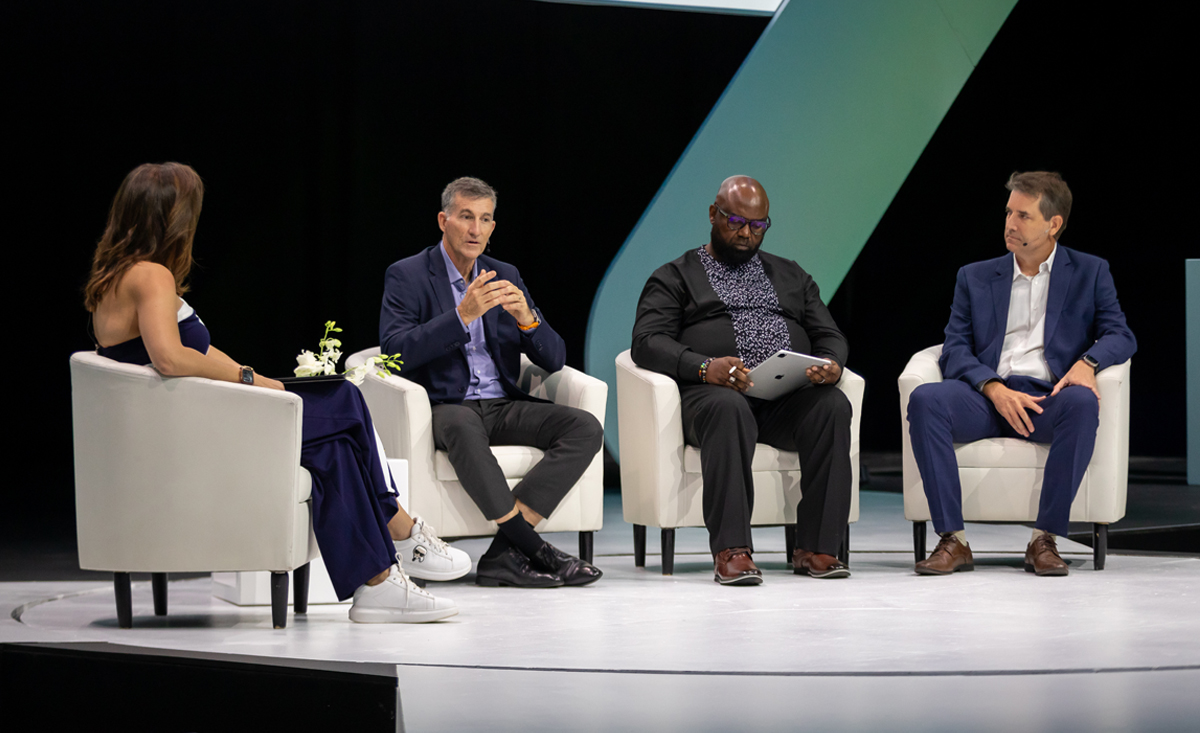
Kirby is also one of the leading representatives for the local industry as a whole, often speaking at various automotive events about the issues the nation’s carmakers face.
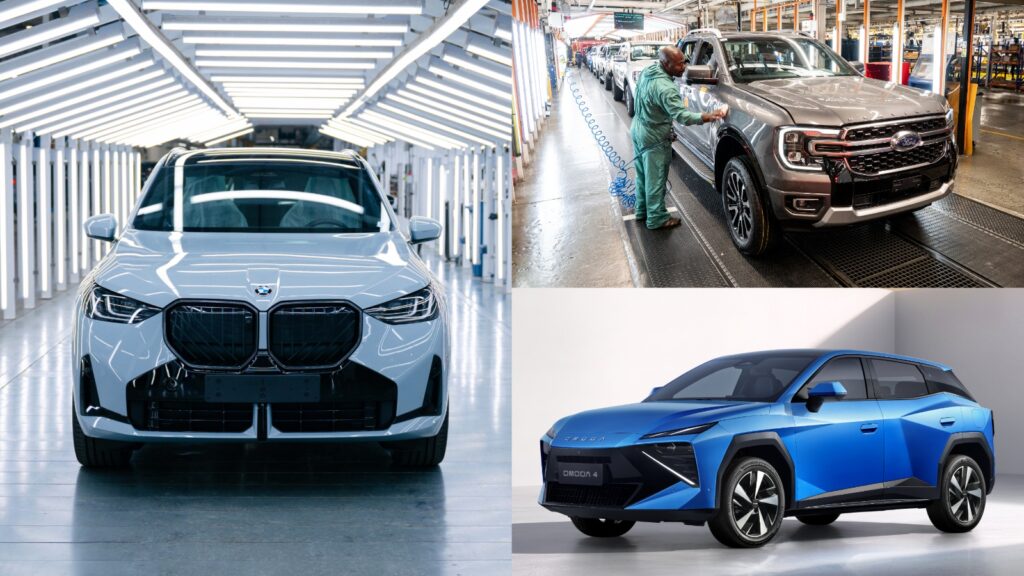
Most recently, he sounded the alarm on the influx of cheap imports into the market, predominantly from India and China, which threaten to undermine legacy automakers with an “unfair playing field.”




 Loading ...