South Africa is no longer the continent’s largest vehicle producer – a position it has held for almost a century.
This title now belongs to Morocco, which achieved a new annual production target of one million cars in December 2025, representing a staggering 79% year-on-year increase from the 559,645 units it manufactured across the whole of 2024.
In contrast, South Africa only managed to produce 554,614 cars in the first 11 months of 2025, meaning that Morocco now has almost double the production capacity.
This drastic shift in the continent’s manufacturing landscape happened over a relatively short period, mind you, as Morocco’s auto industry was non-existent 15 years ago.
The rapid growth of the North African nation’s manufacturing sector can be attributed to extensive government support, encouraging private investment while facilitating the changes needed to make local carmakers competitive in the global market.
This includes tax breaks, and extensive free trade agreements with important export markets like the United States, European Union, and China.
It has also implemented new policies encouraging the production and local uptake of new-energy vehicles (NEVs) – the fastest-growing auto segment in the world.
As a result of these policies, Renault and Stellantis elected to build new manufacturing plants in Morocco in 2012 and 2019, respectively, and production began on the nation’s first electric vehicle (EV) – the Opel Rocks-e – in 2021.
A Moroccan carmaker, Neo Motors, is also set to begin producing the country’s first locally developed EV – the Dial-E – this January.
This focus on EV support has also resulted in Tesla’s launch in Morocco – the first of any African country
South Africa, in contrast, has only just started to produce multiple hybrids and has yet to build its first EV.
Morocco’s EV transition has been supported by investments in renewable energy, as the country is rapidly reducing its reliance on fossil fuels for electricity generation.
This is a massive benefit for local carmakers, as their EV exports won’t receive penalties for high-carbon-intensity production processes.
South Africa is falling behind
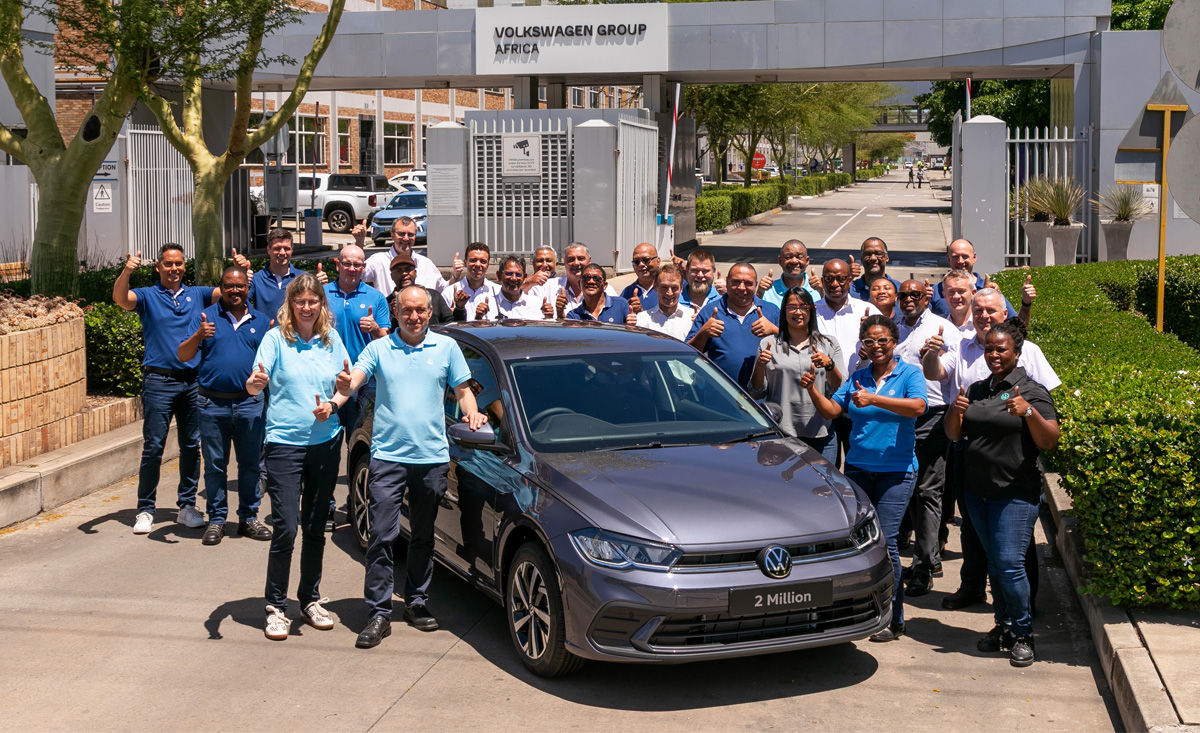
All of this stands in contrast to South Africa, which used to be Africa’s leading manufacturer, but which has fallen behind several other countries in recent years.
Original equipment manufacturers (OEMs), including Toyota, VW, Ford, and BMW, have all warned that South Africa has lost its competitive edge, disincentivising private investment.
Ford Motor Company of Southern Africa CEO Neale Hill previously explained that the company’s Silverton plant in Pretoria is consistently outperformed by its sister facility in Thailand, and Volkswagen South Africa warned that its parent company would rather invest in emerging markets like Ethiopia than in South Africa.
This decline in performance is the result of both direct and indirect factors stemming from a lack of government support.
Deteriorating roads, sluggish ports, and the collapse of the nation’s rail network mean OEMs are operating at a massive disadvantage compared to their overseas counterparts, spending millions of rands on alternate transport solutions to ensure that they can get components and finished goods to and from their factories on time.
Similarly, load-shedding has forced OEMs to heavily invest in generators and solar solutions to minimize disruptions to their production schedules.
The government also dragged its feet on the matter of providing direct support to the industry for years, only recently pledging to introduce tax benefits for local carmakers.
Starting on 1 March 2026, automakers will be able to reclaim tax equal to 150% of their investments into the facilities and machinery earmarked for NEV manufacturing.
It’s a start, but it also doesn’t address many of the issues these companies face.
Most notably, South Africa still gets roughly 85% of its electricity from Eskom’s fossil fuel plants, which means any NEVs produced here will be subject to emissions penalties when they are shipped overseas.
There are also no incentives to encourage NEV adoption, resulting in high prices and little demand – an issue that has been compounded by load-shedding fueling concerns about EV charging.




 Loading ...