


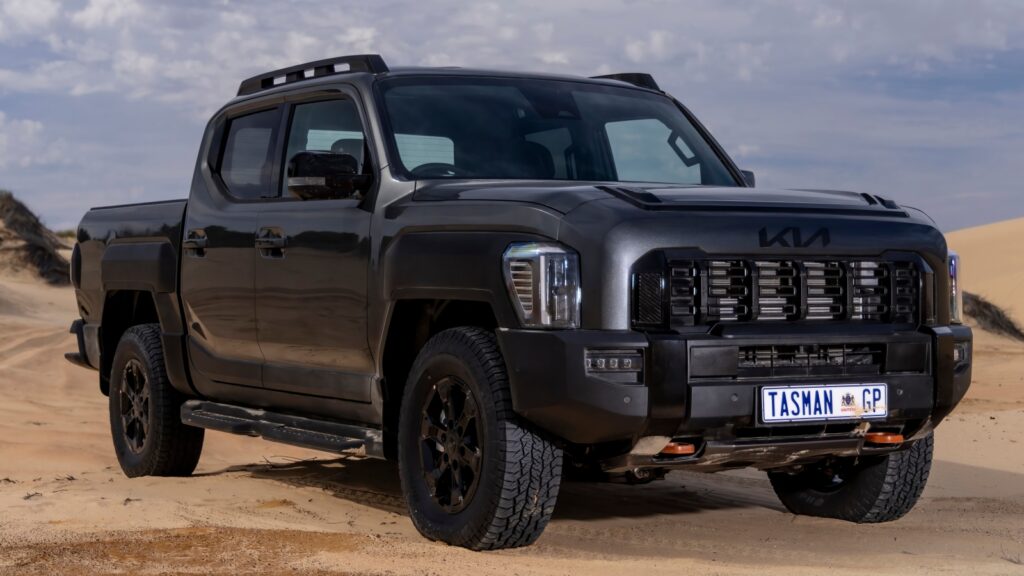
The Kia Tasman sold a total of 31 units in its first month on the market in South Africa.
That may not sound like a lot, but it’s a reasonably good start for a brand-new nameplate from a car brand not typically associated with 4x4s.
Kia’s new bakkie officially went on sale on 9 April 2026, meaning this figure does not represent a full month’s sales.
Additionally, it is only available in double-cab form with prices ranging from R679,995 to R999,995, making it one of the more premium pickups on the market.
With that in mind, the Tasman is not trying to compete on raw sales with models like the Toyota Hilux or Isuzu D-Max, where a significant portion of their monthly sales comes from the commercial sector.
While it is not the first utility vehicle produced by Kia, the Tasman is breaking new ground as the brand’s first global body-on-frame pickup truck.
It is meant to take on the industry’s heavy hitters in the lifestyle bakkie segment, which is currently dominated by names like the Ford Ranger Wildtrak, VW Amarok PanAmericana, and Toyota Hilux Legend.
The 31 sales it achieved in its first few weeks on the market made it the 15th best-selling bakkie overall.
For a better point of reference, these were the sales numbers for every bakkie in South Africa in April, according to Cars.co.za:
- Toyota Hilux – 2,955 units
- Ford Ranger – 2,013 units
- Isuzu D-Max – 1,045 units
- GWM P-Series – 588 units
- Mahindra Pik Up – 563 units
- Toyota Land Cruiser 79 – 451 units
- VW Amarok – 399 units
- Nissan Navara – 315 units
- JAC T-Series – 270 units
- Foton Tunland – 205 units
- Peugeot Landtrek – 138 units
- BYD Shark 6 – 108 units
- Mahindra Bolero – 72 units
- Mitsubishi Triton – 41 units
- Kia Tasman – 31 units
- Changan Hunter – 24 units
- GWM Steed – 2 units
- Jeep Gladiator – 1 units
What’s on offer
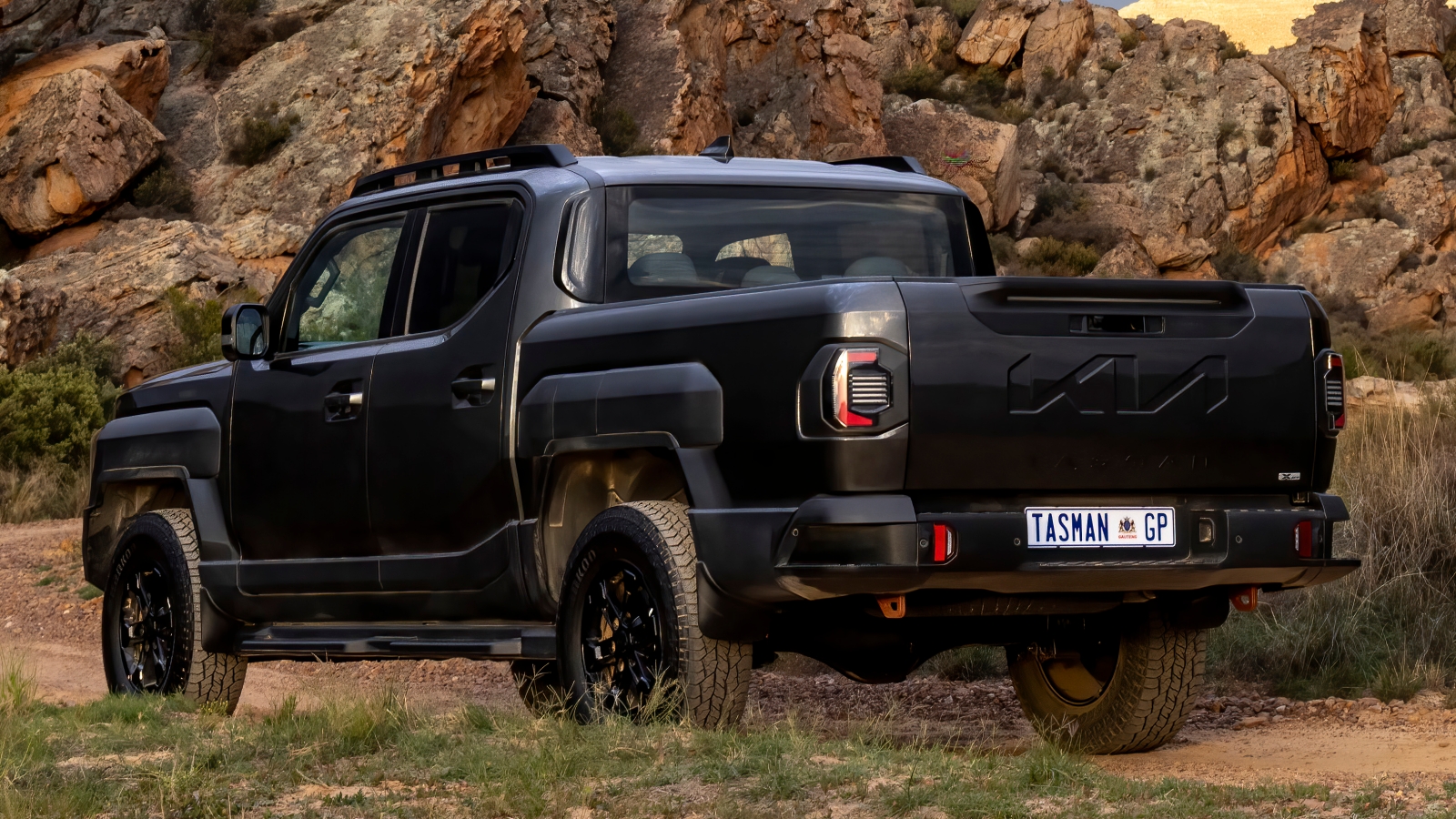
The Tasman is available in three specifications – the LX, SX, and X Pro.
The LX is rear-wheel-drive, while the SX and X-Pro feature a four-wheel-drive system.
Regardless of the version you choose, the Kia is fitted with a 2.2-litre turbocharged diesel engine that generates a total of 154kW and 440Nm.
The same is true of the gearbox, as all three variants come with an eight-speed automatic shifter.
The LX has an average fuel consumption of 7.5l/100km, while the 4×4 models have a slightly higher consumption of 7.8l/100km.
Its towing capacity clocks in at 3,500kg, and it can haul 1,000kg in the load bed.
The X-Pro also comes with a rear differential lock and five driving modes – Eco, Sport, Normal, Tow, and X-Trek.
In terms of size, the Tasman is 5,410mm long, 1,930mm wide, and 1,930mm tall.
The wheelbase is 3,270mm long, and it has 231mm of ground clearance, and a water-wading depth of 800mm.
Features on the bakkie start with 17-inch alloy wheels, automatic LED headlights and daytime running lights, keyless entry and start, an artificial leather multifunction steering wheel, cloth seats, and automatic climate control.
On the dashboard, you’ll find a dual 12.3-inch screen comprised of a digital driver display and an infotainment system with Apple CarPlay and Android Auto.
The Kia also has safety and assistance features, including six airbags, ABS, stability control, cruise control, hill-start assist, hill-descent control, traffic sign recognition, front and rear parking sensors, and a rearview camera.
The higher-spec models will then add a sunroof, electric front seats with heating and ventilation functions, artificial leather upholstery, blind-spot detection, tyre pressure monitoring, adaptive cruise control, lane-departure warning, and lane-keep assist.
Each purchase includes a 5-year/unlimited km warranty and a 6-year/90,000km service plan.





 Loading ...
-2026.10.webp)


-2026.10.webp)