Local light commercial vehicle (LCV) sales have fluctuated monthly since the start of the year, peaking in March, before figures dropped off slightly, while exports of these vehicles have indicated a much greater decline.
LCVs, or rather bakkies to the South African buyer, continue to be a favourite local vehicle choice, offering not only practicality, but also a good amount of the necessary toughness to survive our roads.
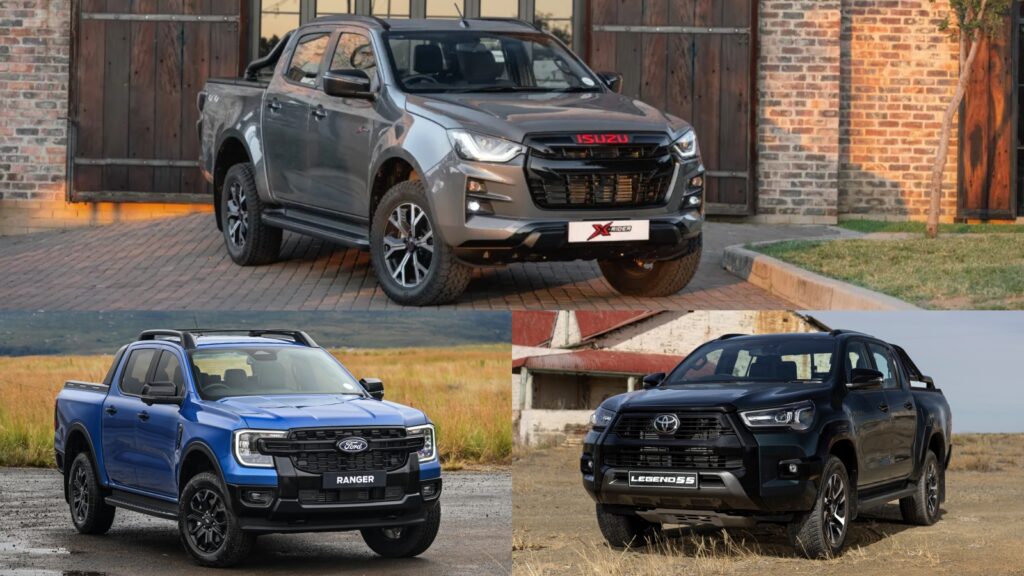
It is for this reason that locally-built bakkies, which include the ever-popular Toyota Hilux, Ford Ranger, and Isuzu D-Max, are popular in export markets as well.
That being said, 2026 has been a turbulent year for bakkie exports, despite local sales remaining relatively strong.
Data compiled from the Automotive Business Council’s (Naamsa’s) monthly reports indicate that March represented the best month for both the local and export bakkie market.
More than 15,000 LCVs were sold in South Africa in March 2026, and nearly 12,000 locally-built bakkies were shipped in the same month.
This, after the year started with 10,996 local sales, and merely 7,094 exports in January, followed by 13,218 and only 4,500 in February.
Naamsa lauded the increase, noting that LCV demand continued to align with conditions in the goods-producing sectors, which it said were gradually stabilising as energy supply improves and logistics reforms gain traction.
Despite the gradual increase in sales throughout the first three months of the year, global tensions and macro-economic factors like increased fuel prices and overall financial uncertainty have put a stop to the improvements.
In April, local bakkie sales faltered to 10,966, down 4,591 units from the high of 15,557 sold a month earlier.
However, last month bakkie sales increased by nearly 300 units, jumping back up to 11,251 units sold.
The up-and-down trend has been the norm since the turn of the year, but overall bakkie sales have remained strong, which can be expected in the South African market.
Exports, however, have continued to perform lower than expected since January.
South Africa is exporting fewer bakkies

In February, LCV exports fell by more than 2,500 units to merely 4,500 units compared to the 7,094 units shipped in January.
March’s strong export performance made the drop-off look like an anomaly when it recovered to a staggering 11,899 units.
However, the resurgence was short-lived, as only 8,073 units were exported in April, followed by another dramatic fall-off to 6,382 units last month.
Despite the local LCV segment remaining fundamentally strong and resilient, thanks to a 10.5% year-to-date (YTD) increase by the end of May, export figures indicate a massive collapse.
May’s export figures represent a staggering 49.5% year-on-year (YoY) decline compared to May 2025, as well as a staggering 34.7% YTD decrease in bakkie exports by the close of May 2026.
Early in the year, Naamsa cautioned that the export outlook is increasingly shaped by heightened protectionism across several of South Africa’s key export markets.
“The industry’s export performance remains subject to heightened protectionism across several of South Africa’s key export markets, while increasingly stringent decarbonisation requirements in destination markets continue to weigh on the competitiveness of South African vehicle exports,” it said.
Naamsa noted that ongoing geopolitical developments, such as the conflict in the Middle East, have had an impact on key destination markets and continue to weigh on local export performance.
It added that the April decline was largely driven by the LCV segment, which contracted sharply by 42.9% due to the phased rollout of new-model production by a key exporter.
This could refer to any one of South Africa’s big bakkie manufacturers, as Toyota, Ford, and Isuzu have all updated their bakkie line-ups this year.
The new-generation Toyota Hilux is expected to go on sale any day now, after Ford completely reconfigured its own bakkie line-up, and Isuzu has refreshed its local D-Max offerings.




 Loading ...