
New 24-hour rule for anyone entering or leaving South Africa


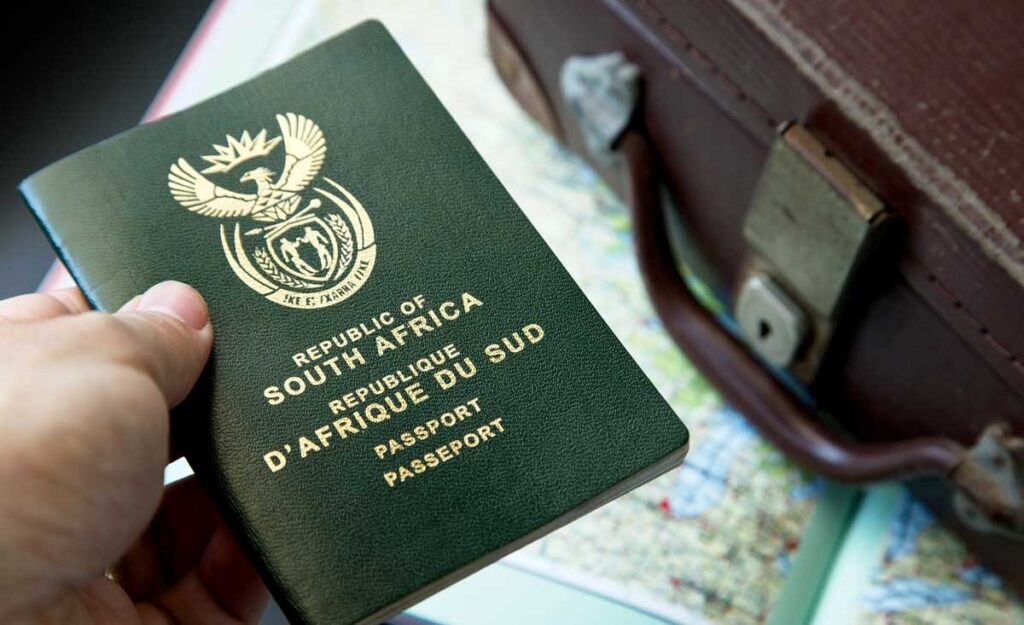
The South African Revenue Service (SARS) has implemented a new mandatory online traveller declaration for anyone entering or leaving the country, prompting questions over its necessity.
First piloted at local airports in 2022, the South African Traveller Management System (SATMS) was later expanded to sea and land ports, and has now become mandatory, replacing the paper-based customs declaration process.
Effective 1 July 2026, all travellers must submit the online declaration no more than 24 hours before departure from the country they are travelling from.
According to SARS, the declaration forms part of the Customs process and helps travellers meet their legal obligation to declare goods, currency and other relevant items in their possession.
“The system makes it easier for travellers to comply with Customs formalities before arriving at a port of entry or exit,” the revenue service said.
However, the Free Market Foundation’s President, Temba Nolutshungu, has now questioned whether it was necessary to implement in the first place.
“Government departments appear now to assume that because something can be digitised, it should be digitised. Worse still, because information can be collected, it ought to be collected,” he said.
According to Nolutshungu, while it has been presented as a modern and innovative solution, it is neither; rather, it is the “digital resurrection of an administrative practice wisely abandoned over twenty-five years ago”.
Instead of travellers completing a paper declaration on the aircraft, they are now required to complete it online within 24 hours of departure.
Nolutshungu said this does not signal simplification but rather the transfer of the same paper bureaucracy in electronic form.
“This is not simplification. It does nothing to assist ‘traveller convenience’. It is universally intrusive reporting, reintroduced under the fashionable banner of ‘technological progress’,” he said.
The Free Market Foundation believes that governments have every right to combat smuggling, illicit trade and cross-border crime and doesn’t object to travellers declaring goods electronically rather than on paper.
However, Nolutshungu said that rather than using technology to reduce compliance burdens for law-abiding travellers, SARS has used it to do the opposite, extending its administrative reach over everyone.
What needs to be declared and what happens if you don’t

At launch, the revenue service explained that any person entering or leaving South Africa through any port must submit a traveller declaration, including South African citizens, residents and foreign travellers.
However, there are exceptions, and those who qualify for the limited paper-based exceptions need not submit online, nor do air or sea travellers merely transiting through South Africa.
SARS said that travellers do not need to declare ordinary personal effects for their own use, but must declare goods, currency or other items that exceed their traveller allowance or require Customs attention.
Per-traveller, duty-free limits for declarations include:
- Goods up to R5,000 may be imported without paying duty or VAT.
- Additional goods up to R20,000 may be allowed but may be subject to duty and VAT.
- If the total value exceeds R25,000, normal Customs duties and VAT apply.
According to SARS, this allowance is only valid once per person for 30 days and does not apply to goods imported by persons returning after an absence of less than 48 hours.
It added that once you submit the declaration, it will send a confirmation with instructions on what to do once you arrive at the relevant port of entry or exit.
“You should keep that confirmation available on your phone or in printed form and follow the instructions and signage at the port,” SARS advised.
SARS confirmed that travellers will not be denied entry into or departure from South Africa if they have not completed a declaration before arriving at a port of entry, for whatever reason.
“SARS Customs officials, supported by self-service declaration terminals, will be available to assist travellers who were unable to submit their declarations before travelling,” it said.
It warned that travellers are required to make a proper declaration of goods, currency or relevant items, and that making a false declaration may lead to delays, the detention or forfeiture of goods, penalties, or other enforcement actions.






 Loading ...
Conversation
3 commentsMy shadow has been cast down on the whole earth due unfair story I am saddened by the fact that I was killed while living in South Africa I a’m aslo bieng abused at work with the intention of making me lose my job as I am currently staying at home I have two children from different mothers. Government he’s uses his power in a negative way how does he separate the child from his culture what is the court law over the world for the people who support children’s through the court unfair ✌️💔🐋🌎