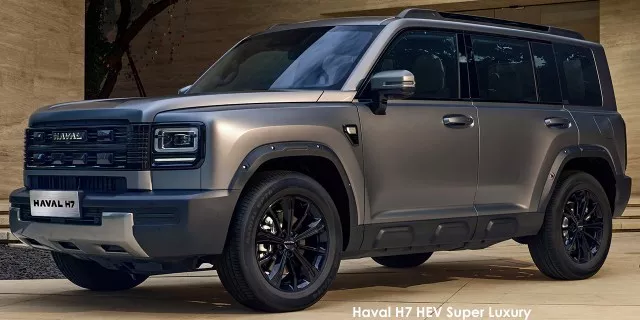
What makes the new Ford Everest better than the old one


The new Ford Everest can now be ordered in South Africa with a starting price of R965,400 – significantly higher than the previous entry-level price of R588,300.
While a noticeable step up in cost over the previous generation, the new model boasts several changes and improvements that make for an even more capable and luxurious off-roader.
This is how Ford’s new seven-seater improves over the outgoing model.
Power comparison
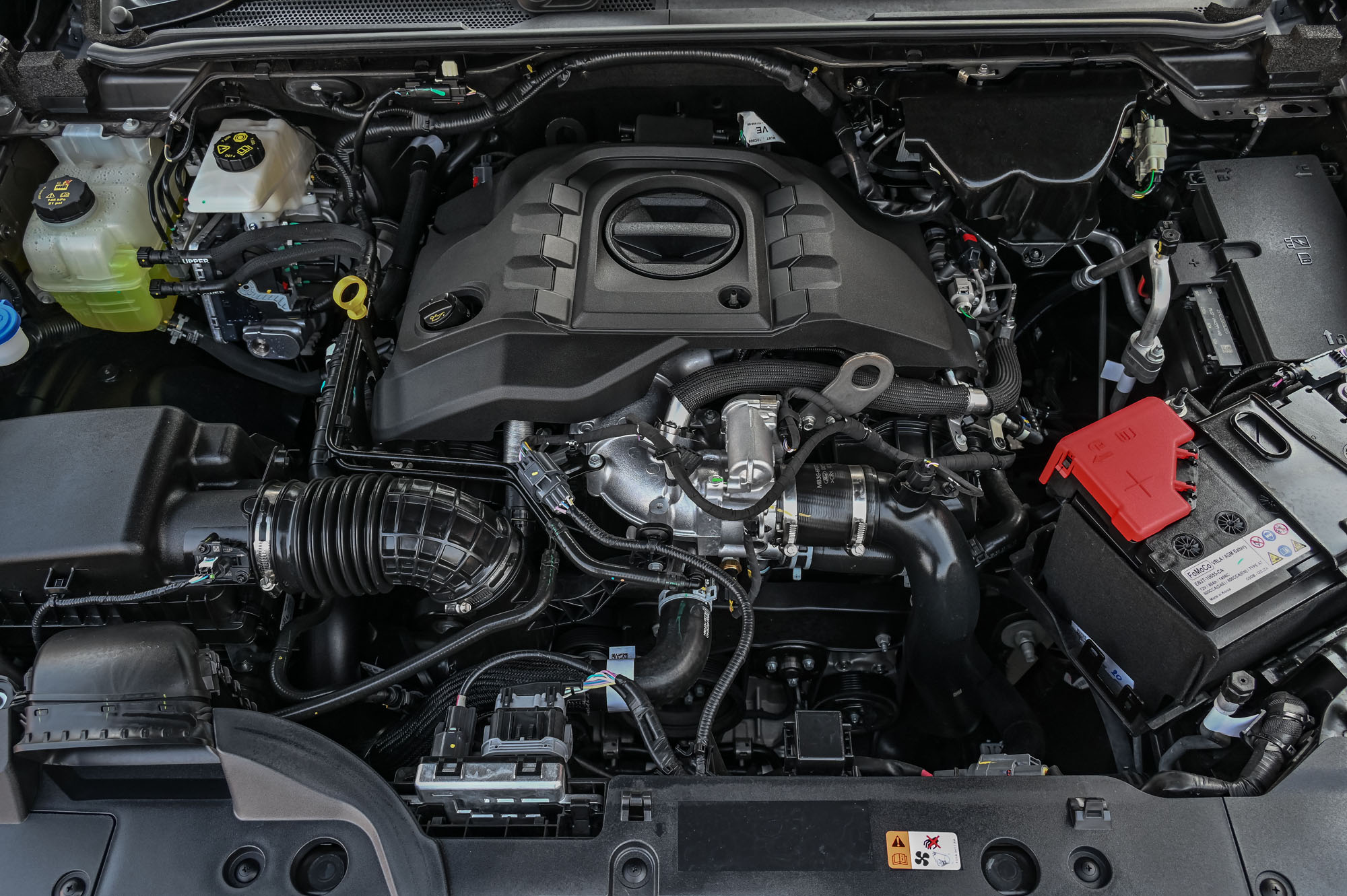
The old Everest was sold with a 2.0-litre diesel engine with a choice of either a single or bi-turbo setup, but while the new one also has two motors to choose from in the form of a 2.0-litre turbocharged unit or a new 3.0-litre V6.
The old bi-turbo 2.0-litre generates 157kW and 500Nm but the new one surprisingly does 3kW less at 154kW and 500Nm. However, the new flagship Platinum model generates much more grunt from its bigger powerplant, for a total of 184kW and 600Nm – trumping the old range-topping Limited by 27kW and 100Nm.
For both generations, a 10-speed automatic transmission delivers power to the wheels and previously this was done through either a 2WD or permanent 4WD drivetrain, while now it’s being done through two different 4WD systems, a part-time one on the Sport and a full-time version on the Platinum.
Though one thing worth noting was that on the last Everest, several engines and powertrain options were available per specification grade, while on the latest one, only a single powertrain is offered per trim level.
Fuel consumption has also been improved, with the new 2.0-litre averaging 7.5l/100km compared to the old unit’s 8.5l/100km, the latter of which is now actually the new V6’s consumption.
For its off-road performance, the previous Everest was capable of towing up to 3,100kg, which has increased to 3,500kg on the new variants.
The SUV’s ground clearance of 225mm maximum wading depth of 800mm, meanwhile, remain unchanged.
Finally, in terms of driving modes and assistance features, the old car included traction control, hill start assist, and anti-roll mitigation, and the 4×4 models additionally came with a low-range gear function, hill descent control, and a terrain-response system with modes for Snow, Mud, Grass, Rocks and Road.
The new Everest, on the other hand, offers Normal, Eco, Tow/Haul, Slippery, Mud/Ruts, and Sand settings, and a low-range gearshift and lockable rear diff are now included as standard.
The top-end Platinum also has a 4A mode which provides dynamic traction by adjusting the flow of power between the front and rear axles, according to the automaker.

Next-gen features
For both generations, features include 20-inch alloy wheels, LED headlamps and daytime running lights, dual-zone climate control, keyless start and entry, a multifunction steering wheel, rearview camera, front and rear parking sensors, cruise control, voice commands, and a Ford Sync infotainment unit with Apple CarPlay/Android Auto and onboard navigation.
Higher spec versions of the old Everest also received up to 10 speakers, leather upholstery, and electronically adjustable front seats – whereas the third-generation infotainment screen reached a maximum of 8 inches.
As for the new SUV, additional standard fittings include a wireless phone charger, electronically-adjustable front seats, leather upholstery, and a minimum of eight speakers.
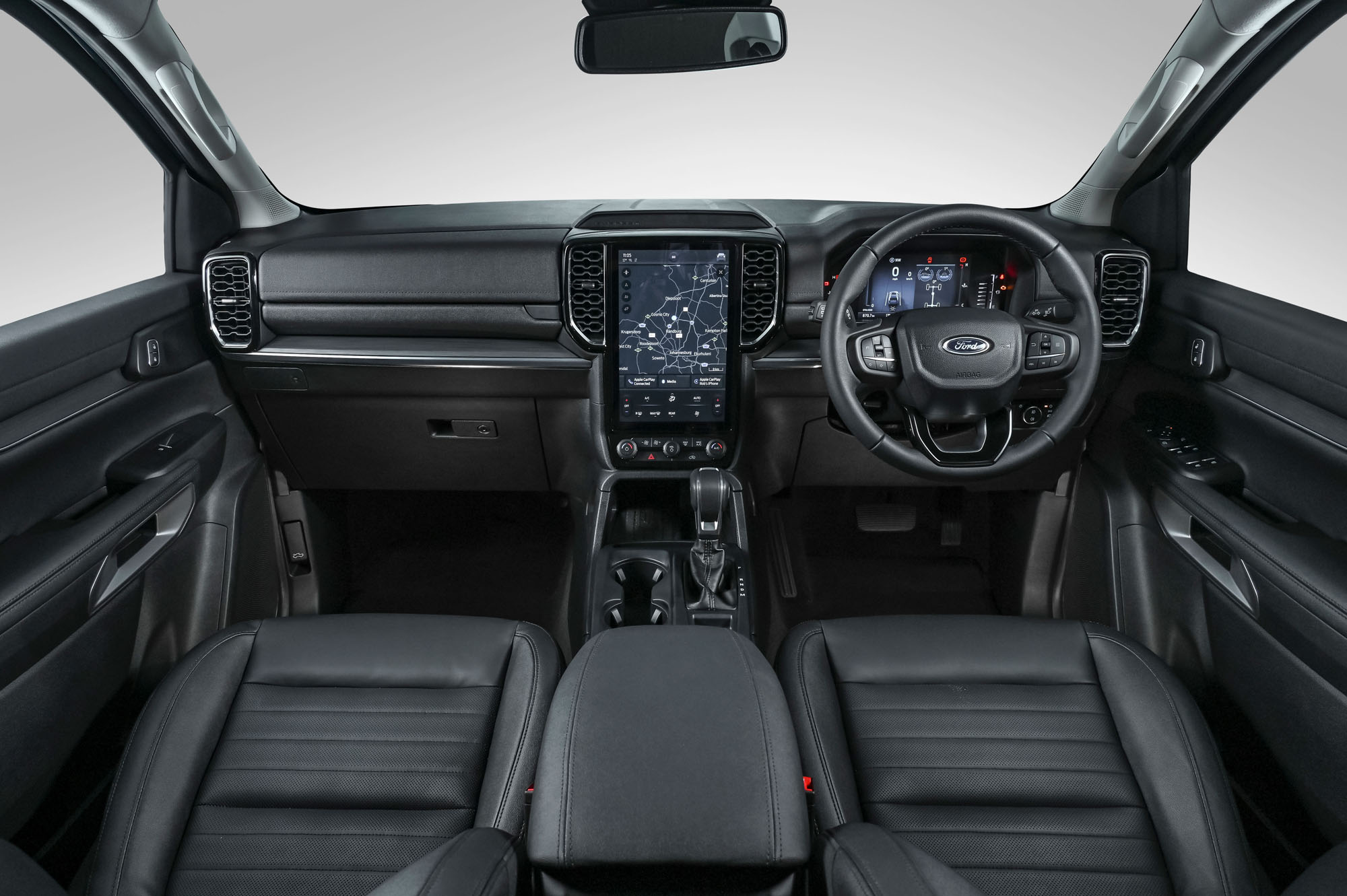
The media screen now runs the latest Sync 4 OS with smartphone pairing and takes the form of a 12-inch portrait touchscreen, while the driver’s screen is no longer analogue, now being a fully-digital cluster ranging from 8 to 12.4-inches depending on the model.
Additionally, the flagship Platinum comes with a 360-degree camera system, heated and ventilated front seats, and as many as 12 speakers.
Regarding boot space, the previous models had capacity of 249 litres in seven-seater mode, which increased to 2,010 with all but the front seats folded.
The new car, on the other hand, has a larger boot at 259 litres, but its maximum space with the seats folded is less than the previous entry at 1,818 litres.
2021 Ford Everest Sport


2022 Ford Everest Sport



 Loading ...