Traffic light sabotage in South Africa – and the people who stand to benefit


The City of Johannesburg is facing a growing problem with traffic lights allegedly being sabotaged by individuals trying to make a quick buck as well as criminals with nefarious intent.
The vandalism incurs a significant cost to the local economy and presents a danger to motorists at intersections who may be involved in an accident or targeted by hijackers.
The people who want load-shedding back
Tampering with traffic lights is anything but a new phenomenon in South Africa, as thieves frequently target public infrastructure for its valuable components like copper cables which are quickly sold on the black market.
However, this latest trend of robots being deliberately broken is not the result of petty theft, but is actually caused by vagrants and criminals attempting to manufacture conditions that suit their interests.
This is according to Michael Varney, Vumacam’s Chief Commercial Officer, who recently spoke on 702 about activities that the security company has detected using its surveillance network.
Vumacam is a security system supplier responsible for the installation of over 2,900 poles across the Joburg and Tshwane metros in Gauteng, which house roughly 5,400 live cameras monitoring street activity.
Varney explained that their team relies on artificial intelligence and analytics to pick up “unusual behaviour” which gets flagged by the system.
This includes individuals who loiter around a traffic light for far longer than a typical pedestrian, which creates an alert that is sent out to both the police and private security contractors.
“We have incidents where it’s local chaps standing on the corner who would like to direct the traffic to earn some cash out of that and then there are more serious syndicates that are using it as part of hijacking crimes,” he said.

Civilian pointsman directing cars at broken traffic signal
The frequent load-shedding that South Africa experienced over the past few years gave way to a new trend where unemployed civilians took it upon themselves to direct traffic at non-functioning intersections.
These “traffic wardens” were often tipped by passing motorists thanking them for getting the jams moving again, and while the practice was generally seen as a harmless way for people to make a bit of extra money, it presented legal and financial issues for insurers.
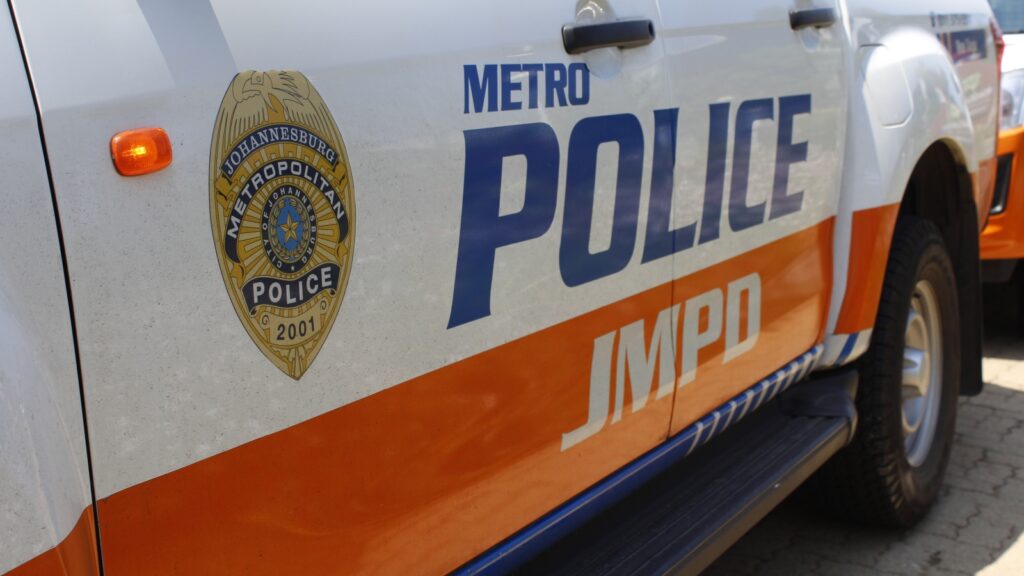
The City of Johannesburg also appointed and deployed hundreds of Metro Police to direct traffic during load-shedding, but homeless individuals still took opportunities at dozens of unattended robots over which the authorities’ wings could not stretch.
However, South Africa has been load-shedding-free for several months now, and it has come to light that vagrants are deliberately turning off traffic signals so that they can direct cars again to earn some cash.
Unfortunately, criminal syndicates have also realized the opportunity that broken traffic lights present, as there have been a number of hijacking incidents at slow-moving intersections where the robots have been sabotaged.

The vandalized infrastructure is a huge loss for the local economy, both in terms of the repairs and in terms of the lost productivity from severe congestion.
Varney commented that the damage to the economy is “extremely significant,” noting that the cost of repairing or replacing a light can vary greatly depending on the location.
The Gauteng Department of Roads and Transport previously revealed that it costs an average of between R900,000 and R1.5 million to replace one broken or stolen traffic signal, with traffic light vandalism consequently eating over R30 million from the provincial government’s budget in 2023 alone.
It was also highlighted that illegal activities have significantly dropped in areas where surveillance cameras have been installed, as they serve as an effective deterrent to opportunistic criminals.
Vumacam claimed that its camera system demonstrates an effective public-private partnership between law enforcement and security firms, as its dispatch system can identify the nearest responders to come to the scene of an incident.

 Loading ...