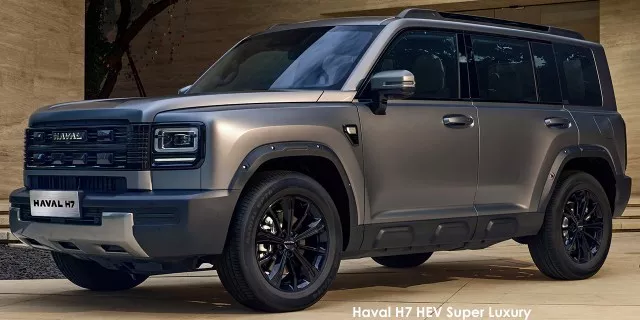
Chinese car brands are facing a double blow that could threaten their competitive edge in South Africa.
Domestically, the government is considering raising tariffs on imported vehicles, while over in China, the authorities are cracking down on the aggressive price war that has helped to drive sales.
Together, these factors are likely to drive up the price of Chinese cars, undermining their appeal as an affordable motoring option in South Africa.
Minister of Trade, Industry and Competition, Parks Tau, announced in a meeting on Wednesday that the government is considering changing subsidies for locally manufactured vehicles and auto components.
It is also reviewing the tariffs placed on imported models.
In other words, the state is looking to promote local car brands while raising prices on cheaper, imported units.
This comes at a time when sales of imported vehicles are at an all-time high in South Africa, with Chinese brands being the most prominent examples.
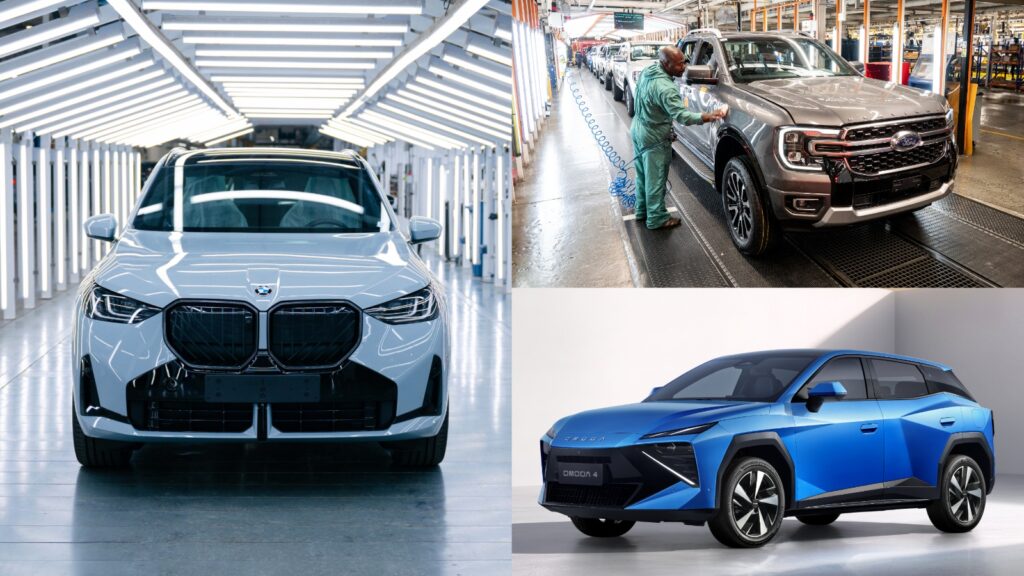
Over the past two years, there has been an influx of automakers from the People’s Republic, including Omoda, Jaecoo, Jetour, BYD, Dayun, Foton, LDV, GAC, and MG.
Even more brands are expected to debut in the near future, such as iCaur, Lepas, Leapmotor, JMC, Denza, Changan, Deepal, Dongfeng, Geely, and Riddara.
Many of these badges have enjoyed great success in South Africa, most notably Chery and GWM, which are now among the top 10 best-selling brands in the country.
The common thread across all of these companies is that their vehicles are cheap relative to their legacy competitors, making them an appealing option in an economic environment where many households are scaling down their spending.
However, Tau warned that this flood of low-cost imports is straining South Africa’s domestic automotive sector, which has already experienced significant decline.
“Decreasing sales of locally produced vehicles, along with new pressures of [US] tariffs, will continue to pressure the auto industry, which has already suffered from job losses and plant closures,” he said.
He added that, over the past two years, 12 companies have closed and more than 4,000 jobs have been lost at various points in the automotive supply chain.
South Africa’s car scene has traditionally been dominated by brands like Toyota, VW, Ford, BMW, Mercedes-Benz, and Nissan, which collectively produced 515,850 vehicles in 2024.
While this sounds like an impressive sum, it is far below the Automotive Masterplan 2035 target of 784,509 units.
Instead, imports now account for 64% of all car sales while localization of manufacturing is still sitting at 39% – a far cry from its goal of 60%.
Not helping matters are the recently imposed United States tariffs, which have dealt a blow to South Africa’s R28.76-billion vehicle export market.
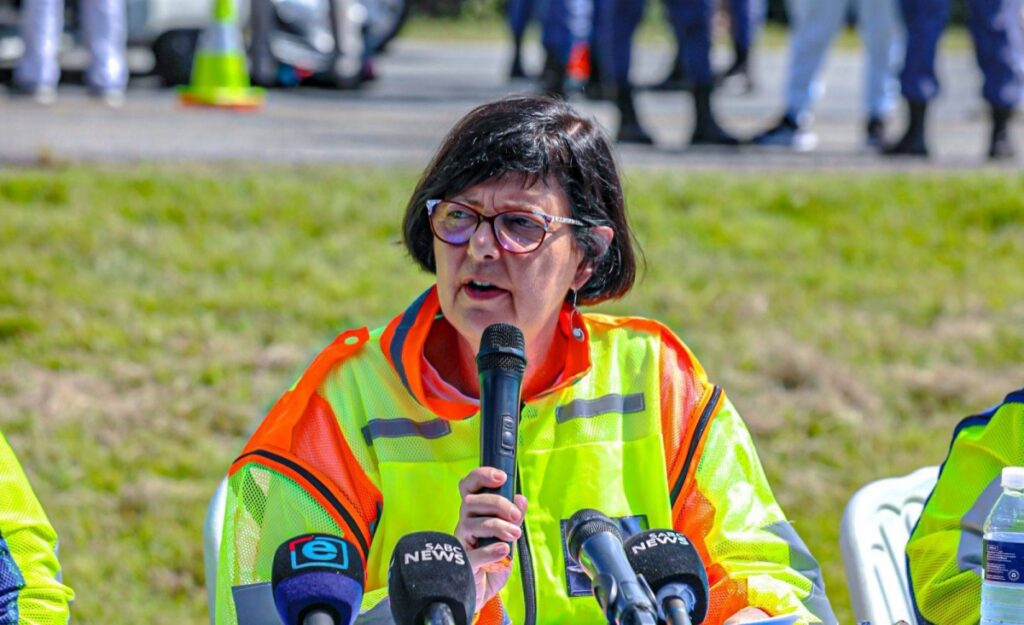
BMW Group South Africa CEO Peter van Binsbergen highlighted the threat and noted that imports have been eroding the sales of locally manufactured vehicles to the point where the industry faces a potential “existential crisis.”
He explained that while domestic car sales have improved, the value of imports has far outpaced this growth, undermining local production.
“We are looking to react to this, and we need to join forces with the government to address it,” Van Binsbergen said.
The National Association of Automotive Component and Allied Manufacturers (NAACAM) CEO Renai Moothilal agreed that the government needs to take more protective measures.
He argued that South Africa needs to take steps to shield its industry, citing the recent shutdown of Goodyear’s tyre factory as an example of what happens when a local producer is unable to compete with cheap imports.
Pressure in China

Chinese brands are also feeling the pressure at home, where the government has issued a stern warning to carmakers to bring an end to the price reduction war.
Over the past few years, local carmakers have engaged in aggressive discount campaigns to achieve market dominance through their attractive prices.
This is especially prevalent in the electric vehicle market, and Beijing has warned that this practice is unsustainable and puts smaller companies at risk of bankruptcy.
President Xi Jinping even warned that too many companies are starting to crowd into a handful of industries – car manufacturing being one of them.
The result of this increased scrutiny is that vehicle price cuts are starting to slow down in China.
The Passenger Car Association (PCA) reported that only 17 car models in China had price cuts in July, down from 23 a year earlier.
This is already starting to have an effect on car sales, which dropped to 1.8 million units in July – 12% less than June and 6.3% less than what they were a year prior.
PCA Secretary General Cui Dongshu said the clampdown on price wars will ultimately benefit the industry by encouraging manufacturers to improve quality instead of relying on deep discounts.
“Anti-involution is a huge benefit to the industry. Upstream enterprises can instead focus on improving quality, satisfying customer demands and not compete on low pricing,” he said.
All of this is likely to have an effect on the price of Chinese cars in South Africa, taking away the affordability advantage that helped them to gain a foothold in our market to begin with.




 Loading ...