South Africa’s drinking and driving ban could be implemented by April


The newly proposed total ban on drinking and driving in South Africa could be enforced as soon as April 2026.
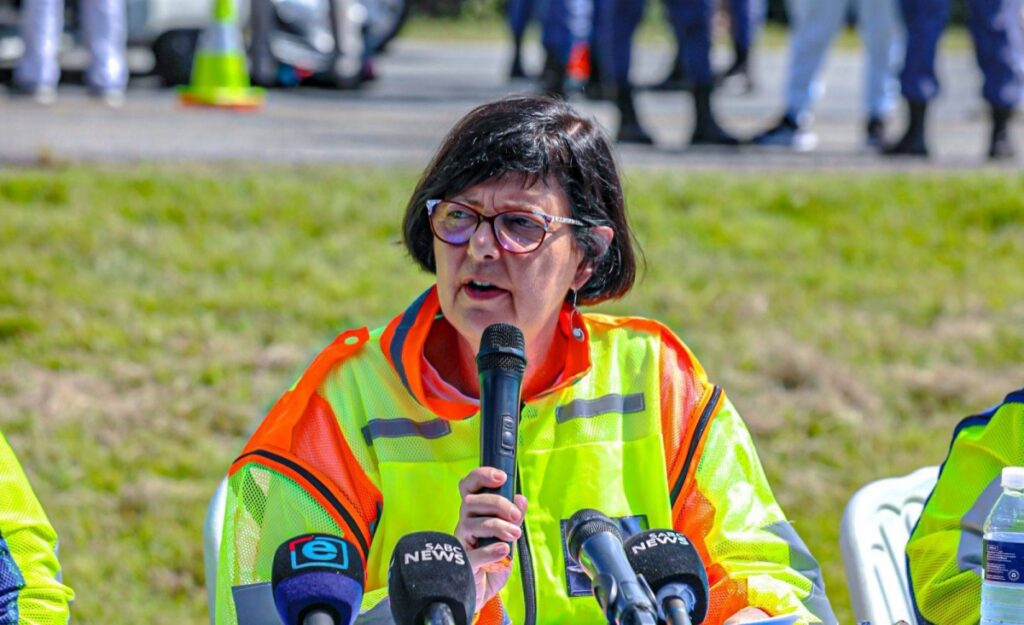
Earlier this month, Transport Minister Barbara Creecy announced that the government plans to reduce the legal blood alcohol driving limit to zero, effectively banning all alcohol usage for drivers, regardless of the amount consumed.
South Africa currently has a legal blood alcohol level allowance of less than 0.05g/100ml.
Creecy made the announcement while speaking about the country’s road accident statistics for the December 2025 holiday period.
She noted that 173,000 drivers were tested for being under the influence of alcohol over the festive season, of which 8,561 individuals tested positive and were arrested.
“This represents a 144% increase in the number of arrests for drunken driving since the previous year,” she added.
The minister argued that the current limit was established decades ago and that South Africa needs to adopt a new, unambiguous zero-tolerance stance on drunk driving.
She added that it was totally unacceptable to allow for any degree of drinking and driving.
“I have never understood this. I cannot explain this to anyone who has lost a parent, a brother, a sister, a child, as a result of a road accident.”
“The time has come for us to amend the law so that we have a clear-cut, unambiguous policy that says drinking and driving is not allowed.”
“So, we will begin an amendment to Section 65 of the National Road Traffic Act. If nothing else, we owe this to the memory of the many fellow South Africans who have lost their lives on the roads.”
Since the initial announcement, the Parliamentary Portfolio Committee on Transport has come out in support of Creecy’s decision, claiming that more needs to be done to reduce road fatalities in South Africa.
“The committee supports the consideration of a total ban on alcohol use on the roads. It is clear now that decisive action is required,” said Committee chairperson Donald Selamolela.
The committee stated that this matter needs to be urgently implemented before the next major holiday – the Easter weekend – which will take place from Friday 3 to Monday 6 April this year.
“Otherwise, during the Easter period in three months, high fatality figures are likely to persist.”
Drunk drivers facing a permanent licence ban

The committee also took things one step further than Creecy, stating that individuals that test positive for driving under the influence should face more severe consequences.
This may even include a permanent ban, preventing offenders from acquiring a driver’s licence.
“Transgressing drivers should face stiff sanctions, including being banned from ever having a license to drive. Drunk driving remains a serious and dangerous offence,” said Selamolela.
Furthermore, the committee called for additional police officers and more effective law enforcement.
“The roads have increasingly become sites of non-compliance with traffic laws because drivers know police will look away. That must come to an end,” he said.
The chairperson argued that all of these measures need to be fast-tracked, as any delay will result in more deaths that could have otherwise been avoided.
Another entity that has voiced its support for the Department of Transport’s proposed ban is the Congress of South African Trade Unions (Cosatu), which said that 40% of all annual road deaths is linked to alcohol consumption.
“South Africa’s unhealthy relationship with alcohol is a major factor in our painful levels of road carnage. There is a place for responsible consumption of alcohol within society,” it said.




 Loading ...