


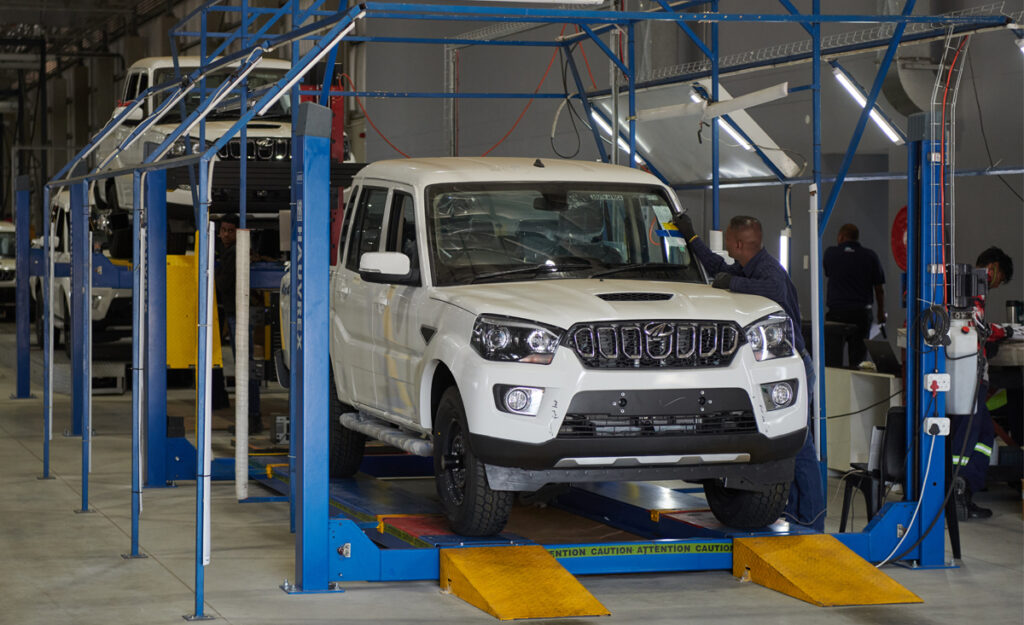
Mahindra’s factory in South Africa may be in trouble if the broader automotive industry gets its way.
Earlier this month, Bloomberg reported that several automakers are pressuring the government to make sweeping changes to the industry to protect and support local factories against the flood of cheap imports from India and China.
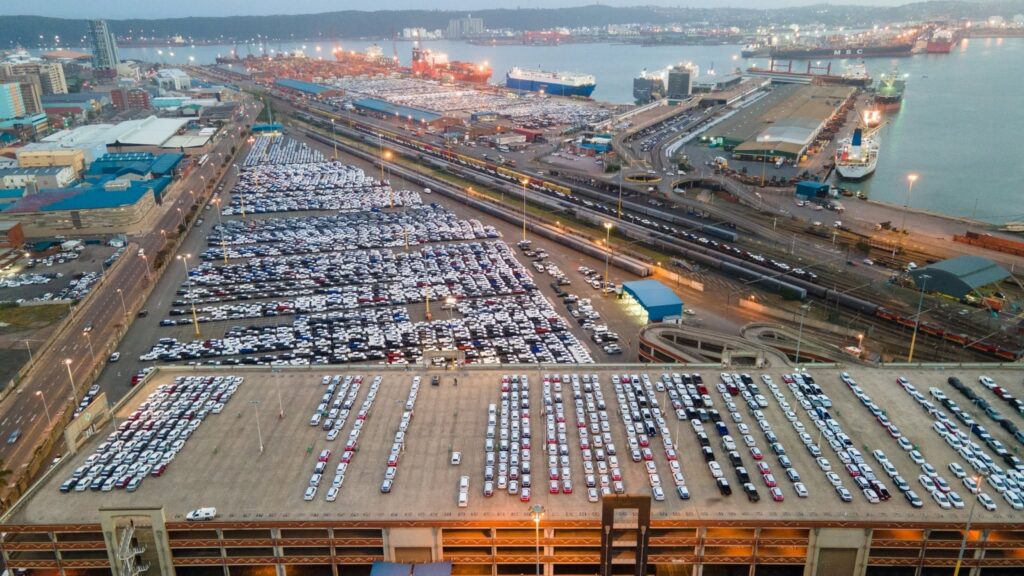
Over the last five years, Chinese and Indian-made cars have exploded in popularity in South Africa due to their affordability.
These imports are, on average, significantly cheaper than their legacy rivals while providing more features and better performance, making them an appealing option for cash-strapped households struggling to keep up with the price of new cars.
Consequently, brands like Chery, GWM, Suzuki, and Mahindra have rapidly grown over the last few years while industry leaders like Toyota, VW, Ford, BMW, and Nissan are slowly but surely losing market share.
The end result is that original equipment manufacturer (OEMs) in South Africa are calling on the government to take urgent steps to support local factories and even the playing field with cheap imports.
According to Bloomberg, several automotive CEOs have told the government they want to see better governance at the state-owned logistics behemoth Transnet, and for private investment into port, rail and electricity infrastructure to be sped up.
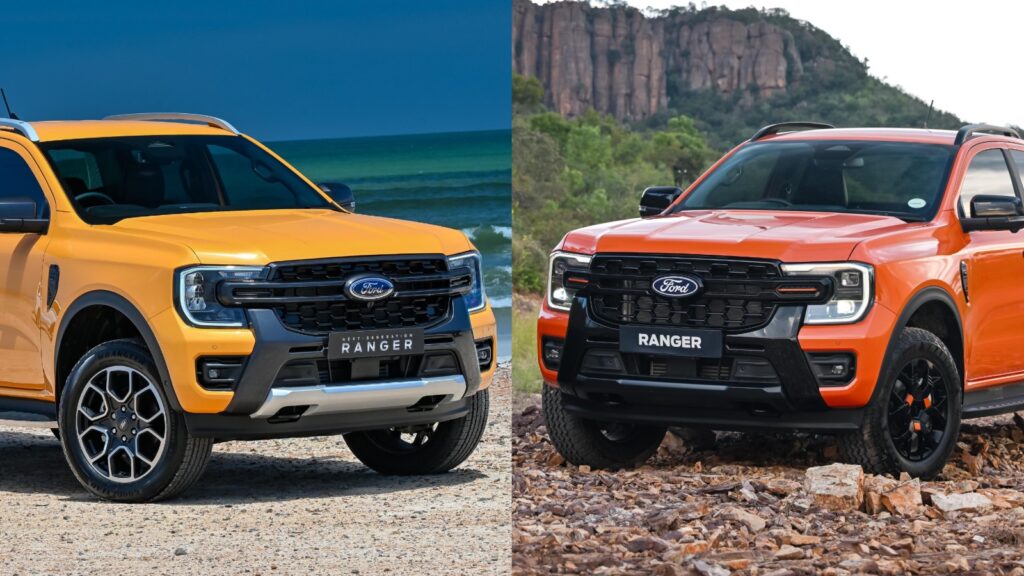
OEMs with inland factories, such as Ford and BMW, used to rely on trains to transport their finished vehicles to the ports in Durban for export, but the collapse of Transnet forced these companies to switch to trucks, which are far less time- and cost-efficient.
In addition to policies that would improve efficiency for local carmakers, companies are also pushing for reforms that incentivize local production over imports.
Notably, OEMs want reforms to the manufacturer voucher system to reward local production, changes to taxes on new car purchases, and an end to state support for semi knock-down (SKD) operations – where cars are shipped as kits and assembled elsewhere, usually for tax efficiency, according to Bloomberg.
Mahindra’s factory in South Africa

The move to end state support for SKD operations is notable, as this would affect Mahindra’s factory in South Africa.
The Indian automaker has a facility at the Dube TradePort Special Economic Zone on the outskirts of Durban in KwaZulu-Natal, which assembles the popular Pik Up bakkie.
However, this site does not have full manufacturing capabilities. Instead, the company imports SKD kits from India, which are assembled locally.
While this operation still represents a significant investment from Mahindra, it is not on the same level as the full-scale production facilities used by OEMs like Ford, Toyota, or BMW.
Anthony Black, emeritus professor at the University of Cape Town’s School of Economics, said the industry’s complaints have some merit.
“Some of their requests have some validity. The growth in imports is a problem,” he said. “The policy also needs to be adjusted to not make it worthwhile to set up SKD operations. I feel quite strongly about that.”
The end of state support for SKD assembly could therefore pose a significant challenge to Mahindra’s growth prospects in South Africa.
Editors Note: Mahindra has officially responded to TopAuto. You can read the company’s full response on their operations in South Africa here.
One of the fastest-growing brands in South Africa

For now, it is unclear whether the move to end SKD support could prompt Mahindra to upgrade its Durban facility to a full-scale production line.
While this would understandably be a massive undertaking on the company’s part, Mahindra is in a strong position to expand its presence in South Africa.
It is one of the fastest-growing brands in the country, driven in large part by two models.
The Pik Up is consistently the fourth best-selling bakkie after the “big three” – the Toyota Hilux, Ford Ranger, and Isuzu D-Max – and is particularly popular in the commercial sector.
Single cab and double cab prices start at R297,900 and R413,849, respectively, making it one of the most affordable bakkies in the country.
Mahindra’s other big success is the XUV 3XO crossover, which is quickly cementing itself as a favourite in South Africa’s passenger car scene.
At R259,900, it is one of the most affordable cars on the market, even cheaper than the locally-made VW Polo Vivo.
For this reason, it has proven to be a big hit with consumers, as Mahindra recently declared that the 3XO sold 10,000 units in just over 500 days – a new record for the automaker.



 Loading ...
-2026.10.webp)

-2026.10.webp)